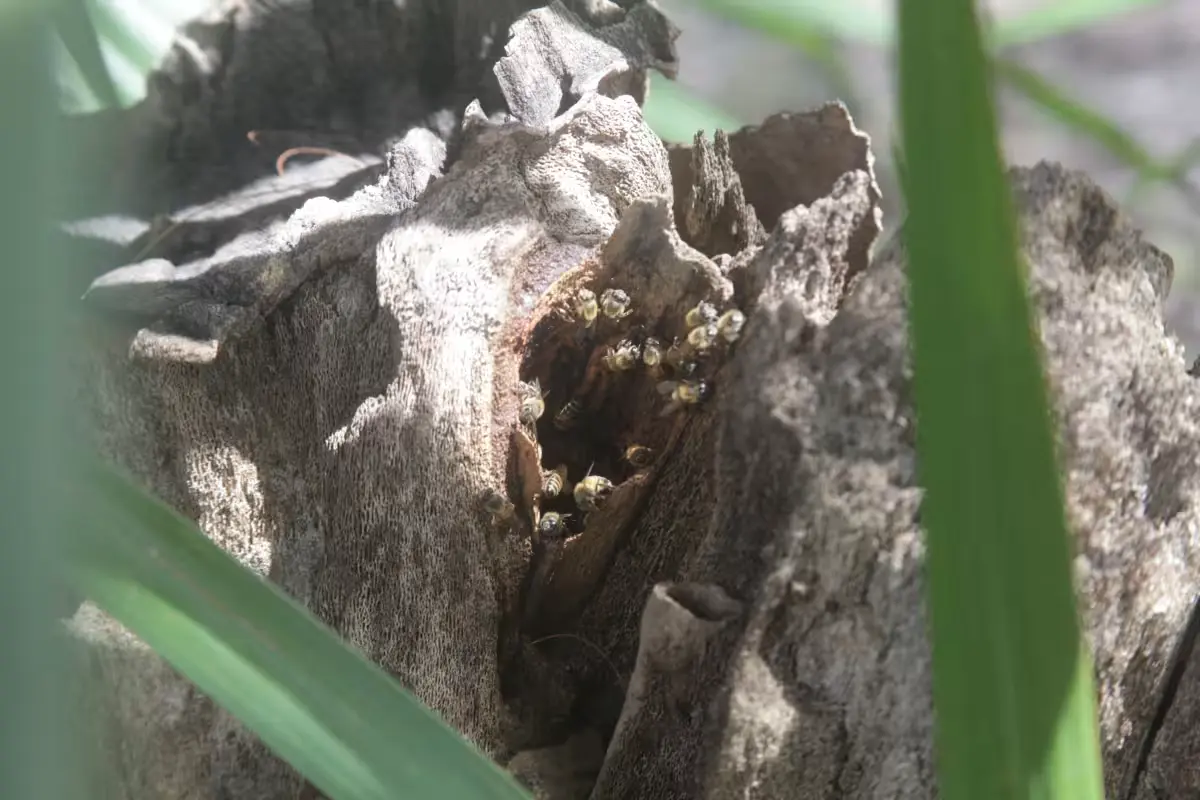
Cancún, Quintana Roo — Bee and wasp attacks have put Quintana Roo on high alert, with firefighters reporting 736 incidents across the state so far this year, ranging from hive removals to emergency responses to stinging attacks. April alone saw 82 cases.
Fire Chief Óscar Aguilar said the numbers are similar to those in 2025. The incidents are primarily caused by Africanized honey bees, a hybrid of local and African bees known for their aggressive behavior.
These bees are highly sensitive to vibrations and tropical weather; high temperatures accelerate their activity and colony growth. Additionally, the vast natural areas where they once lived are shrinking, making encounters in urban areas more common. So far this year, one person and one pet have been injured in Cancún.
Statewide statistics on swarm interventions are not consolidated, but recent months have seen critical situations in several municipalities. In Othón P. Blanco, particularly Chetumal, emergency services received up to 160 calls in April. In José María Morelos, civil protection calls in the Maya zone nearly doubled.
Among the most serious incidents, two children were injured and a dog died in an attack in the community of El Ucum less than two weeks ago. In José María Morelos, a swarm injured 10 people, and similar incidents were reported in Felipe Carrillo Puerto. Even a commercial airplane at Cancún International Airport was delayed when a swarm prevented takeoff.
In Cancún, attacks have caused minor injuries and at least one hospitalization. On June 19, an elderly man was attacked by a swarm at the Arco Norte near Region 233 and required medical transport. On April 25, a swarm caused panic at Plaza las Américas in Chetumal. On June 28, firefighters responded to a report at a bus stop on Avenida Nichupté in Cancún, where several people were stung. In February, a hive was promptly removed near the Municipal Palace without incident.
Firefighters attribute the increase in attacks to construction growth that destroys insect habitats. Aguilar explained: “The numbers are similar to last year. There is no single cause for a swarm becoming aggressive, but Africanized bees, which are the species in our urban and peripheral areas, are very territorial and defensive. They respond to the needs of their queen, and if she moves, the entire swarm mobilizes to protect her. It’s not spontaneous aggression; it’s their nature.”
In a survey of high-traffic areas, residents said they understand bees are vital to the ecosystem but fear being stung if they accidentally enter their territory. They worry about hives forming in their homes or yards and hope authorities will remove them and hand them over to beekeepers.
“They are beautiful and essential creatures, but like all living beings, they respond to threats. We are partly responsible for destroying their habitats, and the few spaces left in the city lead to these problems. I hope people understand that and don’t stigmatize them,” said Sofía, a young resident.
In the town of Xuxub, Lázaro Cárdenas, a coordinated emergency response involving civil protection, firefighters, municipal police, local officials, and volunteers rescued a person with serious injuries from a swarm attack. Due to difficult terrain, rescuers used a small boat to reach the victim, provide first aid, and transport them to a hospital.
More Lifestyle
- Mexico’s Senate Approves Animal Welfare Law With Fines up to 229,000 Pesos
- Yucatán Congress Repeals HIV ‘Danger of Contagion’ Crime
- Four Years After Decriminalization, Quintana Roo Feminists Say Abortion Access Still Falls Short
- Tulum Residents Identify Five Sites Where Homeless People Gather
- Cancun’s Night Bike Ride Returns to Avenida Bonampak on October 3
More Quintana Roo
- Quintana Roo Warns Against Unchecked Hotel Growth as It Courts Brazil and Colombia
- Quintana Roo Congress Approves Single-Nationality Rule for Top Elected Offices
- Mexico’s Senate Approves ‘Anti-Meme’ Law With Five-Year Prison Terms
- Quintana Roo Ranks Third Nationally in Corruption of Minors With 182 Cases
- Quintana Roo Opens 2026 Poetry Contest for Indigenous and Afro-Mexican Girls