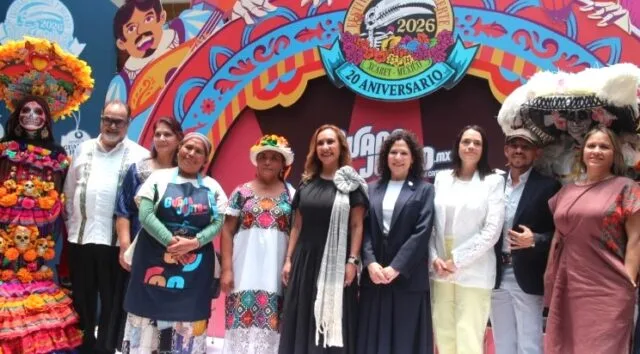
Playa del Carmen, Quintana Roo — Guanajuato will take center stage at Xcaret Park this fall as the guest state for the 20th edition of the Festival of Life and Death Traditions, one of the Riviera Maya’s largest annual cultural celebrations.
The festival will run from Oct. 30 through Nov. 2, 2026, transforming the park south of Playa del Carmen into a nighttime showcase of altars, music, dance, theater, traditional food and ceremonies honoring the dead. Organizers expect approximately 52,000 visitors over the four days.
Guanajuato’s delegation will include 127 artists and cultural representatives. Its program is expected to comprise 78 performances, three workshops and five altars and installations inspired by communities across the central Mexican state.
State tourism and cultural officials announced the program during a press conference in Mexico City.
Lupita Robles León, Guanajuato’s secretary of tourism and identity, said the festival would give visitors an opportunity to discover the state through the people who maintain its cultural traditions. Lizeth Galván Cortés, Guanajuato’s secretary of culture, said the delegation would highlight the relationship between memory, art, handicrafts, regional cooking and local approaches to honoring deceased relatives.
The detailed performance schedule and participating artists had not yet been published on the festival’s official website as of mid-August.
A meeting of regional traditions
Although Day of the Dead is observed across Mexico, its ceremonies, foods, decorations and beliefs vary widely between states and communities. That regional diversity has become one of the defining features of Xcaret’s festival, which invites a different state to present its traditions alongside those of the Yucatán Peninsula.
Guanajuato brings a particularly broad cultural landscape. Its 46 municipalities encompass colonial cities, former mining communities, agricultural areas and Indigenous communities, each with its own celebrations and artistic traditions.
Recent Day of the Dead programming elsewhere in the state has included monumental altars, processions, cemetery visits, catrina exhibitions, traditional cooking, music and nocturnal tours. Guanajuato’s state tourism authorities have promoted celebrations in destinations including Guanajuato City, León, San Miguel de Allende, Dolores Hidalgo, Celaya and Yuriria. Those activities illustrate the range of cultural material available to the delegation, although organizers have not confirmed which individual traditions will be presented at Xcaret.
“More than a celebration, the Festival of Life and Death is an invitation to reconnect with our roots, to recognize the cultural diversity that defines us as a country, and to share traditions, performing arts and community identity with respect and admiration,” said Leticia Aguerrebere, Grupo Xcaret’s corporate director of art and culture.
Two decades of honoring memory
First held in 2006, the festival has developed into one of Xcaret’s signature events. Organizers say it has welcomed more than 800,000 visitors and presented more than 15,000 artists and tradition bearers from 12 Mexican states over its first 19 editions.
More than 6,400 cultural presentations have been staged during that period, according to figures released for the anniversary.
The festival’s significance extends beyond colorful costumes and entertainment. Mexico’s Indigenous celebration dedicated to the dead was originally proclaimed by UNESCO in 2003 and placed on the Representative List of the Intangible Cultural Heritage of Humanity in 2008.
UNESCO describes the observance as an annual encounter between the living and their ancestors. Families commonly prepare food favored by the deceased and arrange candles, flowers and other offerings at household altars and graves. The practices combine Indigenous beliefs with Catholic commemorations introduced during the colonial era.
At Xcaret, those traditions are presented through theatrical productions, dance, music, workshops, exhibitions, religious observances and regional cuisine. Activities generally begin in the late afternoon and continue after dark, when candles and illuminated pathways change the atmosphere of the park. Xcaret currently lists festival hours from 4 to 10:30 p.m. and describes the event as suitable for families, though visitors should consult the park’s festival information page closer to the event for the final schedule and admission options.
More Events
- Mexican Navy Opens Youth Photography Contest on Ocean Conservation
- Valladolid Hosts Second Edition of La Vid y la Ceiba Wine Festival
- Progreso to Open Historic Muelle de Arcos for Sunset Walk Marking 85 Years
- Seña Fest to Bring Mexican Sign Language Events to Playa del Carmen on Sept. 26
- La Bamba por Playa 2026 Kicks Off With Community Peace Mural in Playa del Carmen
More Playa del Carmen
- Playa del Carmen Beach Restoration Clears Environmental Hurdle, Mayor Says
- Bidding Process to Define Renovation of More Than 10 Parks in Playa del Carmen
- Body Cameras Reduce Complaints Over Police Detentions in Playa del Carmen
- Lone Robber Steals 3,000 Pesos From Playa del Carmen Pharmacy
- Three Raids in Playa del Carmen and Cancún Net One Detention and Suspected Drugs