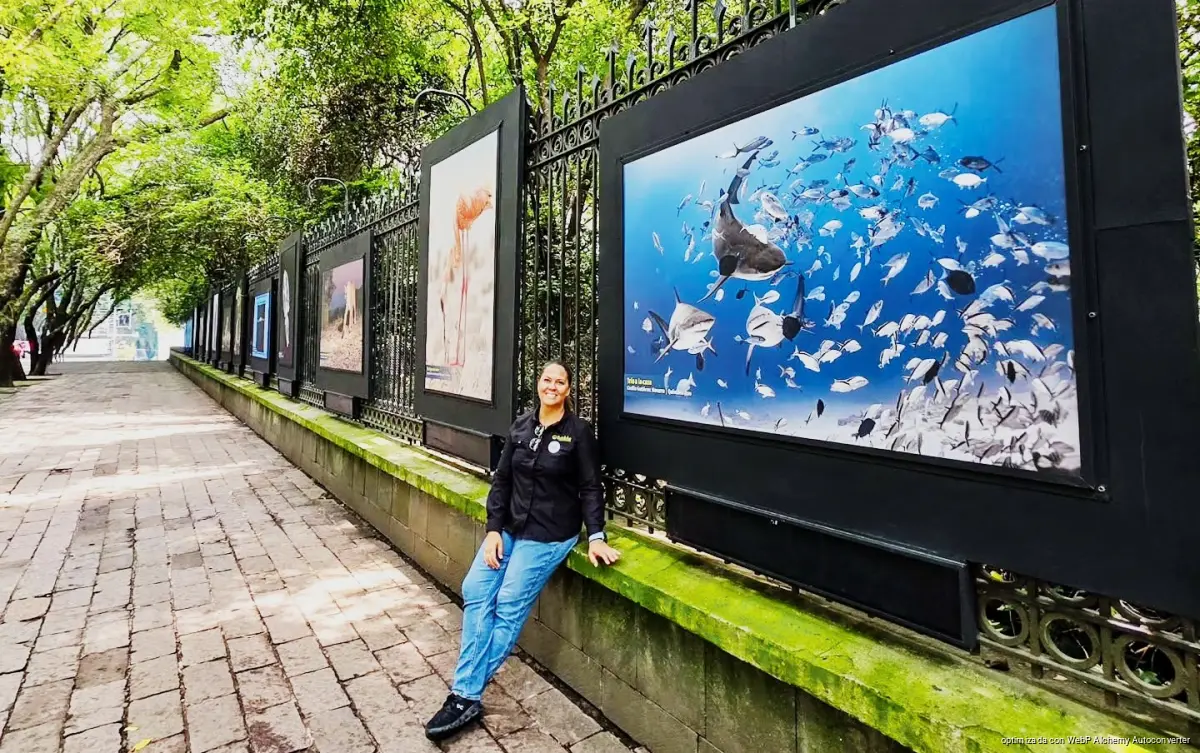
PLAYA DEL CARMEN, Quintana Roo — Two underwater photographs of bull sharks taken off Playa del Carmen have been selected as finalists in the seventh Mosaico Natura México competition, bringing one of the Riviera Maya’s most distinctive seasonal visitors to a national audience.
The images were submitted by members of Baálche Photography, the team formed by underwater photographers and shark conservation advocates Cecilia Gutiérrez and Mizael Palomeque.
Both photographs will appear in “Visions of Our Nature VII,” an outdoor exhibition planned for Chapultepec Park in Mexico City. The winning images are scheduled to be announced in September.
Organized by Mexico’s National Commission for the Knowledge and Use of Biodiversity, or CONABIO, Mosaico Natura is a national competition devoted to Mexico’s wildlife, plants, fungi, landscapes and relationships between people and nature.
Entries are evaluated for artistic merit, originality, technique and the difficulty involved in photographing the species or environment. The 2026 competition accepted submissions from April 24 through July 5.
Photography supports shark research
Gutiérrez said the selected images were intended to show bull sharks as part of a functioning marine environment rather than as the threatening figures often presented in popular culture.
For Baálche, underwater photography is closely connected with research and public education. The team participates in a community-science project that photographs and identifies individual bull sharks returning to the Playa del Carmen area.
Distinctive markings, scars and fin shapes allow researchers to recognize animals in subsequent seasons. Those records can help document return patterns, the size and composition of the seasonal group and changes observed over time.
Gutiérrez holds a master’s degree in natural-resource management and is director of Baálche Proyecto Azul. Palomeque, an attorney with a master’s degree in environmental law, has also received recognition in national and international nature-photography competitions. The husband-and-wife team conducts underwater photography workshops tied to shark monitoring and conservation.
Playa del Carmen’s seasonal visitors
Bull sharks, Carcharhinus leucas, are found in tropical and subtropical coastal waters around the world. The species can tolerate both saltwater and freshwater, but the animals photographed off Playa del Carmen are part of a seasonal marine aggregation.
Female bull sharks, many in advanced stages of pregnancy, generally begin appearing off the coast in November and remain through the winter. Local monitoring has documented some individuals returning repeatedly over a number of years.
The season also supports a specialized diving industry. Municipal officials estimate that approximately 30,000 visitors come to the region each year for the opportunity to observe bull sharks, creating income for dive operators, instructors, boat crews and other tourism workers.
The International Union for Conservation of Nature classifies the bull shark as vulnerable globally. Its coastal habitat brings it into frequent contact with fishing activity, pollution and the loss or degradation of nursery areas.
National recognition grows
The selection comes as Playa del Carmen is working to make the bull shark a more visible part of the city’s environmental and tourism identity.
In May, Quintana Roo submitted a request to the Mexican Institute of Industrial Property for protection of the name “Tiburón Toro de Playa del Carmen” as a geographical indication. The application was published in the Federal Official Gazette on May 29.
The proposal remains an application rather than a completed designation. If approved, it would establish standards for tourism services operating under the protected name and distinguish participating operators who comply with the agreed rules.
The two Mosaico Natura photographs will carry that local story well beyond the Caribbean coast. Visitors to the Chapultepec exhibition will see the sharks where local photographers encounter them: underwater, in their natural environment and within sight of one of Mexico’s busiest tourism destinations.
More Lifestyle
- Fewer Than 20% of Young People in Quintana Roo Use Condoms, Advocacy Group Warns
- Buen Fin 2026 Travel Deals: Flights and Hotels to Quintana Roo Compared
- Pet Microchips in Cozumel: What Owners Should Know Before Deciding
- Chickenpox Outbreak Prompts Class Suspension at Playa del Carmen Middle School
- Playa del Carmen Queer Film Festival Closes 13th Edition With 75 Films
More Playa del Carmen
- Thirty Hotel Workers Allege Retaliation Firings at Playa del Carmen’s Wyndham Altra
- Playa del Carmen Weighs Extending Tax Breaks to December
- Playa del Carmen Collects 469 Tons of Recyclable Waste in First 10 Months of 2026
- Artisans From Yucatan Peninsula and Central America Showcase Crafts at Playa del Carmen Forum
- Quintana Roo Moves to Rewrite Mobility Law So Ride-Hailing Apps Operate as Private Service