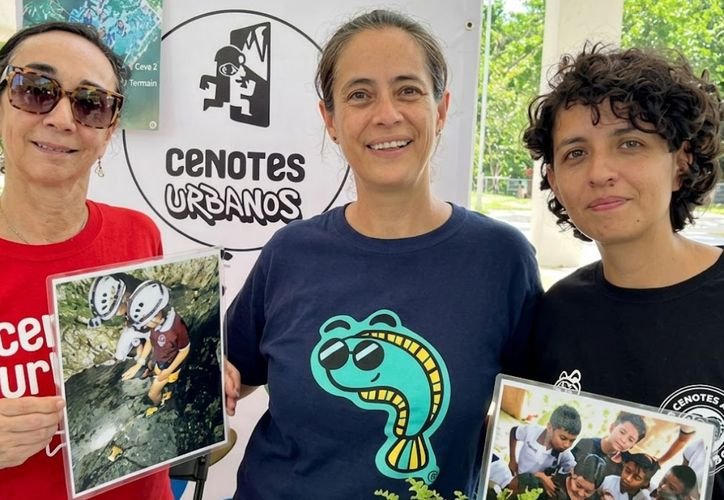
Playa del Carmen, Quintana Roo — Between 50% and 60% of the more than 300 cenotes in the municipality show high levels of bacteria harmful to humans, according to the activist group Cenotes Urbanos.
Laura Mendoza, a representative of the group, said that for the past year they have been using chemical test cards to measure water quality. The cards indicate contaminants with red and blue dots.
“We have recorded high amounts of E. coli, a bacterium that lives naturally in the intestines of healthy people and animals. Although most varieties are harmless, some pathogenic strains produce dangerous toxins and are present in the water consumed by the population,” she said.
The group also found possible fecal contamination, suggesting the presence of dangerous pathogens such as viruses, parasites, or other disease-causing bacteria. Mendoza noted that underground rivers supply water to the region, making their protection critical.
The activists successfully urged the Water and Sewerage Commission (CAPA) to repair three drainage pipes that were leaking contaminants, but they suspect more such leaks exist in the city.
The group is also working with informal settlements to install dry toilets. “Their cost is quite affordable, between 3,000 and 4,000 pesos [about $150 to $200], but unfortunately people lack the financial resources to build them,” Mendoza said.
Lilia Huber Montanaro, another representative, said the group organizes group cenote cleanups and runs a program called “Infancias Cueveras” (Cave Childhoods) to educate children and teenagers about caves, their ecosystems, and the importance of water conservation.
The group invites the public to report any cases of people or companies sealing off a cave or cenote at reporte.cenotesurbanos.org. The goal is to create a census of such cases to better understand Playa del Carmen’s underground world.
More Lifestyle
- Hundreds of Riders Expected for Tulum’s Fourth Federated Horseback Ride
- Quintana Roo Plans Two Wastewater Plants and Two Aqueducts for Cancún and Playa del Carmen
- Playa del Carmen Ranks Second in HIV Cases in Quintana Roo, Official Says
- Cancún Taco Festival Aims to Revive Local Economy in Low Season
- Screwworm Cases Detected in Two Dogs and a Horse in Tulum
More Playa del Carmen
- Quintana Roo Riders Resume ‘Vest Law’ Talks, No Protests
- Playa del Carmen Recognized as International Bull Shark Zone
- Five Zones in Playa del Carmen Lose Urban Jungle to Construction Boom
- Playa del Carmen to Build Tactical Operations Center to Boost Fifth Avenue Security
- Hurricane Isaías to Bring Rain and Heat to Cancún and Playa del Carmen This Weekend