
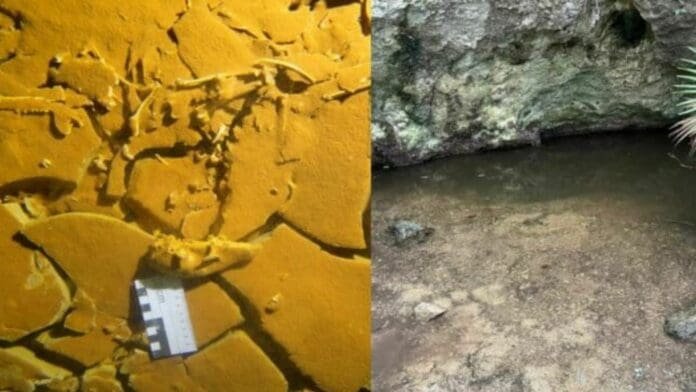
A team of international divers has discovered a fossil in a cenote in Cozumel. Experts believe it could be a raccoon dating back to the Pleistocene era. The divers, who are collaborating with the National Institute of Anthropology and History (INAH) to map the cenotes on the island, made the discovery during their exploration of the Chu-Ha cenote.
The fossil remains, which are believed to be billions of years old, were found in this underwater cave. Speleologist Germán Yáñez shared that specialists are currently determining whether the fossil belongs to a coati or a raccoon from the ice age.
Yáñez emphasized the significance of the find, noting that the research process is still ongoing. However, the completion of this research will depend on the resources that INAH decides to allocate for the necessary studies. The project must also receive approval from the national Archaeology Council.
Yáñez further explained that while the investigation suggests the fossil could be a raccoon or a coati, there is still a need to determine the exact age and species of the fossil. He reiterated that conducting a paleontological study is costly, with expenses including tests, sedimentation, and laboratory work. The information gleaned from this research will ultimately depend on INAH's commitment to funding the study.
More Cozumel
- Cozumel Residents March Against Malecón Rehabilitation Project
- Explorers Document New Underwater Cave System South of Cozumel
- Ángeles Viajeros to Take 16 Children With Cancer to Cozumel for a Week by the Sea
- Leonardo Aguilar to Headline Free Cozumel Concert for Grito de Independencia 2026
- Cueva Popotitos: New Underwater Cave System Found South of Cozumel
