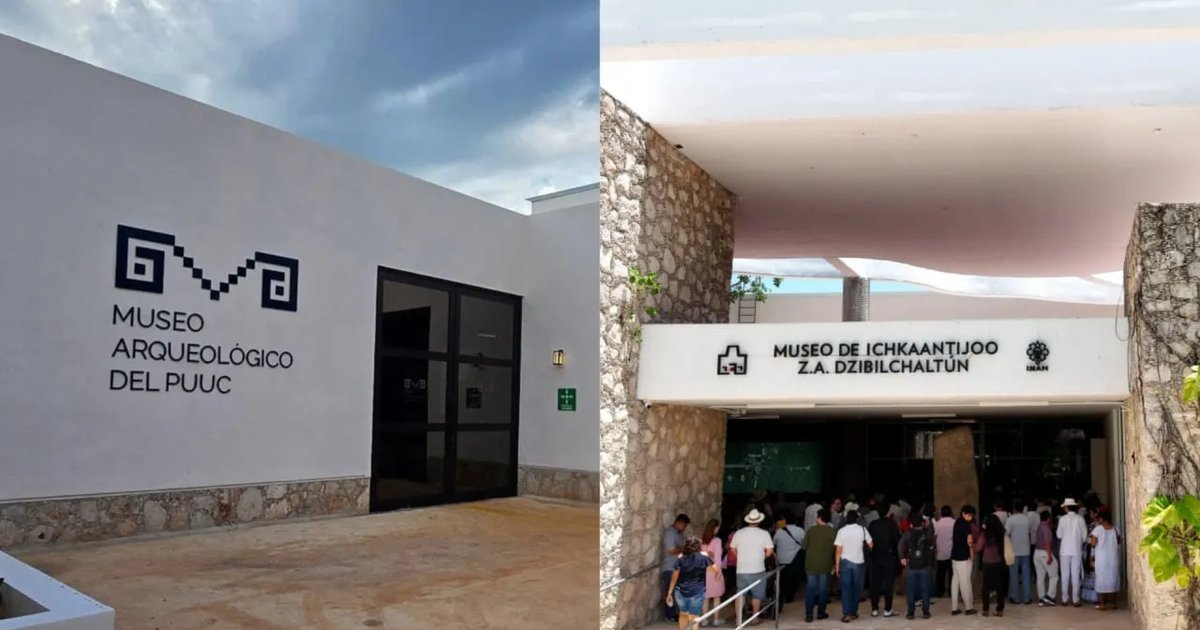
Mérida, Yucatán — Federal and state officials inaugurated two new archaeological museums in Yucatán over the weekend, adding to the National Institute of Anthropology and History (INAH) network and expanding the region’s cultural tourism offerings.
Federal Culture Secretary Claudia Curiel de Icaza led the opening of the Museo Arqueológico del Puuc in the Kabah archaeological zone. The museum, built at a cost of 227 million pesos (about $11.3 million), displays 251 artifacts recovered from excavations over the past two decades.
The building’s design replicates the layout of the Nunnery Quadrangle at Uxmal, a classic Puuc-style structure. Curiel de Icaza said the museum offers an interactive window into the social dynamics of ancient Maya communities.
INAH Director Omar Vázquez noted that the museum brings ancestral heritage directly to nearby indigenous communities. The museum’s layout recreates the Maya worldview around a symbolic central patio.
A service building of nearly 200 square meters was also constructed to enhance the visitor experience. Of the total investment, 211 million pesos went to the museum building and 15 million to service areas. The museum features interactive screens and immersive rooms.
Officials also inaugurated the Museo de Ichkaantijoo and Visitor Center at the Dzibilchaltún archaeological site, 27 kilometers from Mérida. The project cost 180 million pesos, funded jointly by federal and state governments.
Governor Joaquín Díaz Mena attended the event and praised the arrival of 304 recovered archaeological pieces that tell the pre-Hispanic history of Yucatán.
More Culture
- Cancún to Host Climate Change Colloquium With Experts From Mexico, Guatemala and New York
- Free Theater Production ‘Catsup’ Brings Pandemic Childhood Story to Cancún
- Documentary on Puebla River Defenders Screens Free in Cancún
- Cancún Looks to Promote Its Cultural Heritage to Tourists
- Playa del Carmen Opens Nominations for Elvia Carrillo Puerto Award Honoring Outstanding Women