Mérida, Yucatán — A road maintenance project in Yucatán is testing a new asphalt mix made from reclaimed pavement and scrap tire rubber, in what the federal government describes as the state’s first project to combine both materials.
Mexico’s Ministry of Infrastructure, Communications and Transportation (SICT) says the approach reduces the need for new materials, gives old tires a second use, and should make road surfaces more durable.
The first application is on the Mérida-Tizimín highway, on the stretch between Mérida and Motul. One side of the road is being resurfaced from kilometer 19 to kilometer 31 in the direction from Mérida to Motul, and the other side from kilometer 10.2 to kilometer 31.2 from Motul toward Baca.
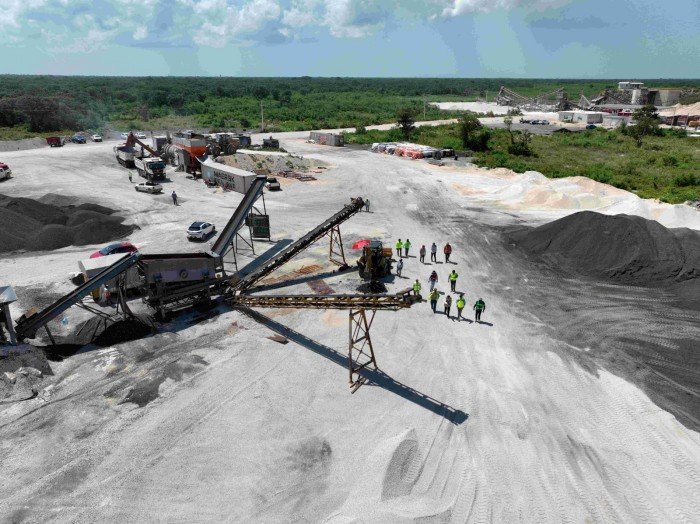
The process begins by milling the existing pavement. Instead of discarding the material, crews recover a portion known as reclaimed asphalt pavement, or RAP, and feed it back into the production cycle. At a plant in the municipality of Baca, RAP is blended with tire rubber powder, asphalt and additives to create a dense-graded asphalt mix that is then laid as a fresh driving surface.
SICT’s Director General of Highway Conservation, David Calderón Hallal, inspected the resurfacing work and toured the plant where the mix is being produced.
The ministry has budgeted 1.286 billion pesos in Yucatán this year for 46 road conservation projects, including routine and periodic maintenance, bridge repairs and high-performance road markings. Another 80 million pesos in projects are out for bid and are expected to be awarded before the end of 2026.
At the national level, SICT reports about 600 highway maintenance contracts: 250 are in progress, 200 have been completed and 150 are scheduled to begin.
More Development
- Cancún’s Route 17 Leona Vicario Draws More Than 16,000 Riders on First Free Day
- Quintana Roo Beaches Lose Up to 14 Meters of Sand a Year as Restoration Plan Advances
- Meliá Invests €50 Million in Paradisus Cancún Renovation
- Kukulcán Interchange in Cancún to Be Completed by Late 2026, SICT Says
- Puerto Juárez Market Set to Open October 30 With 12 Vendors