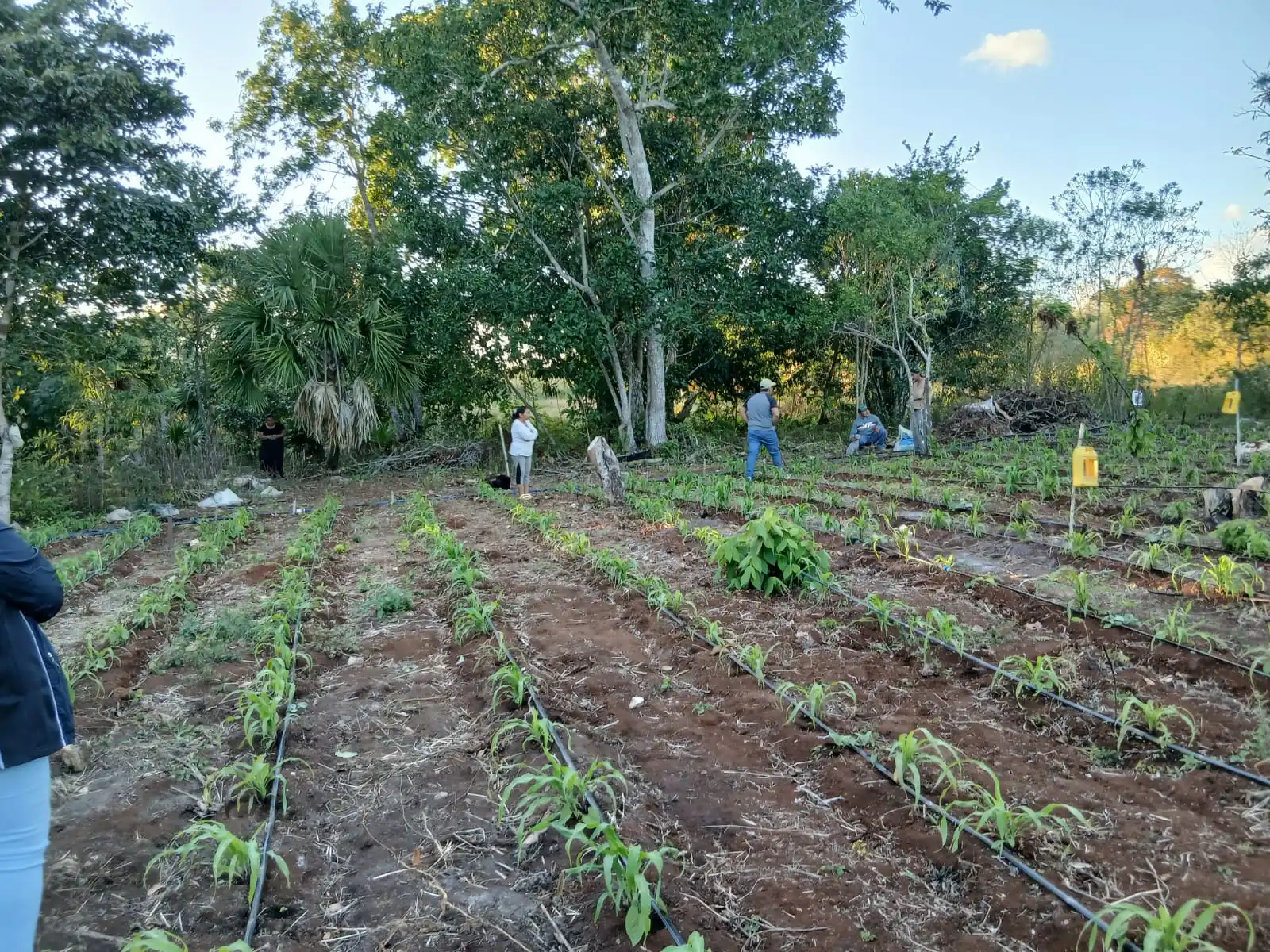
Kantunilkin, Quintana Roo — Deep in the Yucatan Peninsula, an ancient Maya tradition lives on: the belief that the song of the xk’ook’, a small nightingale, helps corn grow. Miguel Poot Kinil, the municipal director of Indigenous Affairs, shared this oral heritage, describing the bird as a mystical symbol of planting and harvest.
From late April to early May, the forests fill with the nightingale’s melody, coinciding with the time when farmers prepare the land. Poot Kinil recalled the Maya phrase that encapsulates this phenomenon: “U k’aay juntúul chan xk’ook’ ku chiisik le naloo'” — “The song of the little xk’ook’ makes the corn grow.”
These stories are part of the collective memory, passed down through generations in Indigenous homes. Poot Kinil remembered how his mother taught him this knowledge while she made toasted tortillas with lard and salt in the traditional kitchen, accompanied by home-ground coffee.
“My mother told me to listen to the xk’ook’s song. She said her mother, my grandmother, had also taught her this story, and that we must not lose it so we can tell our children,” Poot Kinil said, emphasizing the value of Maya legends in today’s social fabric.
According to ancestral knowledge, the nightingale sings joyfully because its music somehow stimulates the growth of the milpa corn plant. Its vibrant notes are heard strongly in the mornings and afternoons, even on cloudy days, when the birds build nests and care for their young.
The bird’s song persists through June, July, and August, lasting until early September — exactly when the milpa reaches maturity and is ready for harvest. Afterward, the ears of corn are collected and stored in granaries to preserve seed for the next agricultural cycle.
Once the harvest ends, the nightingale’s song fades, but the bird remains hidden in the forests and communities. By then, its chicks have grown, ready to repeat the cycle and accompany future planting seasons with their trills.
Poot Kinil stressed the urgency of preserving and spreading these ancient stories. Keeping the mysticism of the xk’ook’s song and the wisdom of the elders alive not only protects Maya cultural identity but also strengthens a vital bond of respect between new generations, nature, and the land.
More Environment
- Maya Frog and Toad Shell Pendants May Reveal Ancient Trade Routes
- Heavy Rains to Soak Quintana Roo as Unstable Weather Moves In
- Brain-Eating Amoeba Found in Six Artificial Lakes in Mérida; Water Contact Restricted
- Semarnat Approves Artificial Reefs and Sand Relocation for Akumal Hotel
- Chetumal Plans 836 Million Pesos in Stormwater Works to Curb Flooding
More Zona Maya
- Ten Rural Communities in Quintana Roo Form Community Conservation Territories
- Fonatur Doubles Maya Ka’an Budget to 20 Million Pesos
- Farmer Warns of Difficult Corn Season Ahead in José María Morelos
- Maya Women in Quintana Roo Turn Ancestral Knowledge Into Thriving Cooperative
- Quintana Roo Opens 2026 Poetry Contest for Indigenous and Afro-Mexican Girls