
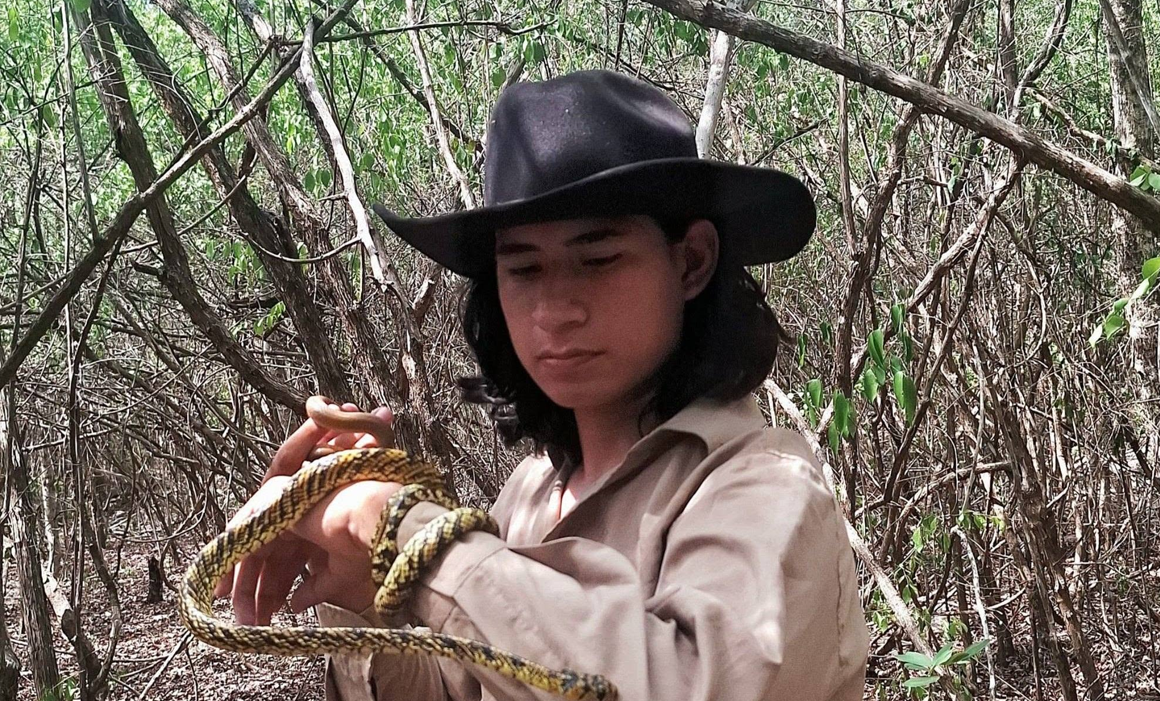
Mérida, Yucatán — Diego Sánchez Herrera, a biology student at the Autonomous University of Yucatán (UADY), is developing a research project to conserve snakes and reduce the risks of unplanned encounters with them in the municipality of Mérida.
Sánchez, who studies at UADY’s Faculty of Biological and Agricultural Sciences, is building a species inventory for the municipality as part of his thesis. The goal is to identify which snakes most frequently appear in areas where they come into contact with residents, and to establish safe methods for their relocation.
“This project was created mainly to conserve these animals,” he said. “We’re putting together a list of species to document the diversity found in Mérida.”
The records will help determine which species are most common in encounters with people and the most effective response options. “This will tell us which species are most frequently involved in unplanned encounters and the most efficient approach, which in this case is relocation,” Sánchez explained.
As part of the project, Sánchez takes reports from residents who find snakes in their homes, yards, lots, or other spaces throughout the municipality. He urged anyone who spots a snake to keep a safe distance and avoid handling it, especially if the species is unknown.
Sánchez noted that the presence of snakes in populated areas is linked to the loss and transformation of their natural habitats due to urban growth and new housing developments. “Construction and new subdivisions are affecting the habitats of these animals,” he said.
In previous relocation efforts, the project has handled between 23 and 26 snakes from 11 different species, according to Sánchez. Among them was Micrurus apiatus, commonly known as the southeastern coral snake, a species of medical importance. The snake was rescued, measured, and moved to a remote and suitable release site. “We rescued it, took measurements, and then relocated it to a place far away but safe for the snake as well,” he said.
Residents can report sightings by calling or sending a WhatsApp message to 999 169 5439, or through the project’s page, Béech-Kaan. Sánchez also said that, when possible, people should take a photo of the animal to help with identification before he arrives.
More Environment
- Cozumel’s Reefs Get a 3D Map Divers Can Explore Before Entering the Water
- Documentary Exposes 30 Years of Pollution in Cancún’s Chacmuchuch Lagoon
- Crocodile Surprises Tourists Swimming at Cozumel’s El Cielo Sandbar
- Playa del Carmen Calls Volunteers to Clean More Than 7 Kilometers of Beach
- Tulum Fishing Cooperative Seeks Funds to Expand Facilities and Sustain 70 Families
