
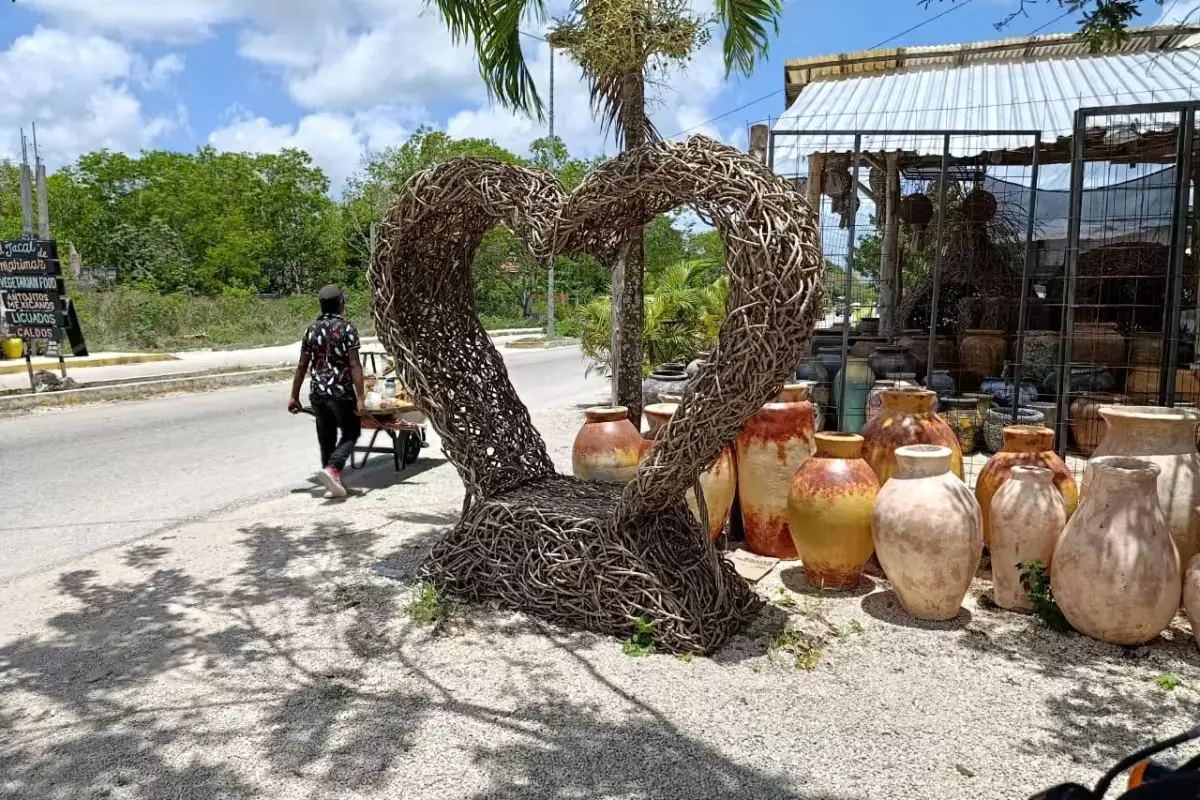
Tulum, Quintana Roo — The tourism slump in Tulum has moved beyond the beachfront and the town center, reaching the inland Maya communities along the road to Cobá, where small shops, restaurants and artisan workshops depend on the flow of visitors passing through.
In Macario Gómez, Francisco Uh May and other stops along the corridor, some businesses have closed, while others have changed how they operate in an effort to cut costs and stay open.
The main challenge for small businesses is covering fixed costs with income that remains limited. Merchants say they must pay rent, taxes, wages and other obligations no matter how many customers they receive. The squeeze has pushed some owners to give up established storefronts and move their operations to semi-permanent stalls, reducing expenses while they wait for tourism to recover.
Johana Jiménez Contreras, a merchant in Macario Gómez, said the community has seen some busier days, but the pattern remains uneven.
“We have good days, when there seems to be a little more movement of tourists, but it hasn’t really picked up well,” she said, adding that the uptick is still not enough to offset losses built up during the slower months.
Hilaria Poot, a member of Artesanías La Esperanza, reported a similar situation weeks earlier, estimating that sales in Macario Gómez and Francisco Uh May had risen only 5 to 10 percent. She recalled stretches when entire days passed without a single sale, describing the recent visitors as a brief relief rather than a recovery for the sector.
Cobá Tour Guides Report Sharp Drop
The impact also reaches Cobá, one of the main draws feeding traffic through the corridor. William Cen Canché, who represents tour guides in that community, warned in June that activity had fallen to roughly 10 percent of levels seen in previous years, leaving some workers with eight to 10 days without a single tour. Fewer excursionists ripple through the local economy, affecting guides, artisans, restaurants, transport workers and roadside businesses.
For merchants, the modest movement seen recently is still far from an economic recovery. The immediate test is keeping businesses open through September and October, traditionally difficult months for tourism, before hoping the high season brings visitors back to the Maya communities, where much of the economy relies on travelers who leave Tulum to explore Cobá and other inland attractions.
More Tourism
- Hotel and Business Groups Warn 35.8% Non-Resident Fee Hike Threatens Quintana Roo Tourism
- Three Arrested in Tulum After Taxi Driver Beaten and Robbed for Refusing Extra Passengers
- Tulum Hotels Stay Open Through Renovations Ahead of High Season, Union Says
- Quintana Roo Records 29,413 Sea Turtle Nests at Season’s Midpoint
- Workers Question Official Vehicles Parked in Restricted Zones at Cancún Airport
More Tulum
- Tren Maya Archaeological Finds Won’t Be Displayed in Chetumal, INAH Says
- Quintana Roo Seeks to Curb Unfair Competition Among Transporters
- Tulum Taxi Fares Remain Unclear as Union Sets New Rates and State Pushes Meters
- Sargassum and Low Season Drive Tulum Beach Weddings to Decade Low
- Least Tern Nests Under Watch in Sian Ka’an Reserve as Threats Mount