
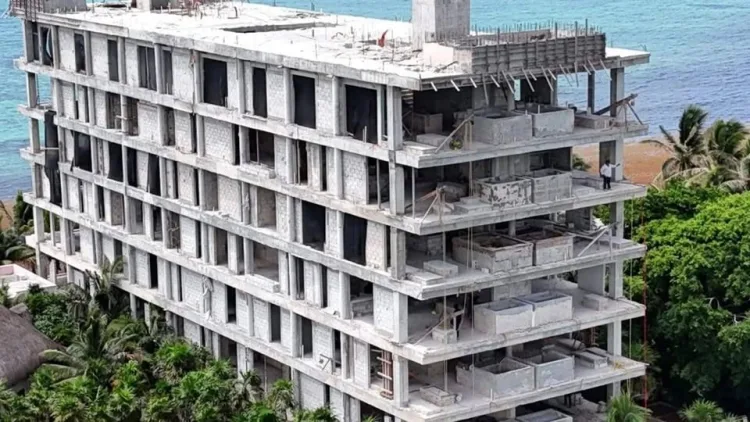
Tulum, Quintana Roo — The real estate boom that promised to transform this municipality into a paradise for investment and luxury is now being revealed as a web of fraud, ghost developments, and defrauded foreign buyers. Behind projects with idyllic names lies a repeated scheme: pre-sales without permits, developments without foundations, and evaporated capital.
Over recent months, dozens of foreigners have reported paying for apartments in projects that were never built. State authorities have confirmed the existence of more than twenty developments lacking state or municipal permits. These include Luna Sanctuary, Santuario Uh May, Uxcan Tulum Bamboo Villas, Viventum, Selvadentro, Ulumi, Rosela Tulum, Trebola, Zool, Xeelenja, and Cibelia. Purchasing or promising to purchase at these sites implies a real risk of financial loss.
The most emblematic case is that of Akela or Solemn, a conglomerate that attracted millions of dollars with promises of luxury amenities and high returns. Today, its projects are stalled, some partners have disappeared, and others were found dead. What seemed to be a symbol of Tulum's touristic progress has transformed into a warning for investors worldwide.
Federal closures of projects in beach zones have multiplied due to a lack of environmental licenses, although some construction companies have reoffended after paying fines. President Claudia Sheinbaum publicly acknowledged the gravity of the problem and requested that SEDATU coordinate with state authorities to investigate the illegal sale of national lands used in private operations.
The problem has deeper roots. There is lax permitting, institutions incapable of halting irregular construction, and buyers at a legal disadvantage. The frauds not only affect foreign investors; they also distort urban development and leave scars on coastal and jungle ecosystems.
Experts warn that Tulum's real estate market is already showing symptoms of saturation. The oversupply of studio-type apartments and buyer distrust are reducing the speed of sales and collapsing profitability expectations.
Recommendations are clear: verify permits with local authorities, do not provide down payments without a trust or guaranteed accounts, demand bilingual contracts with penalty clauses, and always use a notary public to verify the legality of the land.
In this scenario, the illusion of a Caribbean paradise comes with a warning that is sounding ever louder: not everything that glitters in Tulum is a sound investment, and the cost of naivety can be devastating.
More Business
- Canaco-Servytur Seeks Tax Incentives for Sargassum Management in Quintana Roo
- Cancún’s Protected Natural Areas See Tourism Slump, With 600,000 Visitors Expected in 2026
- Bamboo Growers From 13 Mexican States Form National Association
- Quintana Roo Delivers Equipment to 77 Small Businesses Under Transforma Tu Negocio Program
- Cancún Bets on Health Tourism With New Forum
More Tulum
- Tulum Faces Budget Deficit as Tourism Slump Slashes Revenue
- Drought Stalls Corn Planting in Tulum’s Maya Communities
- Mexico Moves to Curb Misleading Hotel Ads Claiming Private Beaches
- Tulum Tour Guides Pin Recovery Hopes on Cruise Ships and Year-End Holidays
- Man Shot Dead in Tulum Irregular Settlement as Neighbors Cite Land Threats
