
Tulum, Quintana Roo — Mexico’s Culture Ministry, working through the National Institute of Anthropology and History (INAH), has added 53 archaeological pieces to the Museo Regional de la Costa Oriental (Mureco) in Tulum as the museum celebrates its second anniversary.
The objects come from various INAH repositories and were handed over through the agency’s Directorate of Public Registry of Monuments and Archaeological and Historical Zones, said Mureco director Carmen Gaitán Rojo.
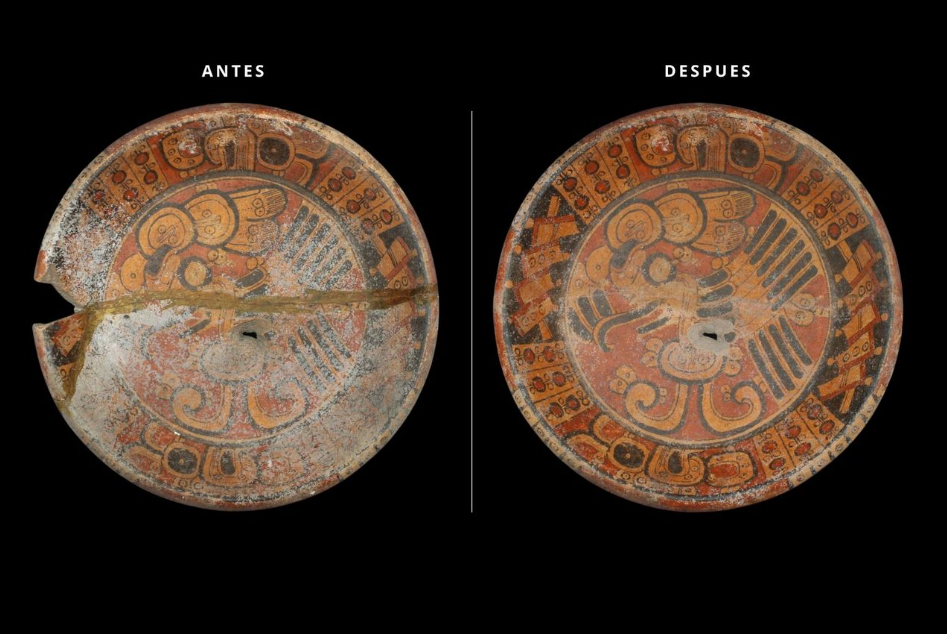
Of the total, 47 pieces will make up the museum’s new Mesoamerica Introductory Hall, which is intended to widen visitors’ view of the region’s cultural mix and the many ancestral peoples settled there, including the Maya. The remaining six will be added to Hall 2, titled “Mayas, una cultura milenaria” (Maya, a Millennial Culture), among them a tripod plate and three polychrome vessels from the Classic period (400-800 AD) found in southeastern Mexico. Museum staff treated the vessels to restore their original vividness.
“The history of Mesoamerica was built from an enormous diversity of peoples and cultural traditions,” Culture Secretary Claudia Curiel de Icaza said. “The new hall Mureco is preparing will broaden that perspective from Quintana Roo by bringing together Olmec, Teotihuacan, Mexica and other civilizations in a single route. In this way, the archaeological heritage offers new possibilities for understanding the richness and complexity of our past.”
The additions will join the museum’s three permanent exhibition halls, which hold 296 original pieces and 61 reproductions, and will give visitors a more dynamic tour of the collection, Gaitán Rojo said.
Among the standout objects:
- An incised Olmec pot from the Preclassic period (1500-500 BC).
- A Teotihuacan incised tripod vase and a candelero decorated with a human face.
- An anthropomorphic sculpture of the Mezcala culture from the Classic horizon (300-800 AD).
- A tripod bowl of the Chupícuaro culture, made between 600 and 200 BC.
- A Huastec effigy vessel from the Classic period (300-600 AD).
- A Mexica anthropomorphic figurine from the Postclassic (1200-1521 AD) and a Zapotec anthropoid urn from the Classic (400-900 AD).
Gaitán Rojo said the selection is varied and will allow the public to deepen its knowledge of the region’s original cultures and how they evolved over time.
She recalled an earlier effort to expand the collection: in 2024 the museum incorporated a bench-throne recovered from the Nicolás Bravo Pueblo archaeological site, about 70 kilometers from Chetumal, during work on the Tren Maya Archaeological Rescue Project (PSATM).
Also displayed in Hall 2, the piece measures 3.10 meters long and 0.60 meters high and consists of 15 elements: four small drums with braided ribbons and four plain ones, along with three anthropomorphic figures with their arms across their chests. Dated to the Late Classic period (850-900 AD), it was conserved at the laboratory in Chetumal under the supervision of Felix Camacho Zamora, coordinator of the PSATM conservation area.
More Culture
- Cancun Planetarium Renovation Reaches 50 Percent, December Reopening Expected
- Chetumal Entrepreneur Develops Automatic Hammock Rocker for Mexico
- Cancún Prepares Janal Pixán 2026 at Puerto Juárez, Aims to Double Attendance
- Quintana Roo to Host Caribbean Culture Festival 2026 With Belize as Guest of Honor
- Maya Frog and Toad Shell Pendants May Reveal Ancient Trade Routes
More Tulum
- Quintana Roo Braces for Four Days of Heavy Rain and Flooding
- Tulum’s Mureco Museum Adds 53 Archaeological Pieces From Across Mesoamerica
- Tulum Fishing Cooperative Seeks Funding to Modernize Its Facilities
- 23 Tulum Police Officers Complete Initial Training Course
- Tulum-Miami Flights to End as American Airlines Adjusts Routes
