
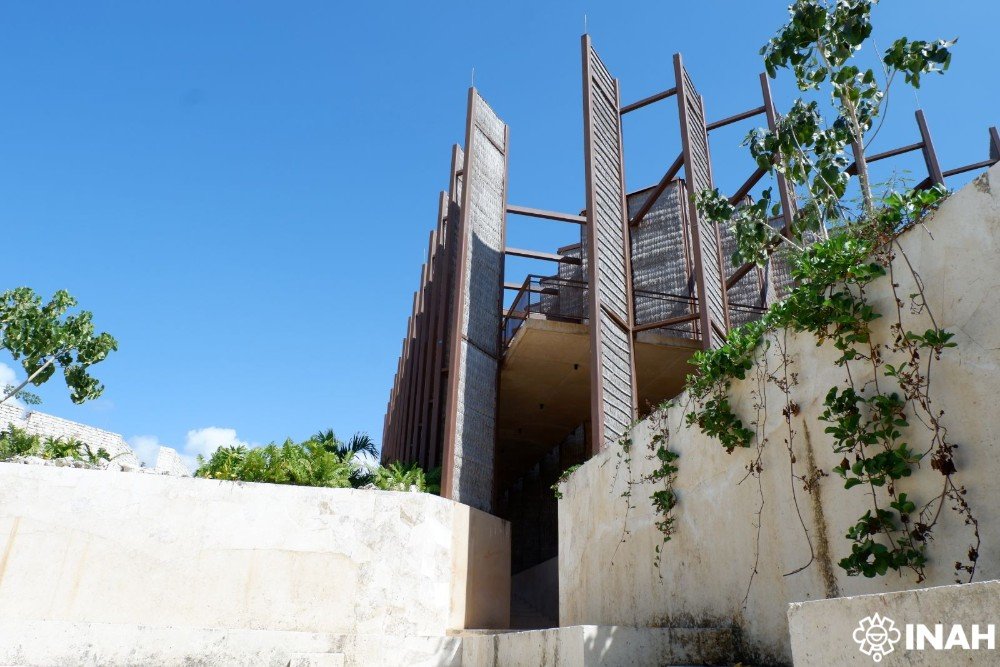
Tulum, Quintana Roo — Mexico’s National Institute of Anthropology and History (INAH) has added 53 archaeological pieces to the Museo Regional de la Costa Oriental (Mureco), strengthening the collection of the Quintana Roo museum as it marks its second anniversary.
The objects, drawn from various INAH repositories, reflect the cultural diversity of Mesoamerica and include works attributed to the Olmec, Teotihuacan, Mexica, Chupícuaro, Mezcala, Huasteca and Zapotec civilizations. The Directorate of Public Registry of Monuments and Archaeological and Historical Zones handled the transfer, said Mureco director Carmen Gaitán Rojo.
Mexico’s Culture Secretary Claudia Curiel de Icaza said the new hall would broaden how visitors understand the region’s past. “The history of Mesoamerica was built from an enormous diversity of peoples and cultural traditions,” she said. “The new hall that Mureco is preparing will allow us to widen that view from Quintana Roo, bringing together Olmec, Teotihuacan, Mexica and other civilizations in a single tour. Archaeological heritage thus offers new possibilities for understanding the richness and complexity of our history.”
Of the 53 pieces, 47 will go on display in a planned Introductory Mesoamerican Hall, while the remaining six will join Room 2, titled “Maya, a Millenary Culture.”
Restored Maya Vessels Join Permanent Collection
The six objects headed to the Maya room include a tripod plate and three polychrome vessels dating to the Classic period (AD 400-800), all from southeastern Mexico. Museum conservation staff treated the pieces to restore their color and detail.
With the addition of the new space, Gaitán Rojo said, Mureco will offer a dynamic route through its three existing permanent exhibition rooms, which hold 296 original pieces and 61 reproductions.
The director said the diverse batch — varied in size, format, manufacture and function — will be set within a curatorial narrative that highlights each object’s aesthetics and its ritual, tributary, commercial or domestic role.
Among the highlights are:
- An incised Olmec pot from the Preclassic period (1500-500 BC)
- A tripod incised vessel and a candelero decorated with a face, both Teotihuacan
- An anthropomorphic sculpture from the Mezcala culture, Classic horizon (AD 300-800)
- A tripod bowl of the Chupícuaro culture, made between 600 and 200 BC
- A Huasteca effigy vessel from the Classic period (AD 300-600)
- A Mexica anthropomorphic figurine from the Postclassic (AD 1200-1521)
- A Zapotec anthropoid urn from the Classic period (AD 400-900)
Gaitán Rojo said the selection is varied and will allow the public to deepen its knowledge of Mexico’s original cultures and how they evolved over time.
Throne Bench Recovered Along Tren Maya Route
She recalled that an earlier effort to expand the museum’s holdings came in 2024, when Mureco incorporated a throne bench recovered from the Nicolás Bravo Pueblo archaeological site, about 70 kilometers from Chetumal, during work on the Tren Maya Archaeological Salvage Project (PSATM).
The piece — 3.10 meters long and 0.60 meters high — comprises 15 elements: four small drums with braided ribbons, four plain drums and three anthropomorphic figures with their arms crossed over their chests. Dating to the Late Classic period (AD 850-900), it was conserved at a laboratory in Chetumal under the supervision of Félix Camacho Zamora, coordinator of the PSATM conservation area, and is now on display in Mureco’s Room 2.
Gaitán Rojo added that the museum serves as a platform for promoting local culture, giving artisans, artists and regional voices space in its temporary exhibition halls.
The Museo Regional de la Costa Oriental is located in the Parque del Jaguar in Tulum, Quintana Roo.
More Culture
- Tulum Fishing Cooperative Seeks Funding to Modernize Its Facilities
- Mérida Jazz Festival 2026: 40 Artists, Free Shows, Tourism Boost
- FPMC Opens Txepo’s Art + Architecture Dreamscape in Cozumel
- Otoño Cultural 2026: Free Concerts, Butoh Dance and Electronic Music in Mérida
- Yucatán Congress Committees Advance Guayabera and Temozón Smoked Meat as Cultural Heritage
More Tulum
- 23 Tulum Police Officers Complete Initial Training Course
- Tulum-Miami Flights to End as American Airlines Adjusts Routes
- Uber Opens Driver Registration in Playa del Carmen and Tulum for Taxi and Motorcycle Services
- Playa del Carmen Officials and Transport Firms Meet After Fatal Tulum Crash
- Gastrointestinal Illnesses Rise in Tulum’s Irregular Settlements
