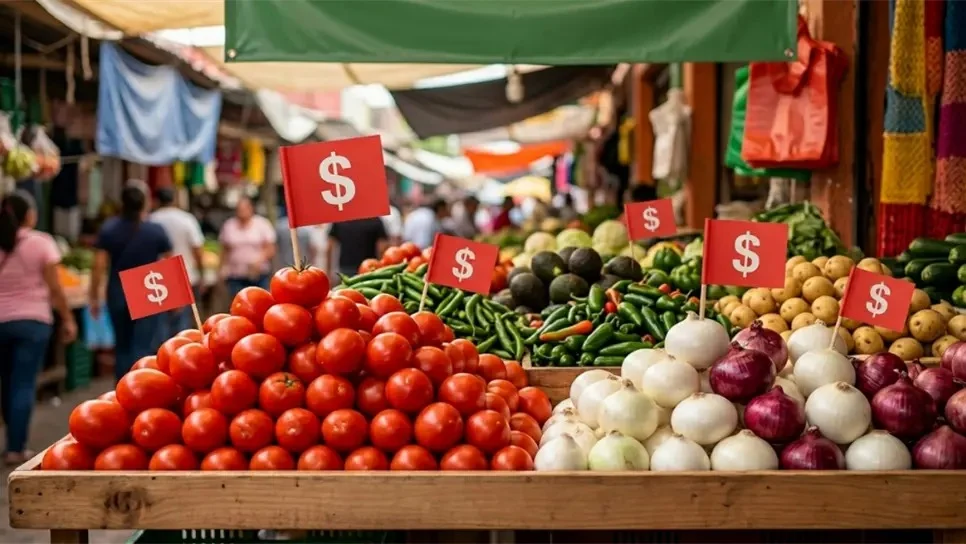
Mexico City — Fruit and vegetable prices in Mexico rose 13.69% in the first five months of 2026, with some items more than doubling in cost, according to data from the National Institute of Statistics and Geography (INEGI).
Overall national inflation from January to May stood at 1.74%, meaning produce prices increased nearly eight times faster. Analysts warn that the El Niño weather phenomenon could push prices even higher in the coming months.
Tomatoes saw the steepest increase, with prices rising 106.06% through May. In some supermarkets, the cost reached nearly 100 pesos per kilogram. While prices have since moderated, they remain above the typical range of 10 to 20 pesos per kilogram. In Mexico City markets, tomatoes now sell for 15 to 35 pesos per kilogram depending on type and quality, while supermarkets still charge between 25 and 50 pesos.
The price spike stems from reduced supply, as the United States imported more Mexican tomatoes than usual after frost damaged Florida’s crop. At the same time, pests affected Mexican harvests. The federal government intervened by holding talks with producers and intermediaries to curb the increases.
Potatoes and other tubers posted the second-largest gain, rising 79% year-to-date. According to Tío Central, a wholesale market data platform, lower supply drove prices to historic highs.
Other produce with significant price increases include poblano chiles (72.08%), lemons (25.69%), bananas (11.64%), carrots (11.51%), apples (10.64%), chayote (8.32%), cucumbers (4.75%), and oranges (4.19%).
Paulina Anciola, an analyst at Banamex, said El Niño could add 0.5 percentage points to overall inflation in 2026. The phenomenon, which involves warming of Pacific Ocean surface temperatures, typically disrupts rainfall and can cause both floods and droughts, affecting crop yields.
“The main impact of El Niño on the Mexican economy would come through higher agricultural prices,” Anciola said. “This will be concentrated in the fruit and vegetable subindex, with a slightly delayed transmission to the livestock subindex as summer forage and water shortages raise production costs.”
The World Meteorological Organization expects El Niño conditions to develop around May to July of this year, with sea surface temperatures already rising rapidly.
Anciola warned that products such as tomatoes, potatoes, poblano chiles, and lemons could continue to rise in price during the second half of the year.
More Economy
- TUCSA Cuts Playa del Carmen Public Transit Fleet to 56 Buses
- Holbox Hotels Project 80% Holiday Occupancy After Island’s First Michelin Key
- Mexico Seeks Tariff Cuts on Steel and Autos in US Trade Talks
- Quintana Roo Expands State Scholarships by 21%, Reaching 15,682 Students
- UT-Chetumal Prepares Aeronautics Degree to Meet Labor Demand