Cancún, Quintana Roo — In the heart of the Maya zone of Quintana Roo, where water flows silently beneath highly permeable karst soil, the conservation of ecosystems depends directly on those who inhabit the territory.
To strengthen community water governance in the Maya Ka’an ecotourism destination, the organization Amigos de Sian Ka’an has launched a series of initiatives aimed at giving local populations scientific and organizational tools to protect their most vital resource.
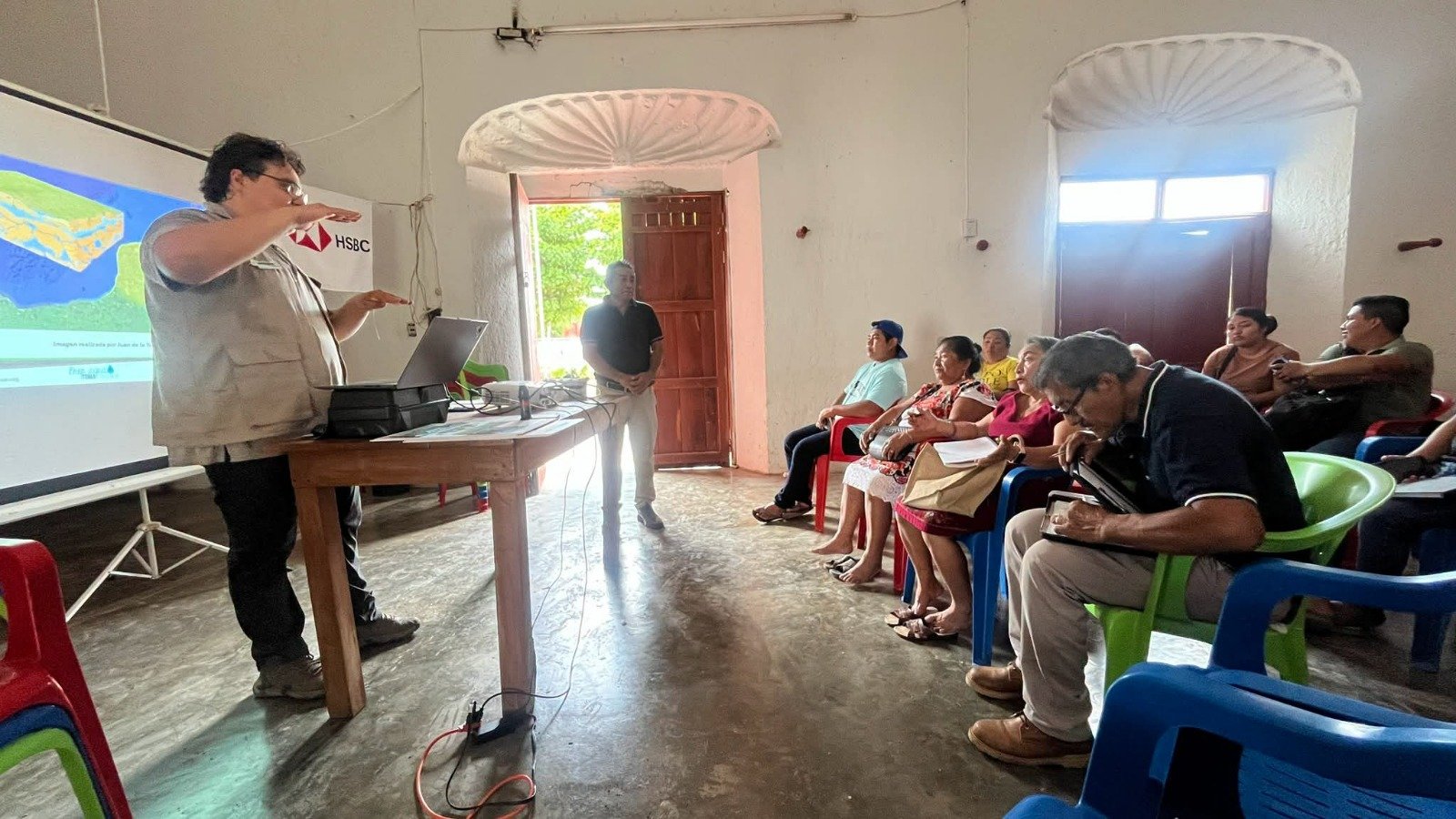
Recently, the organization facilitated a training meeting for members of two community tourism enterprises: U Belilek Kaxtik Kuxtal and Tihosuco Histórico.
During the session, participants took part in the educational program Eres Agua ¡Toma Conciencia! (You Are Water, Become Aware!), designed to deepen understanding of the regional hydrological cycle and the risks facing the water table.
The theoretical session was accompanied by practical training in community water quality monitoring, allowing tourism service providers themselves to acquire the technical skills needed to assess the health of the water bodies they safeguard daily.
This effort to build scientific ownership is complemented by social organization in the territory. The Amigos de Sian Ka’an team visited the community of Tabasco to form a water committee.
This new local organization will be responsible for leading concrete actions for the care, management and sustainable use of water resources at the community level, laying the groundwork for active, organized defense of the regional aquifer.
The vulnerability of the water system in the Yucatan Peninsula demands solutions that go beyond external diagnoses. By integrating technical knowledge with social organization, the communities of Maya Ka’an are consolidating a participatory management model in which knowing the state of the water becomes the indispensable first step to guaranteeing its long-term conservation.
More Environment
- Quintana Roo Looks to Turn Sargassum Into Cardboard and Paper
- Sargassum Covers 96.4% of Quintana Roo Beaches, Only Five Remain Clean
- 60 Cenotes in Yucatan Peninsula to Be Monitored for Contamination
- Manatee Sanctuary in Chetumal: Where to See Manatees in Quintana Roo
- Quintana Roo Leads Mexico in Climate Adaptation, Says GIZ
More Zona Maya
- Dzibanché and Calakmul Maya Treasures Cross Ocean for Denmark Exhibition
- Young Developers Launch Lyra App to Connect Passengers With Mototaxis in José María Morelos
- Maya Traditional Cooks Showcase Flavors and Knowledge at First Quintana Roo Gathering
- Playa del Carmen to Promote Community Tourism at Travel Fairs
- Beekeepers in Mexico’s Maya Zone Report Damage From Badgers, Beetles and Ants