Cancún, Quintana Roo — Sargassum has invaded nearly all of Quintana Roo’s monitored beaches, with 96.4% showing presence of the algae, according to the latest Sargassum Traffic Light map. Only five of the 140 beaches surveyed are completely free of the seaweed, while 7.1% report abundant or excessive levels, mainly in the southern part of the state.
The map, produced by the Secretariat of Ecology and Environment (SEMA) and the Sargassum Monitoring Network with technical input from hydrobiologist Esteban Jesús Amaro Mauricio, found that 116 beaches have low levels, nine moderate, seven abundant, and three excessive. The worst-affected beaches are concentrated in the south.
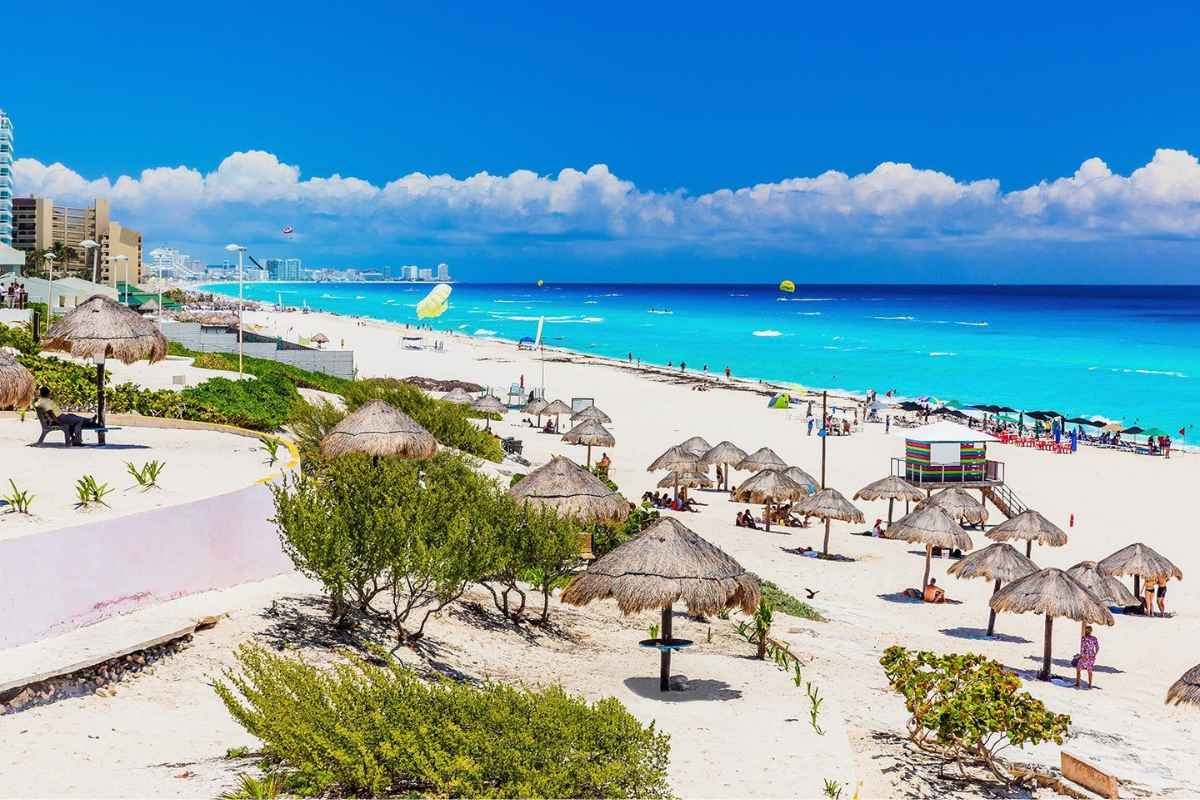
Meanwhile, locals and national tourists enjoyed optimal conditions at some beaches such as Delfines, where the sand is free of sargassum, waves are calm, and visitor numbers are higher than in previous days.
SEMA also warned that some beaches are losing up to 14 meters of sand per year. In the Dreams Sands area of the hotel zone, studies show losses of up to 5.86 meters annually.
A federally authorized project aims to restore 33.5 kilometers of coastline, including 12.85 kilometers in Cancún alone, but no start date has been set. The Beach Recovery Committee still needs to be convened to define funding. In the meantime, Playa Coral continues to lose sand.
Playa Coral received excessive sargassum in September, October, and early November. To clean the algae, sand is removed along with it. Waves carry away more sand, exposing roots and causing palm trees to fall. Without palms or dunes, the next swell drags even more sand from Playa Coral, as happened in those months, explained SEMA head Óscar Rébora Aguilera.
For municipal public services workers Baltazar and Israel, who were working at Playa Coral on Saturday, the problem is that the beach surface is shrinking. The surf now reaches the third row of coconut palms, whose roots are exposed and some of which are already in the sea.
“Beachgoers don’t come to swim, just to enjoy the area, because there’s almost no beach left,” they said.
More Environment
- Quintana Roo Looks to Turn Sargassum Into Cardboard and Paper
- Maya Ka’an Communities Strengthen Monitoring and Governance of Their Aquifers
- 60 Cenotes in Yucatan Peninsula to Be Monitored for Contamination
- Manatee Sanctuary in Chetumal: Where to See Manatees in Quintana Roo
- Quintana Roo Leads Mexico in Climate Adaptation, Says GIZ
More Quintana Roo
- Quintana Roo Has Arrested 11 Former Mayors Since the 1990s
- Mexico’s Treasury Ends Fuel Tax Break for Magna and Premium Gasoline, Keeps Partial Diesel Subsidy
- Quintana Roo Governor Says Prosecutor’s Office Must Explain Arrest of Former Playa del Carmen Mayor
- Caribbean Culture Festival 2026 Opens in Bacalar and Chetumal with Books, Dance and Bacilos
- Quintana Roo Projects $450 Million in Clean Energy Investment