Mexico City — President Claudia Sheinbaum said Thursday that the federal government will spend 2 billion pesos to address the sargassum problem in Quintana Roo and roll out a tourism promotion strategy for Cancún, Tulum, Playa del Carmen and the Riviera Maya.
Speaking at her daily morning press conference in the Treasury Room of the National Palace, Sheinbaum responded to concerns from the hotel industry in the Mexican Caribbean over the increase in the Non-Resident Fee (DNR), the lack of tourism promotion and the problems affecting the image of Mexican destinations.
Federal Government Commits 2 Billion Pesos to Sargassum Response
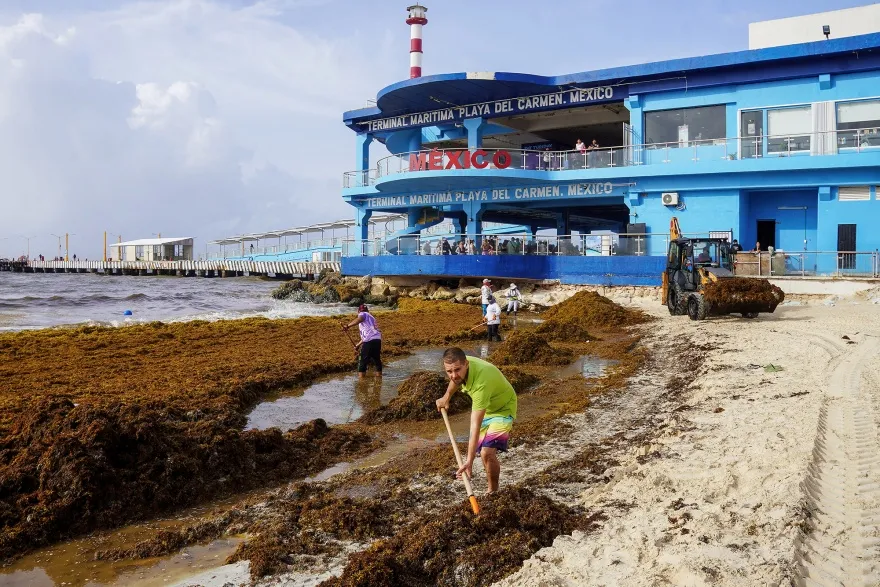
Sheinbaum acknowledged that the arrival of sargassum has damaged beaches in Quintana Roo during 2026, though she noted the phenomenon has also hit other parts of the Caribbean and areas such as Miami.
She said her administration is maintaining a plan to reduce the presence of the macroalgae along the coast, improve beach cleanup efforts and promote its reuse. The strategy includes a federal investment of 2 billion pesos to reinforce the response at the state’s main tourist destinations.
Promotion Push for Cancún, Tulum and the Riviera Maya
The president said a permanent strategy is being developed to strengthen the flow of visitors to the Mexican Caribbean. Tourism Secretary Josefina Rodríguez Zamora has been tasked with leading promotion efforts in Tulum, while Sebastián Ramírez is responsible for Cancún, Playa del Carmen and the Riviera Maya.
Sheinbaum Defends Higher Non-Resident Fee
On the increase in the Non-Resident Fee, Sheinbaum said the decision was taken after carrying out studies and holding talks with representatives of the hotel industry. She said the funds are intended to strengthen the National Migration Institute and rejected the suggestion that the adjustment was made without considering its potential effects on tourism.
She also highlighted rising ridership on the Maya Train and said Mexico will remain an attractive destination for international travelers. Asked whether foreign tourists would continue to choose the country, she answered yes and pointed to Mexico’s beaches and cultural wealth.
More Government
- SCJN Orders Quintana Roo to Legislate Disability Representation
- Playa del Carmen to Review Legal Status of Chen Zubul Property
- Cancún’s Huayacán and 135 Avenue Roadworks Reach 65% Completion
- Playa del Carmen Hosts Second National Firefighters Congress With 750-Plus Participants
- Cozumel Freezes New Street Vendor Permits as Review Committee Stalls
More Quintana Roo
- Cancun Tourism Slumps 7% as Industry Leaders Urge Marketing Overhaul
- Quintana Roo Braces for Four Days of Heavy Rain and Flooding
- Former Gubernatorial Candidate Laura Fernández Piña Loses Appeal Against 20-Year Public Office Ban
- Quintana Roo Prison System Scores Drop Sharply Over Overcrowding and Neglect
- Three Men Sentenced in Quintana Roo for Sexual Abuse of Minors, One Receives 120 Years