
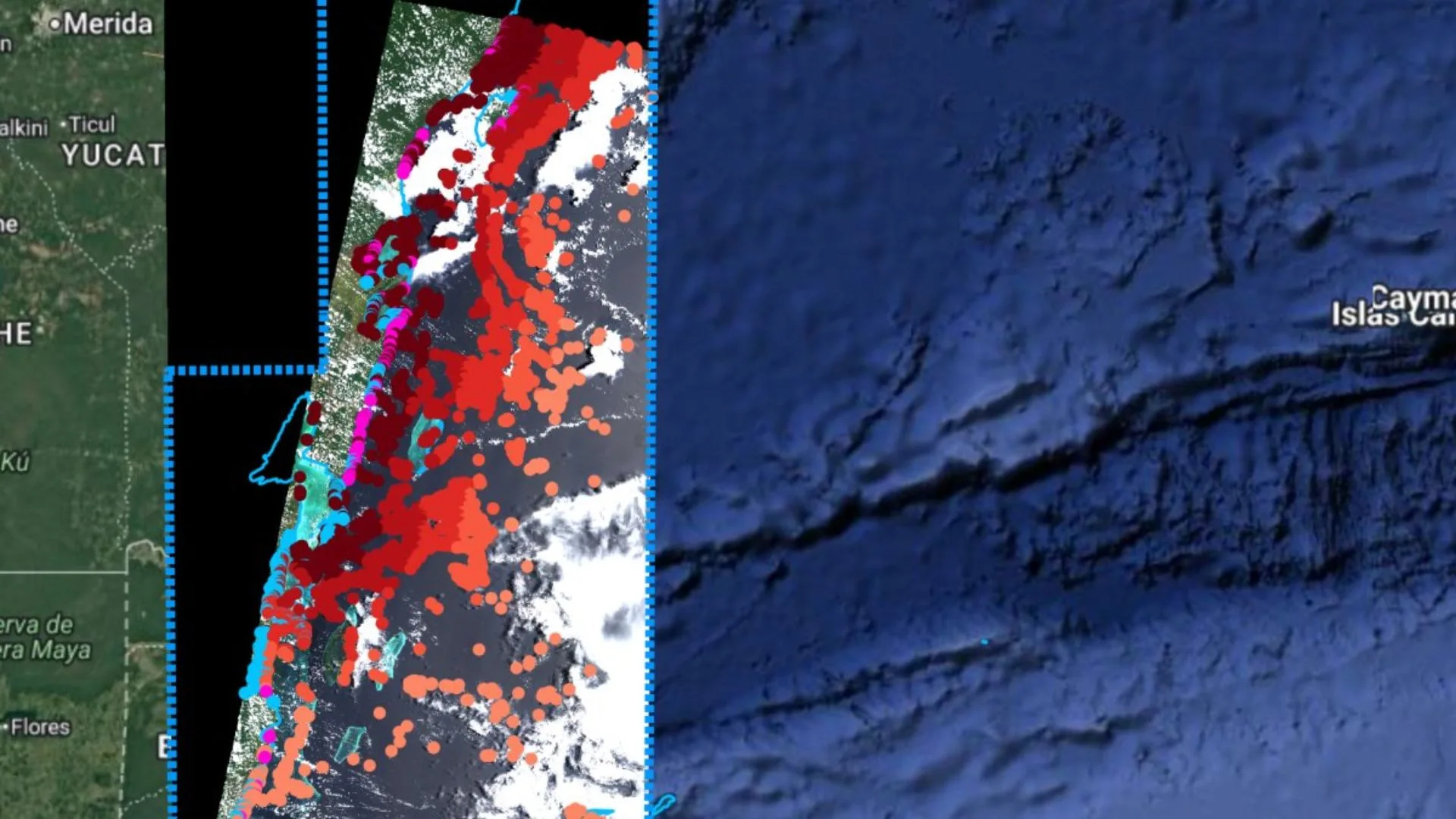
Cancun, Quintana Roo — Record amounts of sargassum are piling up on beaches across Mexico’s Caribbean coast this year, with officials expecting roughly 119,000 tons of the brown seaweed to wash ashore in Quintana Roo during 2026 — surpassing the previous record of 96,000 tons set in 2025.
Data from the University of South Florida’s Optical Oceanography Laboratory shows June brought record sargassum levels to the Caribbean, while the Great Atlantic Sargassum Belt reached volumes near its historical maximum. The seasonal bloom typically peaks between April and October, with the heaviest arrivals in June, July, and August.
Hardest-Hit Beaches
Tulum has emerged as one of the most affected areas. Its exposure to open ocean currents means it receives large mats of sargassum directly from the Atlantic. During peak months, significant accumulations have been reported along the hotel zone and near the archaeological site, forming mounds of algae on the sand and releasing the characteristic odor of decay.
Akumal, farther north on the Riviera Maya, has also seen heavy arrivals, particularly around Akumal Bay, Media Luna, and nearby coves. Playa del Carmen has faced periodic surges, though its status as a major tourist destination means cleaning crews are deployed continuously.
Puerto Morelos, as well as southern destinations such as Mahahual, Xcalak, Punta Allen, and other parts of the Costa Maya, have reported high levels of accumulation. The Quintana Roo Sargassum Monitoring Network recorded dozens of beaches with excessive sargassum in July 2026, affecting both the northern and southern coasts of the state.
Where the Seaweed Isn’t as Bad
Some beaches are less affected due to their geography. Playa Norte on Isla Mujeres, the western side of Cozumel, and parts of Holbox generally receive less sargassum because of natural protection from currents and coastal orientation. Some hotels and private developments also deploy anti-sargassum barriers and conduct daily cleanups to keep their shorelines clear.
Experts note that sargassum conditions can change rapidly with winds and ocean currents. A beach with heavy accumulation one day can be clear the next.
Tracking Sargassum in Real Time
For up-to-date conditions, the UNAM sargassum viewer and monitoring systems from the University of South Florida and the Quintana Roo Sargassum Monitoring Network provide live maps and reports. These tools help travelers and residents plan ahead, as even a single day can bring major changes to beach conditions.
More Environment
- Mexican Army Nears Completion of 16-Kilometer Jungle Road Over Tulum’s Sac Actún Cave System
- Akumal Halts Turtle Swim Tours Through September
- Mexico Assigns $110 Million Navy Budget to Fight Sargassum in Quintana Roo
- Mérida Opens First Green Corridor to Fight Climate Change
- El Niño Keeps Atlantic Hurricane-Free, Setting Record for Latest First Storm in Decades
More Quintana Roo
- Quintana Roo Civil Protection Warns Against Fireworks Ahead of Independence Day
- Quintana Roo to Pilot Child Protection Protocol for Tourism Sector in October
- Sheinbaum Announces 187 Primary Care Clinics and Major Projects in Quintana Roo
- Quintana Roo Records 29,413 Sea Turtle Nests at Season’s Midpoint
- Quintana Roo Reports 1,200 Screwworm Cases as Officials Await Sterile Fly Release