
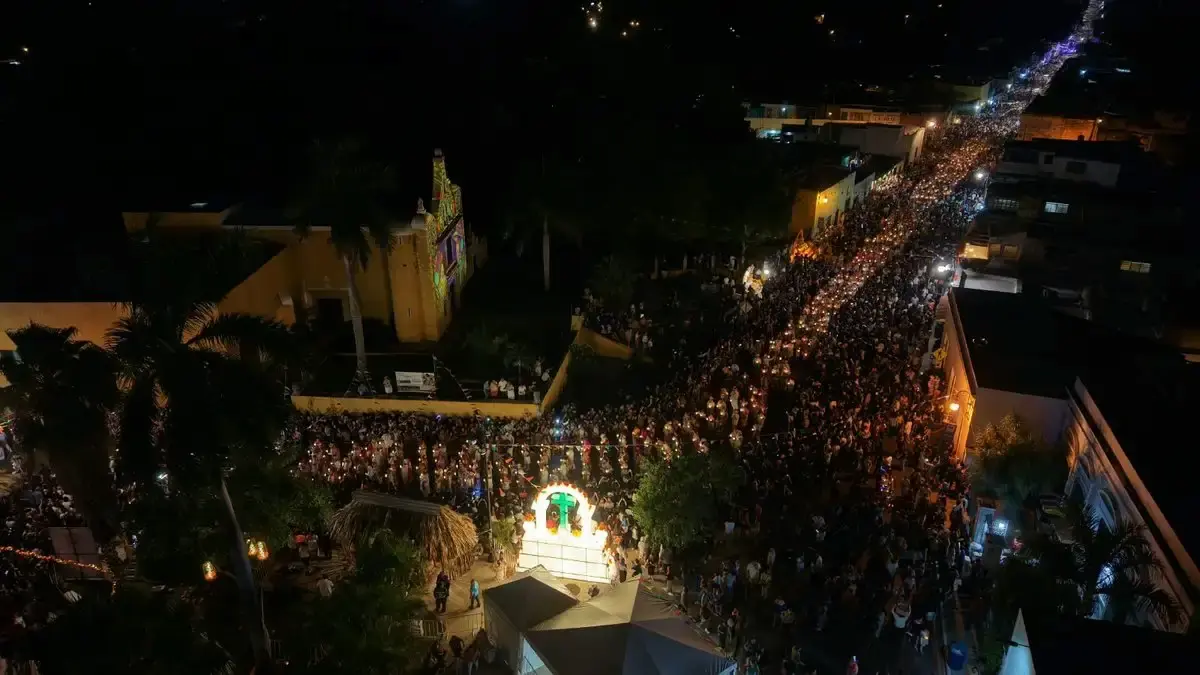
Mérida — The traditional Paseo de las Ánimas, organized by the Mérida City Council, drew approximately 105,000 people to various events in 2026. Under the motto “Memories of the Heart,” it invited residents of Mérida and visitors to share a tradition that has transcended generations of Mayan roots: Janal Pixán, translated as food of the dead.
Around 8 p.m. on Friday, the gates of the General Cemetery opened, and nearly 1,500 people dressed as spirits of the dead began a 2.1-kilometer procession to San Juan Park in downtown Mérida. Children, teenagers, and adults brought the procession to life, their faces painted like skulls, candles in hand, and traditional clothing filling the streets of La Ermita de Santa Isabel, San Sebastián, and San Juan—emblematic neighborhoods of the city—with color and symbolism.
Along the route, 260 family, neighborhood, and institutional altars welcomed the souls with offerings prepared with devotion. Candles, flowers, gourds of water, regional fruits, chocolate, and the ever-present pib—a type of tamale with meat—were arranged on the tables, with the aroma of beans and freshly toasted banana leaves filling the air. The Hermitage of Santa Isabel welcomed the souls with its emblematic kiosk, adorned with flowers and candles, which became one of the most representative settings of the night. Amid prayers in Maya and Spanish, traditional music, and the measured pace of the processions, the solemnity of the ceremony met the joy of a city that celebrates life through the memory of its deceased.
Throughout the day, four stages offered cultural and artistic activities as part of a program of 17 events for all ages. In addition, three spectacular video mapping projections, from 6:00 p.m. to 11:00 p.m., illuminated the facades of La Ermita, San Sebastián, and the San Juan Arch, transforming these emblematic spaces into stages for art and tradition.
In the San Sebastián neighborhood, the celebration took on a communal and festive character. The park became a hub for cultural and commercial activity, featuring performances by the Pixán Folkloric Group, the Ballet of the Yucatán Regulatory Council, a drag show, the ancient Mayan ball game Pok Ta Pok, a monumental altar from the Private University of the Peninsula, and regional humor from Dzereco and Nohoch. It showcased the diverse expressions that coexist in Mérida and enrich its identity.
The tradition was also alive to the rhythm of the jarana, as 69th Street was filled with music and footwork during the Mega Vaquería de las Ánimas. More than 300 jarana dancers of all ages, from 15 Learning Centers, participated in this celebration, accompanied by the Temaxeña Jarana Orchestra and the Jarana Ballet. To the rhythm of Yucatecan music, children, teenagers, and adults demonstrated that the cultural legacy remains alive when it is shared and passed down from generation to generation.
“There are memories that never fade, aromas that bring us back home, and traditions that always find a new generation willing to preserve them. On this night of ‘Heartfelt Memories,’ the souls of the departed walked the streets of Mérida, but their destiny, as every year, was in the place where they never cease to live: in the memory and hearts of their families,” said Mérida Mayor Cecilia Patrón Laviada, one of the thousands of Catrinas who walked the route.
More Lifestyle
- Cancun Cemetery Backlog: 80% of Vaults Abandoned
- Cancún’s New MOBI Route to Playa Delfines Will Be Free Nov. 2–9
- Cancún Launches Free BiciAprende Cycling Course for Children at Paseo Cancunense
- At Least Nine Suspected Suicides of Minors Reported in Cancún in 2026
- Playa del Carmen Councilwoman Proposes Funeral Aid for Low-Income Families
