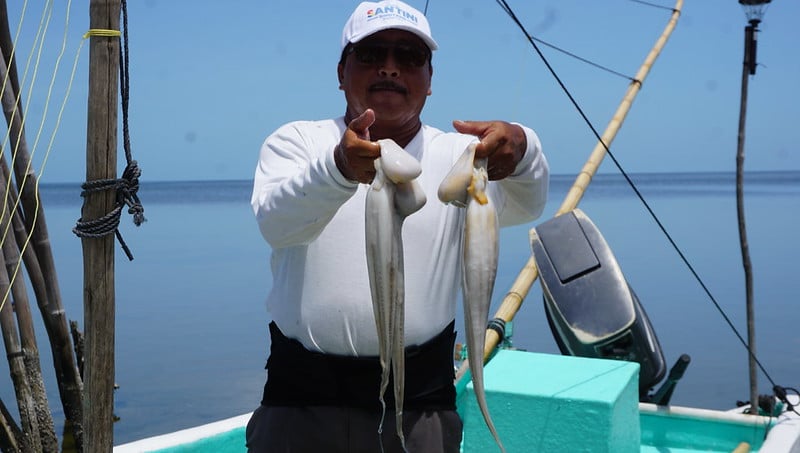
Cozumel, Quintana Roo — Fishermen in Quintana Roo have less than a month left in the regular octopus season. Harvesting began Aug. 1 and is scheduled to end Dec. 15, when a months-long closure takes effect to protect the animals during reproduction and the development of their young.
The season covers two species: red or Maya octopus (Octopus maya) and the larger pulpo patón. The latter is sometimes identified in older reports as Octopus vulgaris, but Mexico’s current fisheries classification uses Octopus americanus.
Quintana Roo does not have a state catch ceiling under the federal quota announced this week. That distinction has attracted attention because the same Nov. 17 agreement sets a 30,000-ton maximum for red octopus caught in Campeche and Yucatán. The limit applies to Octopus maya in those two states; it is not a 30,000-ton quota for both octopus species across the entire peninsula.
No Quota Does Not Mean Open-Ended Fishing
Fishers in Quintana Roo must still follow the season, hold the required commercial fishing authorization and comply with the rules governing how and what they catch. The Mexican fisheries research institute’s overview identifies permits, the seasonal closure and other management measures as parts of the fishery’s regulation.
The difference is scale. Federal officials say red octopus accounts for roughly three-quarters of the Gulf and Caribbean region’s octopus catch, while most production comes from Yucatán and Campeche. The latest annual Conapesca figure cited for Quintana Roo is a little over 619 tons. That is a reference for the state’s recent production, not a count of what its boats have caught so far in 2026.
The federal government says its 30,000-ton ceiling for Campeche and Yucatán follows a technical recommendation from the Mexican Institute of Research in Sustainable Fisheries and Aquaculture. Conapesca is to notify producers as catches approach the limit, with the Navy also involved in enforcement.
What Changes on Dec. 16?
The regular closed season runs from Dec. 16 through July 31 in the Gulf of Mexico and Caribbean fishing zone. The federal fishing authority says the pause is intended to protect reproduction and young octopuses, helping sustain future catches.
For fishing crews, the date marks the end of a source of seasonal income and a shift to other permitted work. For restaurants and seafood buyers, it does not mean octopus must vanish from menus on Dec. 16: product caught legally during the season may still be available afterward. It does make the origin of seafood more important. A freshly supplied local catch during the closure should prompt questions about when and where it was taken.
Octopus is a valuable fishery well beyond Quintana Roo. The 2026 federal agreement says it supports more than 16,000 direct and nearly 30,000 indirect jobs across the Yucatán Peninsula. The seasonal pause and the two-state quota are different tools serving the same purpose: allowing fishing communities to earn a living without exhausting the resource they will need next year.
Should You Eat Octopus During the Off-Season?
You can still order octopus after Dec. 15. The closure restricts catching it in the affected waters; it does not ban restaurants from serving octopus legally caught earlier, frozen for later sale or sourced from elsewhere.
The useful question is where it came from. If a menu advertises “fresh local octopus” during the closure, ask when and where it was caught. A restaurant should be able to explain its supply without suggesting that Quintana Roo fishers are still harvesting it. Choosing seafood with a clear source supports businesses that respect the federal fishing season and helps protect next year’s catch.
More Environment
- Cold Front 6 and Low-Pressure Channel to Bring Rain and Showers to Quintana Roo on November 19
- Riviera Maya Beaches Recover as Sargassum Season Winds Down
- Heavy Rain Floods Cancún Streets, Disrupts Traffic and School Commutes
- Beekeepers in Mexico’s Maya Zone Report Damage From Badgers, Beetles and Ants
- Bull Sharks Return to the Mexican Caribbean as Officials Urge Respect for Their Space
More Quintana Roo
- Senator Mayuli Martínez Urges Mara Lezama to Scrap Visitax to Boost Quintana Roo Tourism
- Mexican Navy Collects 160,000 Tons of Sargassum in Quintana Roo as Season Continues
- Hoteliers Urge Promotion Investment to Revive Quintana Roo Tourism
- Customs Reform to Raise Logistics Costs in Quintana Roo, Business Leader Warns
- IUCN Declares Mesoamerican Reef Critically Endangered