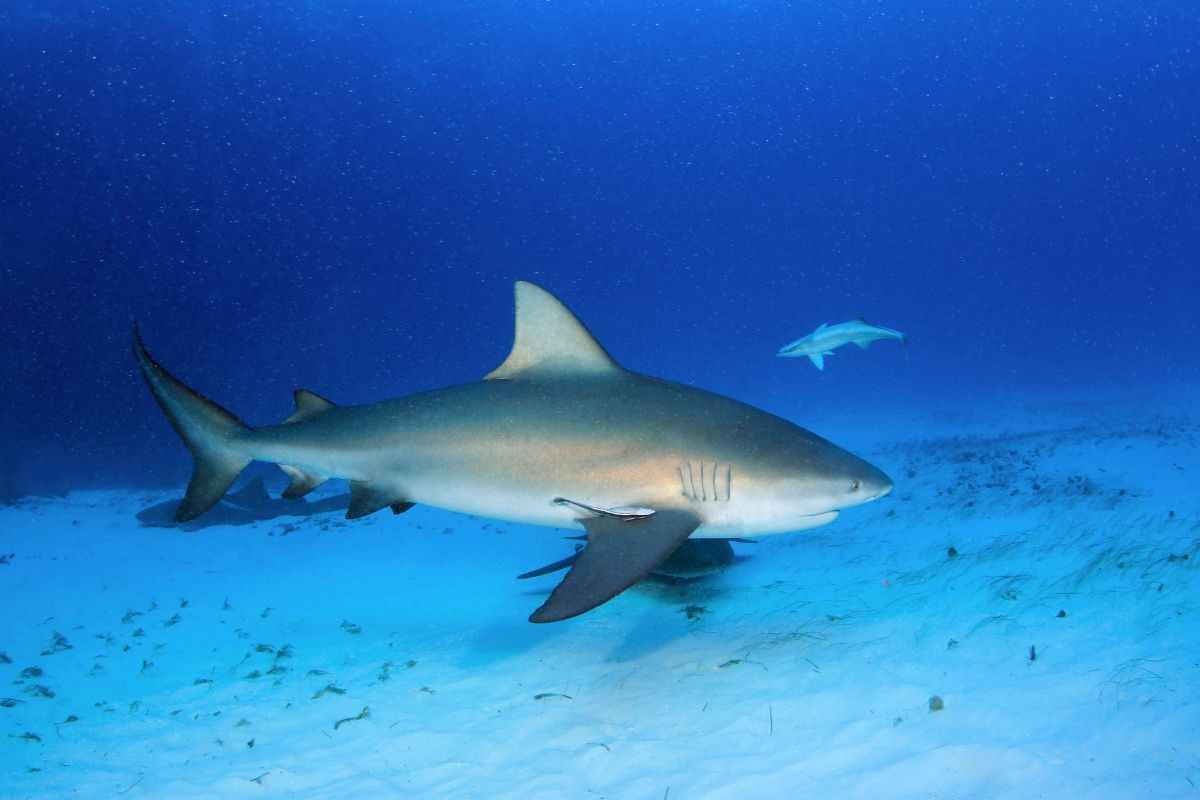
Cancún, Quintana Roo — The waters of the Mexican Caribbean are once again welcoming one of their most imposing visitors: the bull shark (Carcharhinus leucas), a species that forms part of the region’s marine ecosystems and whose presence draws divers, researchers and visitors eager to observe it underwater each year.
As the sighting season begins, the organization Saving Our Sharks released a protocol for residents, tourists and nautical service providers, with recommendations on how to act during an encounter with the animals, how to report their presence and what to know about some of their biological traits.
The guide aims to reduce risks during human-shark interactions and to prevent behavior that could alter the animals’ conduct. Chief among its recommendations is to avoid sudden movements, splashing, kicking or making unnecessary noise, since these actions can trigger unpredictable reactions.
The organization also asks people to respect distance from the animals and to avoid chasing or trying to touch them. If a swimmer encounters one near the shore, it recommends staying calm and leaving the water gradually, without sudden movements. If the encounter happens farther out at sea, the guidance is not to interrupt or disturb the animal.
A situation that requires particular care arises when sharks are in feeding areas. In these cases, people should calmly move away from the school of fish and avoid any attempt to approach, chase or make contact with the animals.
The bull shark is a large species that can move between marine and freshwater environments thanks to its ability to tolerate different salinity levels. That trait makes it one of the most adaptable large predators among sharks. Its presence in the Caribbean is part of the natural processes of marine ecosystems.
Saving Our Sharks also recommends hiring diving services from operators certified by the National Commission of Protected Natural Areas (Conanp) to encourage good practices during observation activities and contribute to the species’ conservation.
The organization noted that understanding these animals’ behavior is essential to avoiding unnecessary interactions. Responsible observation allows people to approach the underwater world without turning human presence into a threat to wildlife.
In the Mexican Caribbean, where nature tourism is an important activity, the bull shark season also poses the challenge of balancing interest in underwater encounters with the protection of a species that plays a role in the marine food chain. The recommendation is clear: observe, keep your distance and let the sharks continue on their way without interference.
More Environment
- Beekeepers in Mexico’s Maya Zone Report Damage From Badgers, Beetles and Ants
- Playa del Carmen Residents Demand End to Open Burning and Illegal Dumps
- Mexican Navy Collects 160,000 Tons of Sargassum in Quintana Roo as Season Continues
- Animal Cruelty Cases Spark Outrage and Calls for Justice in Playa del Carmen
- Tulum Adds Two Specialized Wildfire Brigades Ahead of Dry Season
More Cancun
- Cancún Taxi Union Election Marred by Threats and Criminal Ties, Members Say
- Three Men Killed in Cancún Chase and Shooting at Villas Otoch
- Five Armed Attacks on Cancún Bars Leave Six Dead and 15 Injured in 2026
- Hoteliers Urge Promotion Investment to Revive Quintana Roo Tourism
- Bus and Trailer Collision Shuts Down Highway 307 Near Moon Palace Hotel