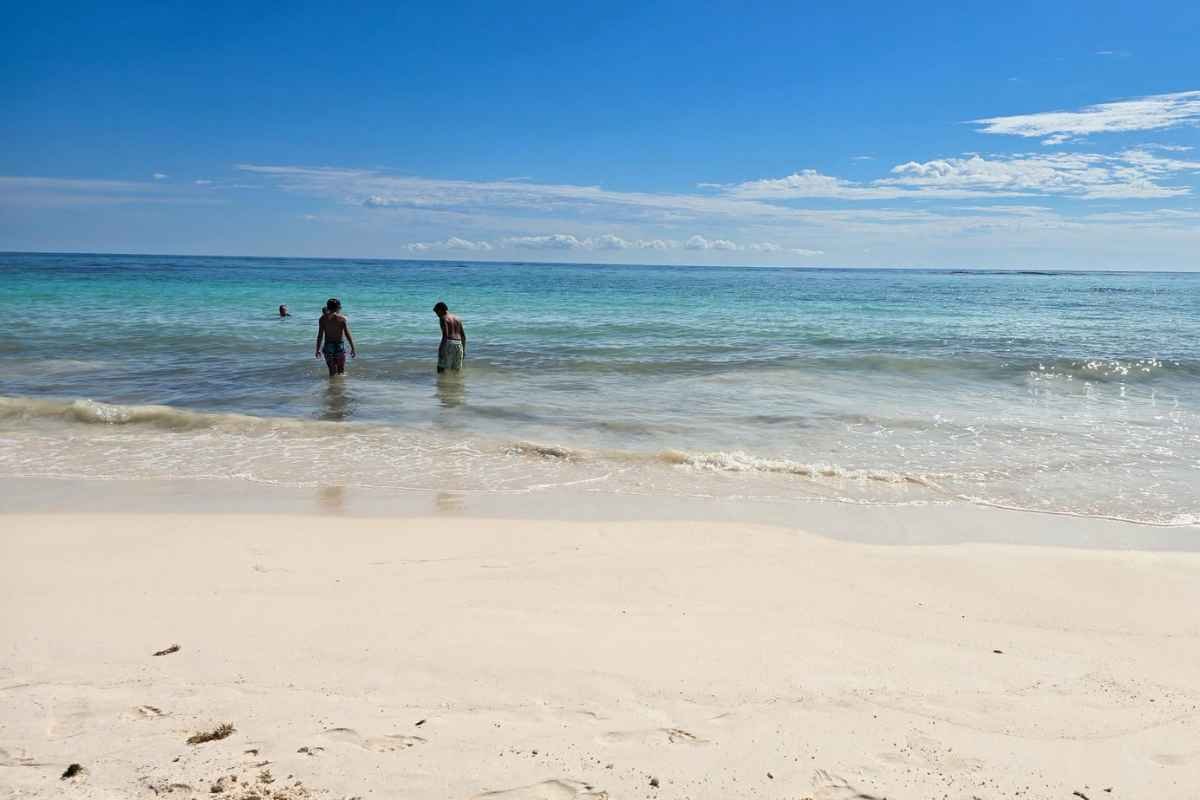
Playa del Carmen, Quintana Roo — Beaches along the Riviera Maya are breathing a sigh of relief as the sargassum season comes to an end. The coastline of Playa del Carmen has seen a marked improvement in sea and sand conditions compared to late October, when the water retained a brownish tint from decomposing seaweed.
During a monitoring tour on Monday, November 16, officials observed that several beaches now have no sargassum and only minimal water discoloration. These include Playacar Fase 2, Playa Caribe, Playa 72, Playa Pelícanos, and Playa Cisne. In these areas, recreational activities, beach club patronage, and swimming are taking place without any accumulation of algae on the sand.
Other stretches, such as Playacar Fase 1, Playa El Recodo, and Playa Mamitas, show a light presence of scattered organic material at the shoreline, but this has not deterred visitors. Loungers, seaside restaurants, and public areas remain busy throughout the day.
On Sunday, during a technical follow-up meeting in Playa del Carmen, Irving Rafael Lili Madrigal, director of the Federal Maritime-Terrestrial Zone (Zofemat) in the municipality, took part in reviewing preparations for the installation of the first experimental sargassum collection and handling center. The project aims to improve the gathering and processing of the seaweed before the next season begins.
Earlier, on October 21, Mayor Estefanía Mercado led the installation of the Sargassum Attention Cabinet alongside representatives from the National Tourism Promotion Fund, the state government, and the Mexican Navy. She noted that the municipality had collected the highest number of tons of sargassum in the state and pledged to maintain coordinated cleaning and containment efforts along the coast.
The Oceanographic Institute of the Gulf and Caribbean Sea (IOGMC), part of the Mexican Navy, reported in its monitoring bulletin 1613/15 for the second week of November a decrease in biomass detected in the Mexican Caribbean, estimated at around 1,402 tons spread in scattered groups offshore.
Based on surface current and wind models analyzed using satellite images from the University of South Florida and the European Copernicus service, the institute said trajectories show a low probability of massive arrivals to the Playa del Carmen coast in the short term.
Meanwhile, the southern coast of Tulum municipality is expected to see sargassum arrivals at various points, with the alert level set at the minimum range for that part of the Quintana Roo coastline.
More Environment
- Cold Front 6 and Low-Pressure Channel to Bring Rain and Showers to Quintana Roo on November 19
- Heavy Rain Floods Cancún Streets, Disrupts Traffic and School Commutes
- Beekeepers in Mexico’s Maya Zone Report Damage From Badgers, Beetles and Ants
- Bull Sharks Return to the Mexican Caribbean as Officials Urge Respect for Their Space
- Playa del Carmen Residents Demand End to Open Burning and Illegal Dumps
More Playa del Carmen
- Playa del Carmen Seeks Federal Recognition for Uxuxubi Indigenous Community
- Animal Cruelty Cases Spark Outrage and Calls for Justice in Playa del Carmen
- Playa del Carmen Official Calls for Cell Cameras After Canadian Tourist’s Extortion Claim
- Advisory Council Begins Work to Protect 53,000 Hectares of Jungle in Playa del Carmen, Tulum and Cozumel
- Navy Removes 2,000 Liters of Fuel from Sunken Ferry in Isla Mujeres