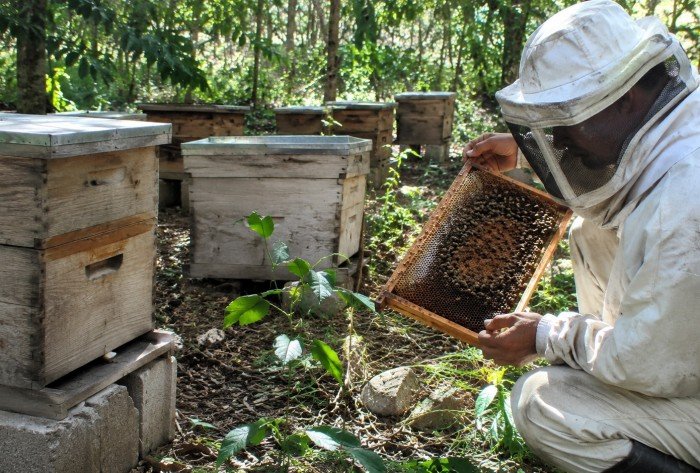
José María Morelos, Quintana Roo — At least 25 beekeepers in the Maya Zone have reported damage to their apiaries from badgers, beetles and ants, species that directly affect hives and put honey production at risk.
Nazario Cohuo, a representative of the Apícola Morelense group, said badgers enter apiaries and destroy hives, while beetles pose another threat by reproducing inside them and feeding on eggs and wax.
“That beetle is eating all the eggs and also leaves its own inside the hive; it even eats the wax and ends up spoiling the honey,” he said.
He said reports of damage have come from areas including Zafarrancho and Esperanza, where several producers have suffered losses in their apiaries.
Cohuo said combating these threats is not simple: while traps can be used for beetles, dealing with badgers is more complicated because producers want to avoid killing them.
“What they say about badgers is that it is quite complicated; you have to find a way to scare them off, because killing them isn’t right either,” he said.
Faced with this situation, producers are looking for alternatives to protect their hives and prevent further losses.
More Environment
- Cold Front 6 and Low-Pressure Channel to Bring Rain and Showers to Quintana Roo on November 19
- Riviera Maya Beaches Recover as Sargassum Season Winds Down
- Heavy Rain Floods Cancún Streets, Disrupts Traffic and School Commutes
- Bull Sharks Return to the Mexican Caribbean as Officials Urge Respect for Their Space
- Playa del Carmen Residents Demand End to Open Burning and Illegal Dumps
More Zona Maya
- Playa del Carmen Seeks Federal Recognition for Uxuxubi Indigenous Community
- Yucatan Peninsula Adult Education Program Teaches in Maya to Break Learning Barriers
- UIMQROO Researcher Proposes Genetic Study of Dengue, Zika and Chikunguña to Aid Vaccine Research
- Maya Women and Youth in Saban Build a Community-Run Tourism Model
- UADY Presents ‘Wáay Chivo,’ a Wordless Graphic Novel Reinterpreting a Yucatecan Legend