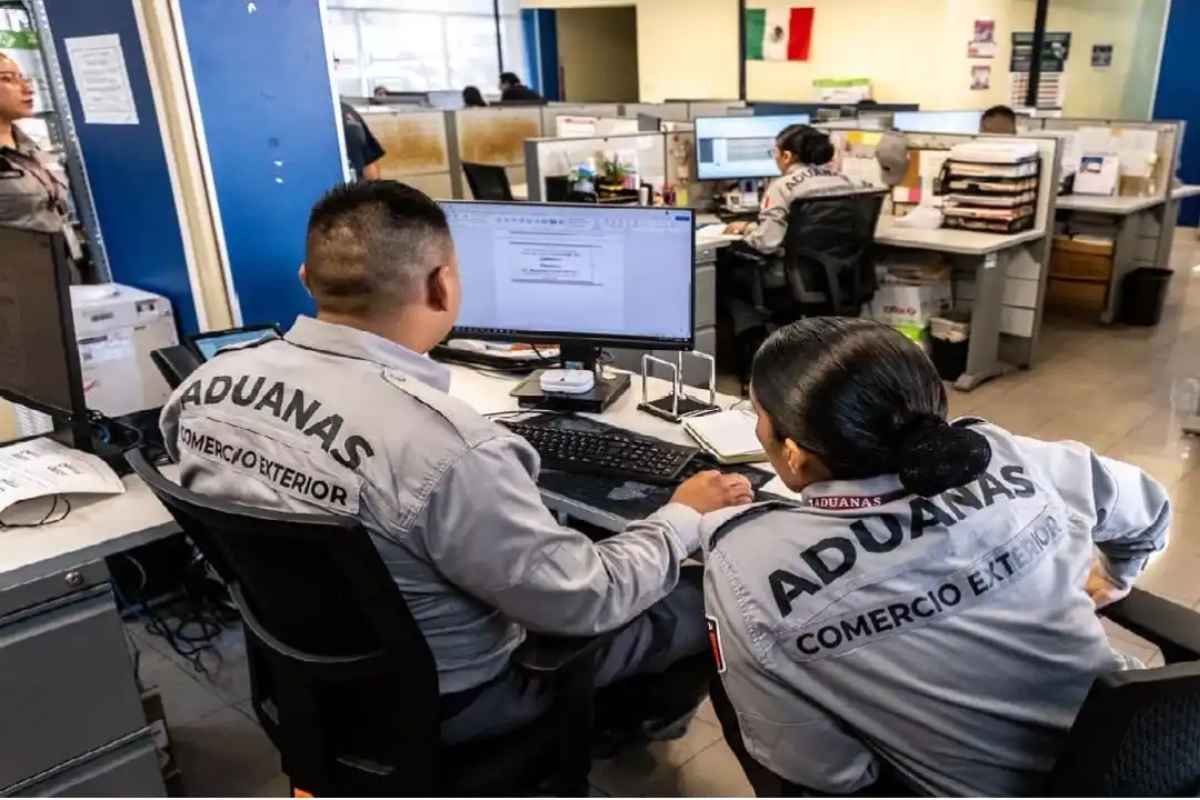
Cancún, Quintana Roo — A reform to Mexico’s Customs Law set to take effect on January 1, 2027, is worrying the logistics sector, as new inspection rules will create bottlenecks that could paralyze imported cargo and raise operating costs, especially in states like Quintana Roo, where many supplies are brought in from elsewhere, said Sergio León Cervantes, CEO of Américas Alliance and vice president of productive chain at COMCE Yucatán.
One of the most critical points, he estimated, is the verification of origin value, because when price differences arise, customs will immobilize shipments and this retention will generate storage and delay charges.
“We are talking about merchandise that, just for having a 20 percent difference, could be immobilized or subject to seizure until the value of the goods is proven, and we are talking about origins that can come from the African continent, the Asian continent, the European continent, and obviously this generates delays, storage, and impacts the value of the merchandise. Thus, the mere suspicion of undervaluation will halt trade,” he warned.
Holding a container, he exemplified, costs between 5,000 and 7,000 pesos per day, a figure that is higher for refrigerated units, so in 10 days the accumulated cost would add up to 50,000 to 70,000 pesos, equivalent to an extra 3,000 or 4,000 dollars.
Such surcharges will raise the final price of products by between 5 and 50 percent, and the situation would become more complicated when comparing brand-name items with generics, where price variations at origin are interpreted by the authority as anomalies.
The businessman considered that the impact will be severe in states dependent on foreign goods, as well as in regions that import 60 percent of their goods; such is the case of Quintana Roo, whose supplies enter through ports such as Manzanillo, Veracruz, and Progreso, in addition to land routes. He also indicated that, given the high dependence on imports, the tightening of controls will affect consumers’ pockets.
“We are a state that brings in products that arrive through the port of Manzanillo, through the port of Veracruz, we move goods overland, and obviously this reform is going to be very complicated, and the impact it has on the pockets of all citizens is strong, especially in an economic contraction like the one we are experiencing. Thus, logistical delays will lead to inflationary pressures,” he lamented.
By 2027, he concluded, companies will face a forced learning curve, with a traceability requirement that will demand meticulous verification of each origin value to prevent goods from being immobilized at customs.
More Economy
- Hoteliers Urge Promotion Investment to Revive Quintana Roo Tourism
- Dredger Fernando de Magallanes Begins Third Phase of Progreso Port Expansion
- Playa del Carmen Reviews Vehicle Rental Contract Signed Before Treasurer Took Office
- Sheinbaum and Carney Agree to Expand Mexico-Canada Cooperation at APEC
- Tulum Residents Launch Petition Demanding Transparency on Municipal Debt
More Quintana Roo
- IUCN Declares Mesoamerican Reef Critically Endangered
- Monitoring Begins at 60 Cenotes Across Yucatan Peninsula to Measure Maya Aquifer Contamination
- Xcaret Founder Miguel Quintana Pali Inducted Into IAAPA Hall of Fame
- Quintana Roo Police Detain 299 People in One Week of Coordinated Operations
- Quintana Roo Swelters Under 40°C Heat as Stalled Cold Front Brings Isolated Showers