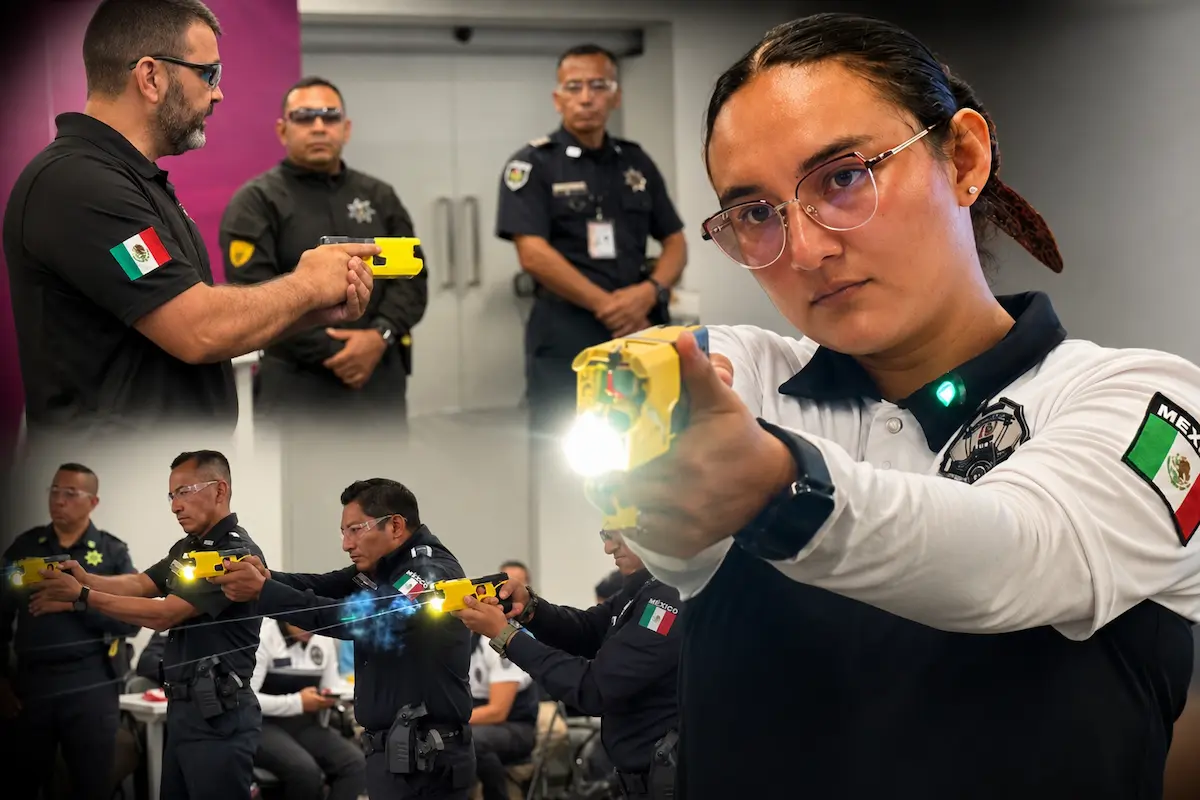
Cancún, Quintana Roo — Police in Quintana Roo have taken the next step in incorporating less-lethal weapons into their arsenal: the first 16 Taser stun guns have been distributed to tourist police officers in six municipalities and can now be used in high-risk interventions when circumstances warrant.
The devices are no longer part of a training program but are operational tools available to certified officers in the field, the state Public Security Department (SSC) announced.
The distribution is as follows:
- Benito Juárez (Cancún): 4 devices
- Playa del Carmen: 4 devices
- Cozumel: 2 devices
- Isla Mujeres: 2 devices
- Puerto Morelos: 2 devices
- Tulum: 2 devices
Public Security Secretary Julio César Gómez Torres said only officers who completed the training and certification process may carry the devices. The Tasers are part of a strategy to give police more options before resorting to firearms.
The deployment comes a week after the specialized “Operation and Deployment of Taser 7 Equipment” workshop concluded at the C5 facilities, with officers from all six tourist municipalities participating. Twelve instructors were certified during the process, receiving specialized technical training to replicate the instruction within their departments and maintain ongoing updates on device use.
According to the SSC, Tasers may be used when a person actively resists, poses a threat with a bladed weapon such as a knife or machete, or when a physical superiority puts officers or others at risk. The goal is to temporarily incapacitate aggressive individuals through a controlled electric shock, reducing the likelihood that an intervention ends with gunfire.
However, the rollout also opens debate about the controls that must accompany this new tool. Although the National Law on the Use of Force recognizes Tasers as less-lethal devices, they are not harmless and cannot be used indiscriminately. Their use must adhere to principles of legality, necessity, proportionality, and accountability.
Human rights and public security experts have repeatedly stressed that such weapons require clear protocols, constant supervision, body cameras, detailed records of each activation, and investigation mechanisms when excessive force complaints arise.
In Quintana Roo, which draws millions of domestic and international tourists annually to destinations including Cancún, Playa del Carmen, Tulum, Cozumel, Isla Mujeres, and Puerto Morelos, authorities hope these tools will resolve high-risk situations without immediately resorting to lethal force.
The real challenge, however, is just beginning. Beyond the device distribution, it will be the officers’ conduct on the streets, adherence to protocols, and transparency in each intervention that determine whether Tasers fulfill their purpose of reducing violence or become a new source of controversy over potential police abuse.
The implementation in Quintana Roo follows a model long used in the United States, where electroshock weapons have sparked intense debate over operational and human rights issues. Benefits observed in the U.S. include a significant reduction in lethal force use and fewer injuries to both officers and citizens during aggressive control situations. But the U.S. experience also warns of risks from excessive or improper use, leading to legal controversies and criticism from civil organizations over the potential for these tools to become torture mechanisms without strict training and constant oversight protocols. The success of this deployment in Quintana Roo will depend entirely on the rigor with which newly certified instructors ensure compliance with risk management principles regarding physical force.
More Law Enforcement
- US Drug Czar: Governors With Cartel Ties Will Be Prosecuted
- Quintana Roo Riders Resume ‘Vest Law’ Talks, No Protests
- Mexico Arrests Family Accused of Using AI Voice Cloning to Extort Officials
- Mexico’s 911 Centers Explore AI to Speed Up Emergency Response
- Quintana Roo Education Official Reported Missing in Cancún, Found Hours Later
More Quintana Roo
- Tren Maya Freight Project Targets 4.7 Million Tons by 2030
- Cancún Business Council Launches Push to Diversify Quintana Roo’s Economy Beyond Tourism
- Mexico Adds COVID-19 Vaccine to Routine Childhood Schedule for Infants and Toddlers
- Power Outage in Chetumal Forces Closure of Quintana Roo Labor Courts
- Cancún Restaurants in the Red as Power Outages Add to Mounting Losses