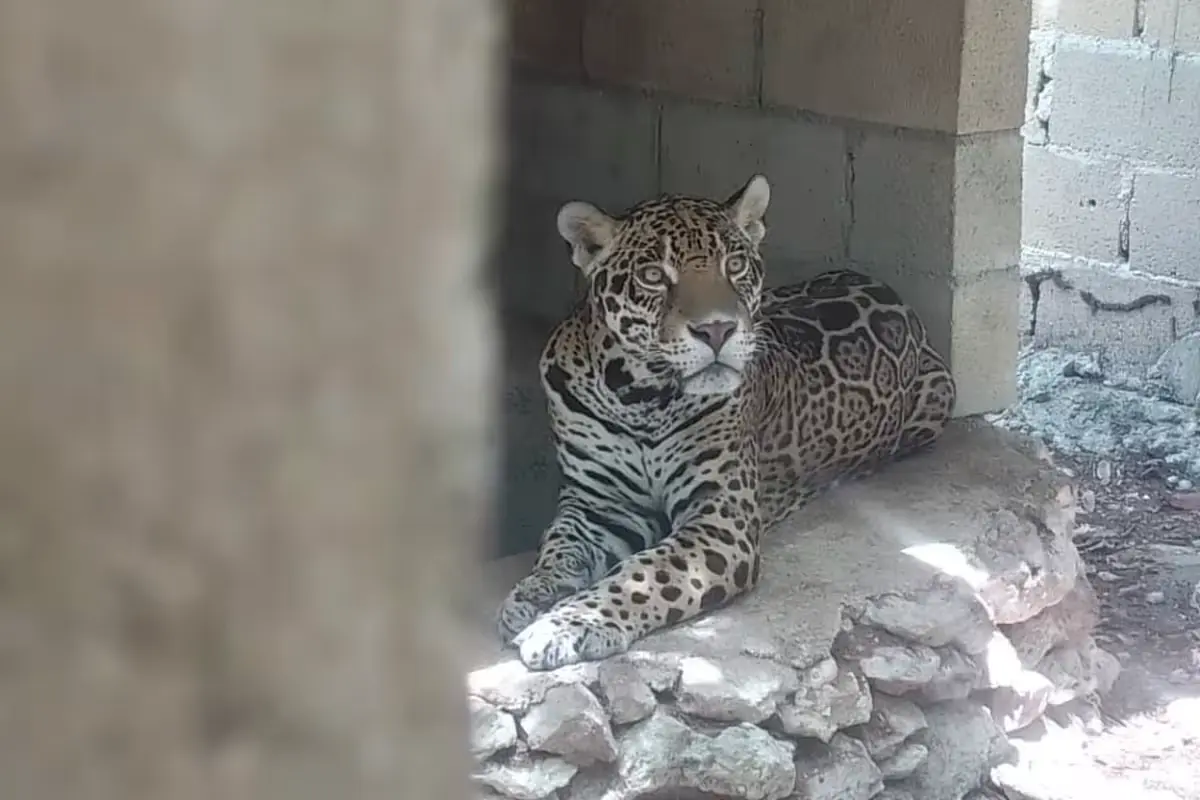
Playa del Carmen, Quintana Roo — Authorities rescued 15 wild animals from a property in Playa del Carmen, where they were found in deplorable conditions, officials said.
During a court-ordered operation to reclaim a 60-hectare estate known as Balam Há, state prosecutors, together with the Federal Environmental Protection Agency (Profepa) and the Quintana Roo Environment Department (SEMA), discovered the animals in makeshift cages about 800 meters from the main building.
The animals included five jaguars, four black jaguars, a puma, two macaws, a howler monkey, a magpie, and a king vulture. They lacked clean water and adequate food and were confined in cramped spaces that endangered their health and well-being.
Residents and animal rights activists in Playa del Carmen expressed relief at the rescue but also concern about the frequency of such cases. “It’s outrageous to see these animals in such small cages without basic conditions. Many are protected species that should be free or in specialized centers,” said a nearby resident who asked not to be named.
Another local animal protection group member said: “We hope authorities not only rescue the animals but thoroughly investigate who is responsible for this mistreatment. This isn’t the first time irregularities have been detected on large properties in the Riviera Maya.”
The Balam Há property, located in the municipality of Solidaridad, is registered to a company whose legal representative is Pedro Miguel Babb Villarreal. Authorities are investigating to determine responsibility for keeping wildlife without permits or proper care.
After the rescue, the animals were transferred to SEMA facilities and wildlife care centers, where they will receive veterinary attention, proper nutrition, and evaluation for possible rehabilitation and relocation.
The operation is part of joint state and federal efforts to combat illegal trafficking and mistreatment of protected species in the Riviera Maya, a region where urban and tourism growth has increased pressure on ecosystems and native wildlife.
Residents called for greater oversight of large private properties. “These animals are not pets or display objects. We must protect our biodiversity,” said Roberto Díaz.
The State Prosecutor’s Office has opened an investigation to determine criminal and administrative responsibilities. Meanwhile, the rescued animals remain under specialized care, awaiting recovery so they can be returned to their natural habitat or placed in authorized sanctuaries.
Environmental authorities urged the public to report any signs of illegal possession or mistreatment of protected species to help safeguard the state’s rich biodiversity.
More Environment
- Screwworm Cases Detected in Two Dogs and a Horse in Tulum
- Playa del Carmen Recognized as International Bull Shark Zone
- Five Zones in Playa del Carmen Lose Urban Jungle to Construction Boom
- Hurricane Isaias Strengthens to Category 3 as Heavy Rain Hits Quintana Roo
- Hurricane Isaías to Bring Rain and Heat to Cancún and Playa del Carmen This Weekend
More Playa del Carmen
- Quintana Roo Riders Resume ‘Vest Law’ Talks, No Protests
- Quintana Roo Plans Two Wastewater Plants and Two Aqueducts for Cancún and Playa del Carmen
- Playa del Carmen Ranks Second in HIV Cases in Quintana Roo, Official Says
- Playa del Carmen to Build Tactical Operations Center to Boost Fifth Avenue Security
- Environmentalists Submit Citizen Initiative to Protect Playa del Carmen’s Chen Zubul Site From Submarine Power Line