
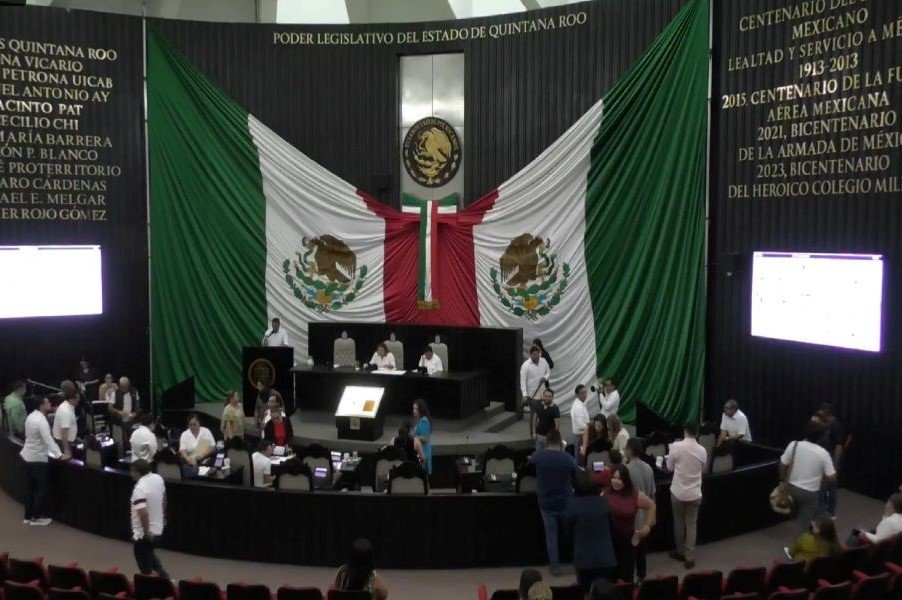
Chetumal, Quintana Roo — The Quintana Roo Congress has approved reforms guaranteeing gender equality in professional language and significantly increasing penalties for environmental contamination. The measures were passed during the regular session of the state’s XVIII Legislature.
The gender language reform ensures women in Quintana Roo will be recognized according to their professions, moving away from generic masculine terms. Lawmakers stated that using masculine-only language has historically made women invisible in various aspects of life.
“Throughout the years, women have been made invisible in various aspects of life, including in grammatical terms where they weren’t named, with the generic masculine used instead,” lawmakers explained. “This has the consequence of devaluing them, since what isn’t named doesn’t exist.”
Under the new rules, professions will have both masculine and feminine forms. The approved definition states: “Person, specialist, teacher or doctor: Professional who has completed studies or acquired training after obtaining a bachelor’s degree.”
Environmental Penalties Increased
Lawmakers also approved modifications to Article 179 of the Quintana Roo Penal Code to toughen penalties for environmental contamination. The maximum sentence will increase to nine years in prison plus 720 days of fines.
Proponents of the measure argued that current penalties are “ridiculous” for corporate entities with substantial financial resources, who treat them as a simple deductible “operating cost” rather than investing in clean technologies.
“This initiative has as its central objective strengthening the state’s criminal response to environmental contamination crimes,” supporters explained. “The proposal reforms Article 179 of the local Penal Code to elevate the maximum sanction, seeking punishment proportional to the gravity of damage caused.”
Additional Legislative Actions
The legislature also addressed several other matters:
- The Board of Government and Political Coordination proposed conducting popular consultations and public hearings for people with disabilities, ensuring they are prior, public, close, regular, informed and transparent according to the constitution.
- Lawmakers reviewed a proposal to reform Article 130 sexies of the Quintana Roo Penal Code, presented by Deputy Jorge Arturo Sanén Cervantes, president of the Constitutional Points Commission. The measure was referred to committees for study and analysis.
- Deputy Filiberto Martínez Méndez presented an initiative to reform and add various provisions to the Law of the Rights of Girls, Boys and Adolescents of Quintana Roo, aimed at protecting minors when consulting social networks or any website. This initiative was also referred to committees.
Session President Silvia Dzul Sánchez called the next legislative session for March 25 at 11:00 a.m.
More Environment
- Playa del Carmen Unveils Recycled-Plastic Lifeguard Tower at Playa 72
- Chankanaab Park Eyed as Site for Cozumel’s First Dolphin Sanctuary
- Tulum Launches Credentialing Program for Parque del Jaguar Tourism Workers
- Cancún to Host National Climate Change Colloquium in October
- Riviera Maya Hotels Offer Free Nights When Sargassum Blocks the Beach
More Quintana Roo
- Quintana Roo Warns Against Unchecked Hotel Growth as It Courts Brazil and Colombia
- Four Years After Decriminalization, Quintana Roo Feminists Say Abortion Access Still Falls Short
- Quintana Roo Congress Approves Single-Nationality Rule for Top Elected Offices
- Mexico’s Senate Approves ‘Anti-Meme’ Law With Five-Year Prison Terms
- Quintana Roo Ranks Third Nationally in Corruption of Minors With 182 Cases
