Cancún, Quintana Roo — Quintana Roo accounts for the overwhelming majority of dengue cases recorded on the Yucatan Peninsula in 2026, with 232 infections accumulated through epidemiological week 34 — roughly eight of every 10 cases counted across Quintana Roo, Yucatán and Campeche.
State health data breaks down the Quintana Roo total into 147 cases of non-severe dengue, 77 cases with warning signs and eight severe cases.
Cases are slightly more common among women, who account for 79 non-severe infections, 42 with warning signs and six severe cases. Men account for 68, 35 and two cases respectively.
The gap with neighboring states is wide. Yucatán has recorded 31 cases — 15 non-severe, 14 with warning signs and two severe — while Campeche has accumulated 27, including 10 non-severe, 16 with warning signs and one severe case. Together, the three states total 290 cases, 80 percent of them in Quintana Roo.
Warning Signs in More Than a Third of State Cases
The clinical classification of Quintana Roo’s cases adds to the concern. Although most infections are non-severe, 85 cases fall into the warning-sign or severe categories, equal to slightly more than one third of the state’s total. That shifts attention beyond the raw case count to the possibility that some patients could develop conditions requiring medical treatment or close monitoring.
On the national stage, Quintana Roo does not rank among the states with the highest caseloads, but it remains a significant player within its region. Mexico has recorded 4,692 cases overall: 2,181 non-severe, 2,338 with warning signs and 173 severe.
Several states report higher figures than Quintana Roo, including Sonora with 1,096 cases, Veracruz with 848, Tabasco with 592 and Sinaloa with 514. Even so, Quintana Roo’s 232 cases far exceed those of Yucatán and Campeche, confirming that the state currently carries the heaviest dengue burden on the peninsula.
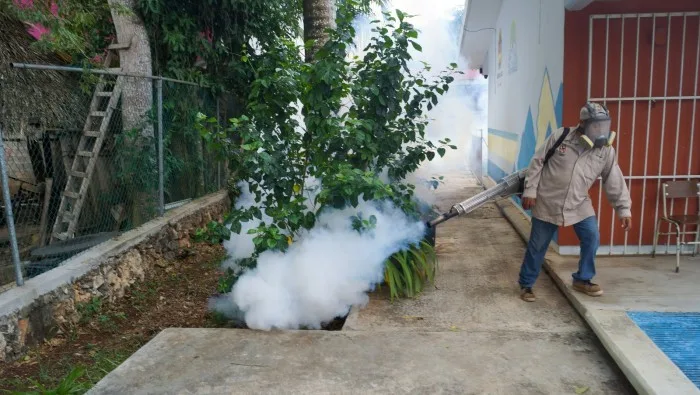
The trend also carries a warning as the region enters the highest-risk season for mosquito-borne diseases. With 232 accumulated cases and eight classified as severe, Quintana Roo will need to maintain patient monitoring and step up efforts to eliminate breeding sites for the mosquito that transmits the virus, particularly in areas where humidity and standing water favor its reproduction.
More Community
- Tulum Delivers Free Medicines to Health Houses in Vulnerable Communities
- Low-Pressure System in Central Atlantic Raises Cyclonic Development Odds to 30%
- Activist Demands Universal Accessibility at Quintana Roo Prosecutor’s Office in Chetumal
- Akumal Halts Turtle Swim Tours Through September
- Leonardo Aguilar to Headline Free Cozumel Concert for Grito de Independencia 2026
More Cancun
- Cancún Pushes Medical Tourism as Sector Grows and Expo Returns in December
- Quintana Roo Adds New Air Routes Ahead of Winter Tourist Season
- Cancún Airport Transporters Blame ASUR for Steep Fees
- Cancún Installs More Than 100 Traffic Signs Across the City
- Profeco to Inspect Businesses Across Mexico During Independence Day Festivities