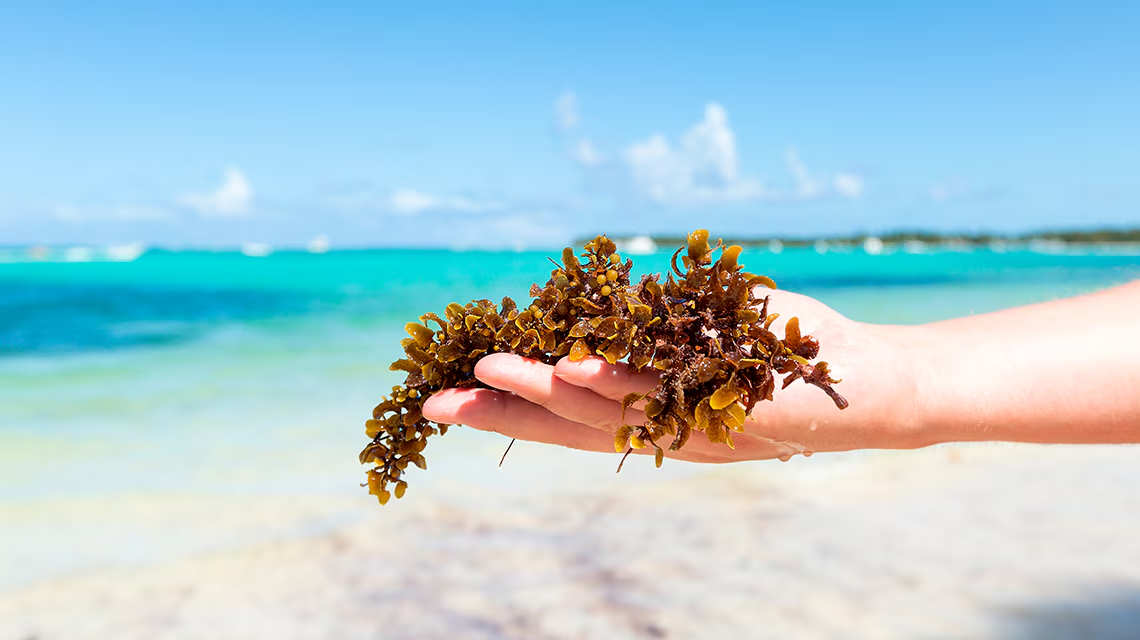
Puerto Morelos, Quintana Roo — The same seaweed that has fouled Caribbean beaches for more than a decade is now at the center of a regional plan to turn sargassum from a tourism liability into an industrial raw material.
Hotel, restaurant and business leaders in the Mexican Caribbean have launched Caribe Circular, a circular-economy initiative designed to create a market for sargassum-based products, including biodegradable plates, cutlery, packaging, cardboard boxes, bioplastics, biofertilizers, bioenergy and construction materials. The program is being promoted as a new model for managing the algae before it reaches the beach, where it decomposes, releases a strong sulfur smell, affects water quality and creates major cleanup costs for coastal destinations.
For Puerto Morelos, the initiative is especially significant. The state government has selected the municipality as the site of a Polo de Desarrollo de Economía Circular para el Bienestar, or PODECIBI, a 38-hectare circular-economy development zone with industrial and commercial land use. The site is intended to bring together private companies, researchers and public-sector partners to process sargassum into marketable products. Quintana Roo’s environmental agency has described the Puerto Morelos polygon as a connection point where the private sector and academia can work on new uses for the algae.
The plan comes as the Caribbean faces another intense sargassum season. State officials said Quintana Roo has reinforced its strategy in both sea and land operations, with manual and mechanical beach cleaning, transport to authorized disposal sites and more offshore containment. As of the state’s latest update, more than 4,500 tons of sargassum had already been collected this year, and 6,600 meters of anti-sargassum barriers had been installed in strategic areas including Mahahual, Puerto Morelos and Playa del Carmen.
Caribe Circular is being operated through The Seas We Love – Plataforma SargaTech and brings together tourism, restaurant, business and federal research partners. Participating groups include the Consejo Hotelero del Caribe Mexicano, AMEXME Cancún, CANIRAC, INVEROTEL, the Asociación de Hoteles de la Riviera Maya and the Instituto Mexicano de Investigación en Pesca y Acuacultura Sustentable, known as IMIPAS.
Ignacio Muñoz, CEO of The Seas We Love, has said the goal is not simply to clean beaches, but to build the market that makes offshore collection financially viable before the sargassum reaches the coast. The first phase includes turning sargassum into biodegradable plates, spoons, cutlery, packaging and cardboard boxes for use in hotels and restaurants. Caribe Circular is also negotiating with an international logistics company to incorporate at least 30% sargassum content into boxes used for online shopping deliveries.
The program’s targets are ambitious. In its 2026 launch phase, Caribe Circular aims to incorporate more than 150 hotels and 600 restaurants, create 250 direct jobs and valorize 150,000 tons of sargassum. By 2028, organizers hope to reach 80% of Quintana Roo hotels and 50% of the state’s restaurants, generating 3,500 jobs and processing up to 2 million tons of sargassum annually.
The product list goes well beyond disposable serviceware. Caribe Circular has identified six main areas of use: bioplastics, biomaterials, bio-agricultural inputs, alginates, bioenergy and biochar. Project organizers say the circular model would allow beachfront hotels to collect, pretreat and sell dried sargassum, then buy back finished products made from that same material. Restaurants and inland hotels could participate by purchasing sargassum-based products at prices comparable to conventional alternatives, creating demand without changing daily operations.
Puerto Morelos was not chosen by accident. The municipality sits in front of the Puerto Morelos Reef National Park, part of the Mesoamerican Reef system. The reef lies close offshore and naturally intercepts some floating sargassum before it reaches the beach, making the area a useful point for collection, monitoring and study.
The state is also working with the federal government on a Centro Integral de Economía Circular, or CISEC, which is in the engineering design stage. According to Quintana Roo’s environmental agency, that project would produce clean energy from sargassum collected offshore and is expected to begin operating in the second half of 2026. A 14-month pilot program in Cancún has already tested the use of sargassum combined with hotel wastewater sludge to produce biogas, a model now expected to inform work at the Puerto Morelos circular-economy site.
For now, the daily beach battle continues. Navy crews, municipal workers and hotel brigades are still cleaning beaches, while the shallow-water vessel Natans has been used offshore to intercept sargassum before it lands. Puerto Morelos is also under pressure to maintain the quality of its public beaches, including Ventana al Mar and Playa Sol, both of which have held Blue Flag certification.
The larger shift is that sargassum is no longer being treated only as waste. Under Mexico’s broader development strategy, circular-economy zones are meant to support public and private projects that recover, reuse or transform materials so they remain in the economy longer. If Caribe Circular and the Puerto Morelos PODECIBI work as planned, the seaweed that has damaged beaches, strained hotel budgets and frustrated visitors could become a new local industry rooted in one of the region’s most persistent environmental problems.
More Business
- Sheinbaum Announces More Gas and Power Grid Upgrades for Quintana Roo
- Sheinbaum Acknowledges Little Progress in Talks With Vulcan Over Calica
- Fitch Downgrades, Then Upgrades Playa del Carmen Credit Rating Over Missed Payment
- Riviera Maya Hotel Occupancy Plunges to 36% in October 2026
- Quintana Roo Hoteliers Say DNR Hike Favors Punta Cana Over Cancún
More Puerto Morelos
- Puerto Morelos to Expand Sargassum Barrier and Restore Six Kilometers of Beach
- Puerto Morelos Launches Biometric CURP Registration Drive
- Volvo EX30 Fire Snarls Traffic at Puerto Morelos Highway Entrance
- Federal Court Voids State Permit for Coastal Condo Project in Quintana Roo
- El 19, 3 Others Arrested in Puerto Morelos Extortion Case