
Playa del Carmen, Quintana Roo — Playa del Carmen has spent decades selling itself as one of the Caribbean’s most recognizable destinations. Yet for all its growth, restaurants, resorts, beach clubs, and international visibility, the city still lacks something many mature destinations take for granted: a strong public museum that tells its own story.
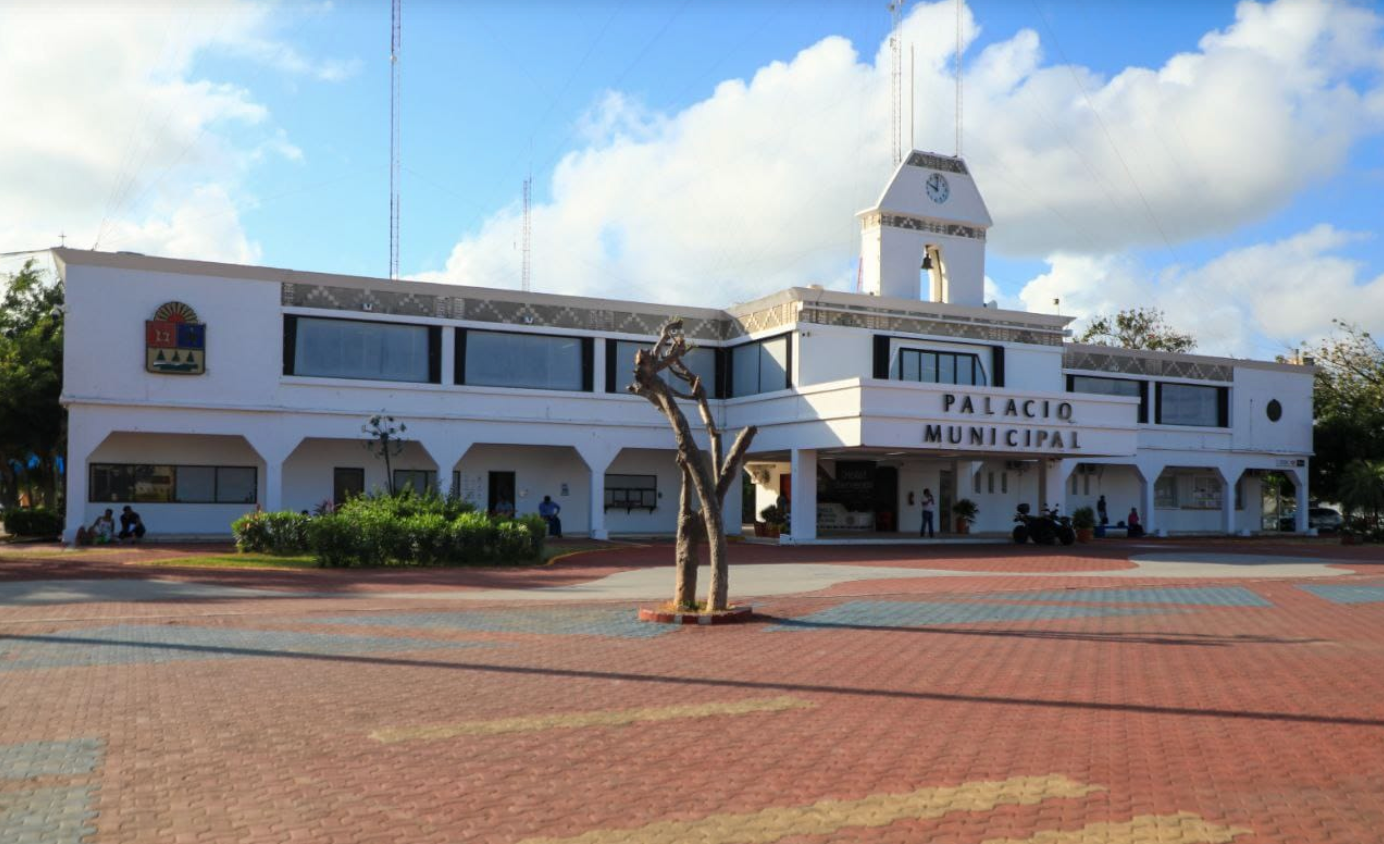
That absence is again drawing attention as local artists and cultural promoters call for renewed support for the proposed Centro Cultural y Museo 28 de Julio, planned for the old municipal palace in downtown Playa del Carmen.
The building, located on Avenida 20 between Calle 8 and Calle 10, already has symbolic value. For years, it was the administrative heart of the municipality. It also sits near Plaza 28 de Julio, a central civic space named for the date Playa del Carmen’s municipality was created. Turning that building into a museum and cultural center would give the city a visible, accessible space for history, art, identity, and public memory.
That has been the hope of cultural leaders such as visual artist and promoter Daniela Jáuregui Servín, who has long argued that Playa del Carmen needs more than a temporary gallery. She and other members of the artistic community have pushed for a museum that reflects the city’s layered identity: Maya roots, founding families, migration, tourism, the rapid growth of the Riviera Maya, and the more than 90 nationalities that now call the area home.
The idea is not new. The old municipal palace was formally approved by the Cabildo in late 2024 to become the Centro Cultural y Museo 28 de Julio, administered by the Municipal Institute of Culture and the Arts (IMCAS) through a long-term agreement. In March 2025, municipal officials called the project a historic step and said it would strengthen Playa del Carmen’s cultural identity and tourism offering. But more than a year later, the project appears to have stalled.
In June 2026, a public information response reported by local media stated that there had been no operational, administrative, technical, or physical progress toward launching the museum. According to that response, the only defined element was the name of the space: Centro Cultural y Museo 28 de Julio. The same report said the institute had not provided details on an executive project, conceptual design, museographic plan, planned rooms, or coordination with state and federal authorities.
Playa del Carmen does have a municipal art gallery in the old palace. The local government has promoted calls for artists, exhibitions, and cultural programming in the space. Officials reported 15 exhibitions during 2025, including one focused on mangroves, and said the gallery remains open to local artists. That is positive. But a gallery is not the same thing as a museum.
A museum requires a curatorial vision, collections policy, historical research, preservation plan, educational programming, permanent and temporary exhibition spaces, trained staff, and long-term funding. It also requires public trust. For artists and cultural leaders, the concern is that the project could be reduced to a small exhibition room instead of becoming the civic institution they have worked toward for years.
Recent events have sharpened that concern. The 1st International Painting Symposium “The Colors of the Caribbean”, which brought artists from Spain, France, China, the United Kingdom, Slovakia, Hungary, Croatia, Turkey, and Mexico, was ultimately hosted in Puerto Morelos, not Playa del Carmen. The event helped launch the first international contemporary art collection for the Puerto Morelos museum, with works created during the symposium intended as a cultural legacy for that community.
A city with Playa del Carmen’s size, tourism profile, creative community, and international population should be able to host and support events of that caliber. When cultural initiatives look elsewhere, the loss is not only artistic. It is economic, educational, and reputational.
Cozumel offers a useful comparison. The Museo de la Isla de Cozumel has become a true cultural anchor for the island. Housed in a historic building that once served as one of Cozumel’s early hotels, the museum reopened after a major renovation in 2020. Today, it offers interactive exhibits on the island’s history, geography, ecosystems, culture, and community resilience, along with temporary exhibition rooms for local and international artists. It also maintains space for Cozumel’s Carnival history and continues to host exhibitions and public programming. That model shows what is possible when a museum is treated as more than a building.
A successful Playa del Carmen museum could do the same. It could preserve oral histories from founding families, document the transformation from fishing village to global destination, highlight Maya heritage, showcase local artists, explain the environmental pressures facing the coast, and give residents and visitors a place to understand the city beyond Fifth Avenue.
It could also help diversify tourism. Not every visitor wants only beach clubs and shopping. Cultural tourism gives people a reason to spend more time in a destination, return during slower seasons, and engage more deeply with the community.
The good news is that Playa del Carmen does not have to start from zero. The building exists. The cultural community exists. The concept exists. The need is obvious. What appears to be missing is political follow-through, funding, transparent planning, and a serious partnership with the people who have carried the idea this far.
Playa del Carmen has grown fast. Maybe too fast. A real museum would give the city a place to pause, remember, explain itself, and decide what parts of its identity are worth protecting. That is not a luxury. For a city still trying to understand what it has become, it is necessary.
More Local News
- Cave Divers Find Ancient Animal Bones in Yucatán Cave
- Two Found Shot Dead in Cancún’s Polígono Sur Neighborhood
- Yacht Strikes and Lodges Under Calinda Bridge in Cancún Hotel Zone
- 146 Artisans Bring Mexico’s Folk Traditions to Xcaret Folk Art Fair
- Pre-Hispanic Bee House Unearthed in Tulum Sheds Light on Ancient Maya Homesteads
More Playa del Carmen
- TUCSA Cuts Playa del Carmen Public Transit Fleet to 56 Buses
- Ex-Playa del Carmen Mayor Lili Campos Joins Mexico City Prosecutor’s Office Amid Quintana Roo Probes
- Semarnat Denies Permit for Secrets Moxché Coastal Project in Playa del Carmen
- Playa del Carmen Councilor Votes Against Mototaxi Agreement With Imoveqroo
- Body of Man Found Near Arco Vial in Playa del Carmen
