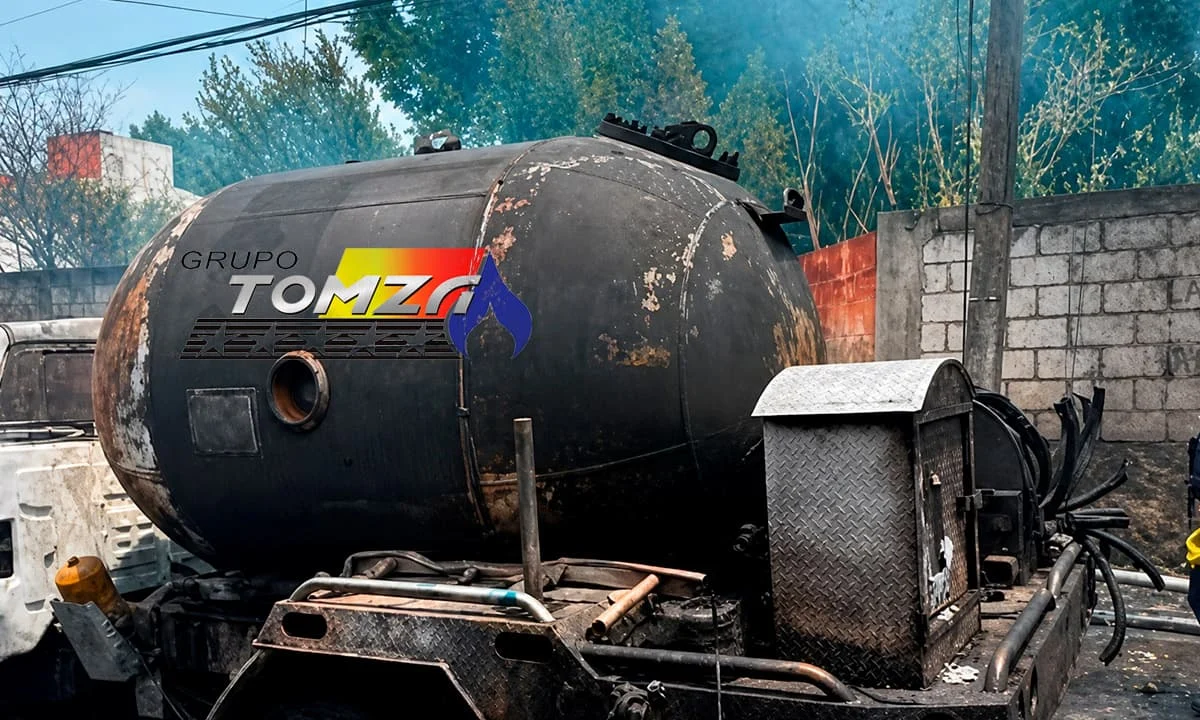
Mexico City — Grupo Tomza, one of Mexico’s largest liquefied petroleum gas distributors, is facing renewed scrutiny after the death of its founder and a string of fatal accidents linked to the company and its subsidiaries.
Tomás Zaragoza Fuentes, who founded the conglomerate, died Aug. 7, 2026, in Ciudad Juárez, Chihuahua, at age 82. His death came one day after a tanker truck operated by the company exploded in Cuernavaca, Morelos, injuring more than 20 people and damaging 32 homes.
Since October 2013, Grupo Tomza and subsidiaries such as Transportadora Silza have been tied to 24 explosions and tanker truck rollovers across at least 11 Mexican states. Those incidents have left 54 people dead and 122 injured, according to records compiled by the news outlet La Silla Rota.
A History of Deadly Incidents
The company’s record includes several major disasters before the Iztapalapa tragedy:
- Puebla, 2013: An explosion at a distribution plant in Amozoc killed seven workers. Authorities found that the company was violating 15 safety regulations.
- Tijuana, 2023: A container failure at Silza’s facilities killed four administrative employees.
- Cuernavaca, 2026: On Aug. 6, a tanker explosion in a residential complex injured more than 20 people and damaged 32 homes.
The Iztapalapa Disaster
The most serious incident came on Sept. 10, 2025, when a tanker truck carrying 49,500 liters of LP gas exploded at the Puente de la Concordia in the Iztapalapa borough of Mexico City, killing 32 people and injuring 63 others.
Investigators from the Mexico City Prosecutor’s Office concluded the explosion was caused by driver error and excessive speed — the truck was traveling at more than 100 kilometers per hour, well above the 50 km/h limit for heavy vehicles on major roads. They also found the driver had not undergone a medical exam before departing from Tuxpan, Veracruz, and had been driving for 16 hours and 20 minutes, exceeding the legal limit of 14 hours.
Safety and Insurance Failures
The federal Agency for Safety, Energy and Environment (ASEA) contradicted the company’s initial claims, saying Transportadora Silza operated the Iztapalapa tanker without valid liability or environmental damage insurance. Official records showed the company’s policy had expired on June 12, 2025, months before the blast.
The unit also ignored Mexico City traffic regulations, which restrict hours for transporting hazardous materials and set a 50 km/h speed limit on primary roads.
Compensation and Oversight Questions
The Mexico City government said it reached 143 reparatory agreements with victims of the Iztapalapa explosion, totaling 480 million pesos. According to the prosecutor’s office, 266 million pesos went to families of the deceased, 136.5 million to the injured, and 27 million for damage to 52 vehicles and nearby structures.
Although officials presented the payments as historic reparations, analysts such as Mario Maldonado, a columnist for El Universal, have questioned the effectiveness of government oversight. After the 2025 explosion, ASEA fined the company 160 million pesos and revealed it had 32 open investigation files against Grupo Tomza for various irregularities.
The conglomerate has also faced penalties at the federal level. In 2022, Cofece, Mexico’s antitrust regulator, fined several distributors including Tomza a total of 2.4 billion pesos for monopolistic practices and price manipulation in the LP gas market.
The recent blast in Cuernavaca has reignited concerns about the lack of rigorous inspections of tanker trucks and containers manufactured by the group under its Industrias Zaragoza (INZA) brand.
More Business
- TUCSA Cuts Playa del Carmen Public Transit Fleet to 56 Buses
- Cozumel Launches 2026 Workshops to Strengthen Civil Organizations
- Mexico Probes Sale of 12.9 Million Personal Records From Call Centers and Corporations
- Holbox Hotels Project 80% Holiday Occupancy After Island’s First Michelin Key
- Mexico Seeks Tariff Cuts on Steel and Autos in US Trade Talks