

Playa del Carmen, Quintana Roo — The Papantla Flyers—locally known as Voladores or “flying men”—are a captivating living tradition that graces Parque Fundadores in Playa del Carmen. These performers have requested the Solidaridad City Council, via the Indigenous Affairs Committee, to move their ceremonial pole to a safer, more central area in the park. Led by representative Isaac González González, they cite both safety risks—particularly from intoxicated spectators—and a decline in tourism income due to sargassum seaweed, which has reduced tips and threatened their livelihood.
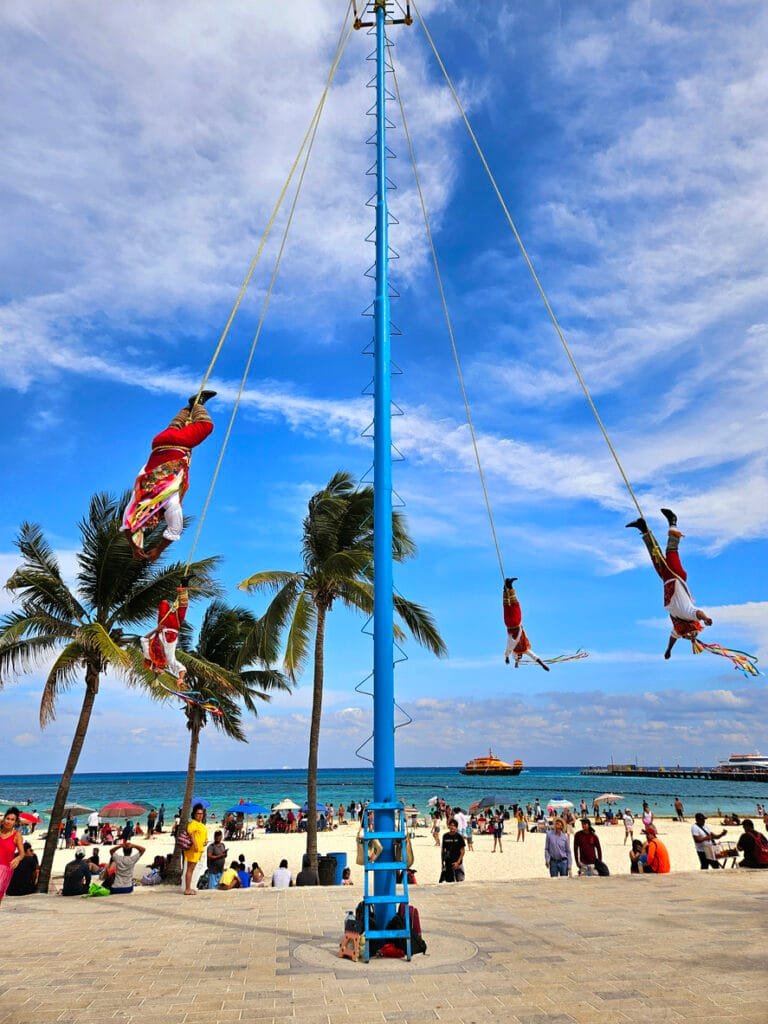
That mix of danger and dwindling revenue is a serious concern, especially for a ritual that dates back at least 450 years. Originally practiced by the Nahua, Huastec, and Otomi peoples, the Danza de los Voladores soared into Totonac culture and became known as the Papantla ritual after troops from Veracruz adopted it. The ceremony begins by felling a tall tree, stripping it of branches, and erecting it—today, often replaced by a steel pole reaching up to 30 meters. Four flyers, tied by ropes to the top, spin downward 13 times each—symbolizing the 52-year Mesoamerican cycle—while a fifth person, the caporal, remains aloft to play flute and drum. The ritual is believed to invoke rain and fertility, a theme rooted in a drought-relief myth honored across Central America.
UNESCO recognized the Danza de los Voladores of Papantla as Intangible Cultural Heritage in 2009. While the ritual has spread across Mexico and into parts of Central America, Totonac communities ensure its original spiritual purpose and strict training are respected. Pilgrims learn the dance and accompany it with traditional costumes—a colorful conical headdress, embroidered vest, and red pants—and the precise, symbolic movements around the pole before climbing and descending in respectful homage to the gods.
In Playa del Carmen, the Papantla Flyers perform regularly at Parque Fundadores—sometimes daily—drawing tourists with their breathtaking and symbolic aerial display. Yet, crowded performance areas and seas of drifting sargassum have created hazards, prompting their request for relocation to maintain both safety and the dignity of their centuries-old tradition.
By securing a more protected and prominent spot, the Papantla Flyers aim to preserve the authenticity of their performance, ensure audience safety, and protect their livelihoods. It’s a reminder that cultural traditions can thrive—if our growing tourist hubs protect spaces where ancient rituals continue to touch hearts with their beauty and meaning.
More Local News
- Mexican Caribbean Destinations and Resorts Win Across 2026 World Travel Awards
- Teen Femicide File Leak: Key Witness, Mother Seek Protection
- No GPS, No Renewal: Quintana Roo Taxi Rule Explained
- Cuban-Mexican Woman: SRE Clerk Called Me Just Another Cuban
- Why a Councilman Wants Tulum Out of the Airport’s Name
More Playa del Carmen
- Nine Suspected Gang Members Arrested in Two Playa del Carmen Raids
- Juan Arena Sworn In as Puerto Aventuras Mayor After Predecessor’s Extortion Arrest
- Developers Seek Semarnat Approval for 16.45-Hectare Residential Subdivision at Punta Maroma
- Playa del Carmen to Review Legal Status of Chen Zubul Property
- Playa del Carmen Hosts Second National Firefighters Congress With 750-Plus Participants
