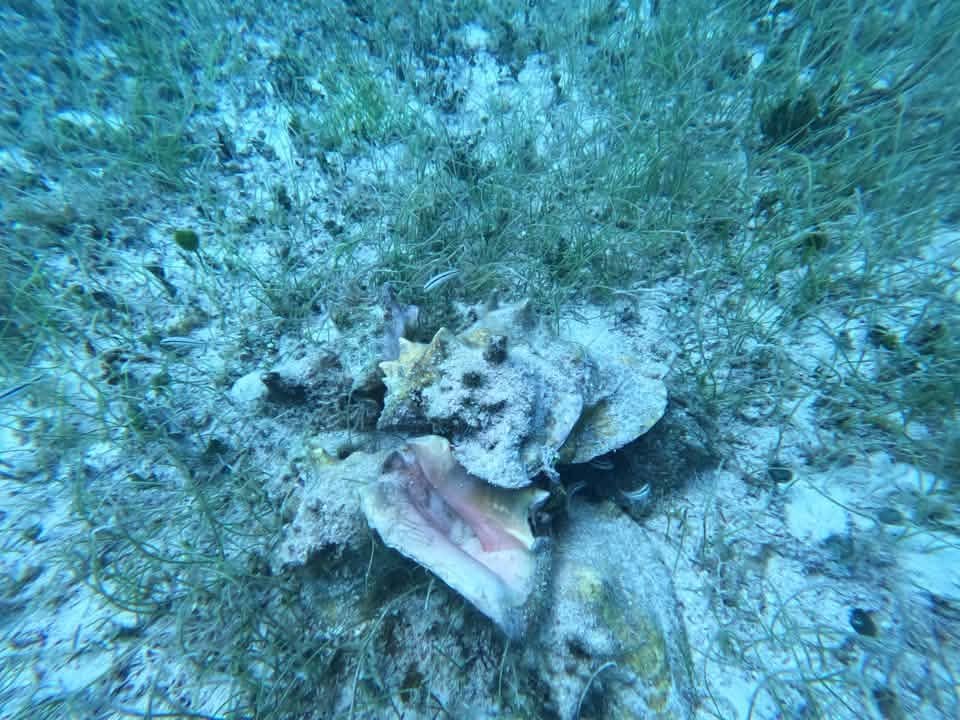
Cozumel, Quintana Roo — Environmental authorities and marine specialists have completed the first pink conch (Lobatus gigas) monitoring survey of the season in the Cozumel Reefs National Park, a key step in assessing the state of the protected species’ population and strengthening its conservation.
The survey was organized by the Cozumel Community Surveillance and Monitoring Committee and funded through the federal Program for the Protection and Restoration of Ecosystems and Priority Species (PROREST). During the survey, researchers recorded pink conch specimens in the process of mating, a positive indicator in the middle of the closed season, which runs from May to October.
The monitoring effort provides data on the pink conch’s population density and helps identify juveniles and adults in seagrass meadows and sandy-bottom habitats. This information is essential for evaluating the species’ recovery and guiding future management strategies.
The pink conch plays a critical role in the Caribbean’s marine ecosystems by controlling algae growth and supporting the health of seagrass beds and coral reefs. Its preservation also supports biodiversity and nature tourism, a major economic driver in the region.
Authorities renewed their appeal to residents and visitors not to buy, capture, or consume pink conch during the closed season. The species is protected, and its conservation is considered vital to maintaining the natural heritage of Cozumel and the Mexican Caribbean.
More Environment
- Polo strengthens to a Category 5 hurricane off Mexico’s Pacific coast in Record Time
- Cozumel Launches Rabies Vaccination Drive With 3,000 Free Doses for Pets
- Sargassum Collection in Quintana Roo Tops 133,000 Tons, Setting New Record
- Isla Mujeres Collects Over 160,000 Tons of Waste in Five Years
- Tulum Beach Cleanup Pulls 32 Kilos of Marine Debris From Playa del Pueblo
More Cozumel
- Ultramar Ferry Collides With Xcaret Xailing Vessel at Cozumel’s Muelle Fiscal
- Marc Dubrick Dominates Ironman 70.3 Cozumel, Wins Wire-to-Wire
- Cozumel Opens Applications for 2027 Carnival Kings and Queens
- Tulum Tour Guides Pin Recovery Hopes on Cruise Ships and Year-End Holidays
- Cozumel Opens Registration for Day of the Dead Catrina Costume Contest