
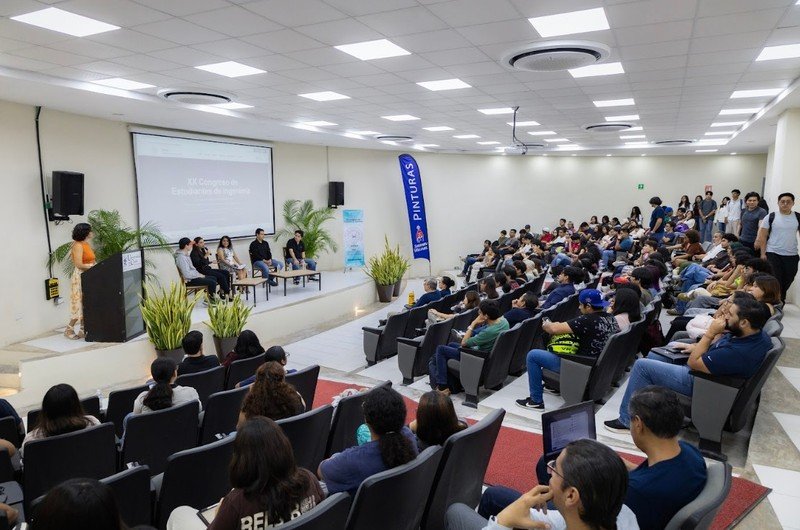
Cancún, Quintana Roo — Technological change, the arrival of artificial intelligence and growing demand for specialized skills are creating new challenges for young professionals entering Mexico’s workforce, graduates of Universidad del Caribe (Unicaribe) warned during a campus panel in Cancún.
The former students said a university education now has to reach beyond technical knowledge and build competencies such as communication, teamwork, empathy and problem-solving.
The discussion formed part of the Graduates Panel at the 20th Engineering Students Congress 2026, held under the theme “GEN-I: Connecting ideas, training engineers, driving the future” and organized by Unicaribe.
The event brought together professionals from different graduating classes and specialties, who shared their experiences of finding work, building careers and taking part in projects with international reach.
Moderated by teacher Nancy Aguas García, the panel featured specialists in Industrial Engineering, Telematics, Data Engineering and Organizational Intelligence, and Environmental Engineering — fields facing significant change as companies and society develop new needs.
Rather than simply presenting success stories, the participants described the difficulties of carving out a career in a competitive labor market, where continuous retraining, hands-on experience and interpersonal skills can make the difference in landing a job.
Careers With International Reach
Calvin Alberto López Salvo, who graduated in 2022 in Data Engineering and Organizational Intelligence, now works as a Senior Emerging Technologies Engineer at AstraZeneca’s General Innovation Technology Center in Guadalajara.
He told students that perseverance won him an internship in Osaka, Japan, an experience that also opened the door to an institutional agreement now benefiting other Unicaribe students.
Regina Hausleber, a 2020 environmental engineering graduate, described her work as a supervisor of environment, health and safety (EHS) at DHL for southern Mexico. She said her team helped cut lost-time injuries and disabling accidents by 40 percent through measures aimed at changing the safety culture in the workplace.
Rafael Arriaga, who graduated in industrial engineering in 2024, spoke about his role as regional manager at a consulting firm. He has trained managers at international hotel chains on regulatory compliance and has worked with civil protection officials in Puerto Morelos to improve internal safety programs.
José Luján, a 2008 telematics graduate, outlined a 15-year career in software development. He is now a Delivery Manager at a multinational technology company and has worked on projects involving Microsoft, Google and Mozilla.
One highlight of his career, he said, was volunteering to translate the Firefox browser into the Maya language — an example of how technical skills can help preserve cultural identity and widen access to digital tools.
What It Takes to Compete
A central theme was the impact of AI on employment and the skills professionals will need to stay relevant.
The graduates agreed that command of technology tools, while essential, does not on its own guarantee a successful entry into the workforce. Soft skills — particularly communication, empathy, leadership and the ability to work with others — matter just as much.
López advised students to strengthen their English, learn to solve problems and prioritize collaborative work. Companies, he said, also value the ability to join teams and build professional relationships beyond specialized knowledge.
On generative AI, panelists said its advance is changing the tasks and profiles organizations require, but is also creating new opportunities for employment and specialization.
Luján cautioned against reading every staffing adjustment in the tech industry as a direct result of artificial intelligence, explaining that corporate restructuring also reflects wage stabilization and reorganization in the years since the pandemic.
Inclusion in technology was another topic. Participants stressed the importance of building accessible solutions for people with different needs, avoiding linguistic bias in AI systems and guaranteeing equitable workplaces, particularly for women in the tech industry.
Learning Beyond the Classroom
The professionals urged students to use internships as a way to learn what companies actually demand, gain experience and make contacts that can ease the transition into work. They also encouraged students not to be discouraged by rejections, to keep a learning mindset and to treat early jobs as a stage of discovery about their own strengths, interests and goals.
The exchange underscored the value of universities keeping close ties with their alumni and with industry, so that new generations understand how the labor market is changing and can prepare to respond.
More Business
- Isla Mujeres Returns to New Orleans DEMA Show to Boost Dive Tourism After Seven-Year Absence
- Cancún Airport Schedules 953 Flights in Best Weekend Since August
- Cancún Street Markets See Sales Climb 15-20% as Vendors Return
- GFNY Cozumel Draws 3,000 Cyclists From 40 Countries
- Cancún’s MOBI Route to the Hotel Zone Starts Charging Fares on Nov. 10
More Cancun
- Quintana Roo to Build Three Margarita Maza High Schools in Cancún by 2027
- Cancún, Playa del Carmen and Chetumal Account for 81% of Quintana Roo’s Disappearances
- Cancún Residents Say 3 Million Peso Park Won in 2023 Was Never Built
- Quintana Roo Loses Nearly 15,000 Hectares of Jungle a Year as Real Estate Boom Drives Deforestation
- Cancún Plants 3,531 Trees, Keeps Sights on 11,000 Target by 2027