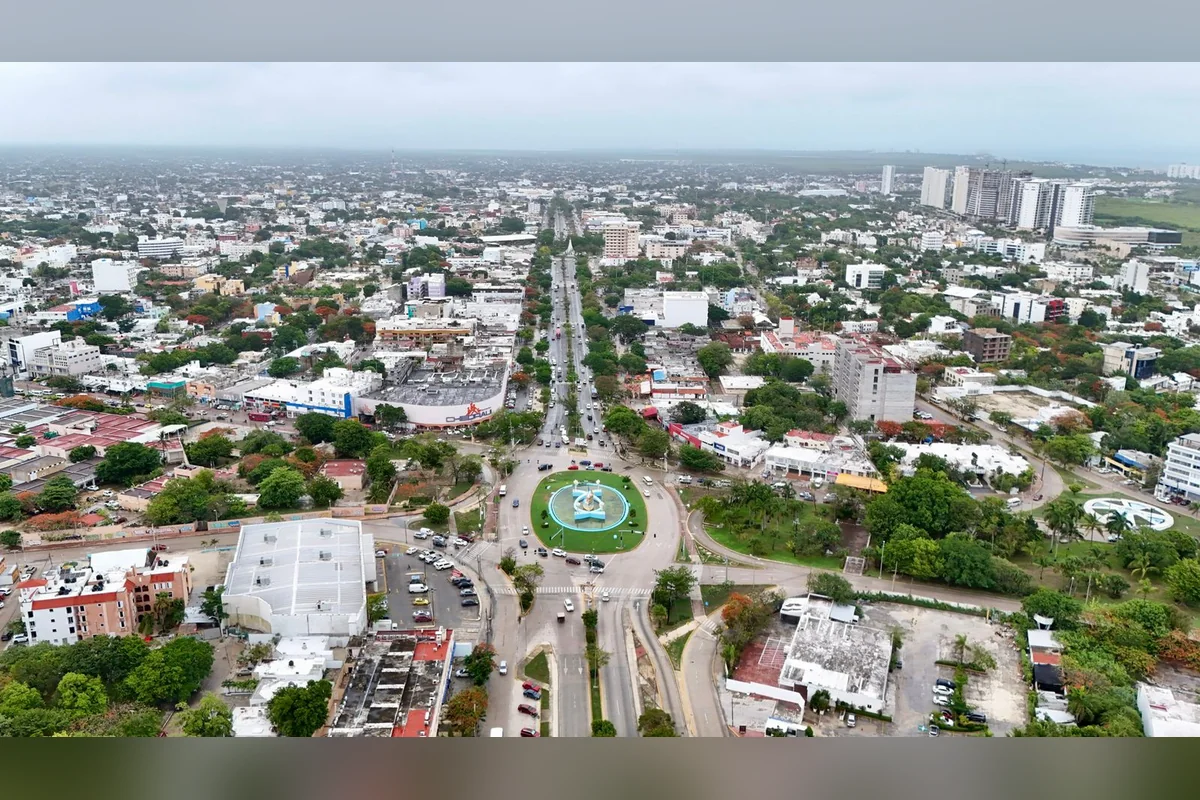
Cancún, Quintana Roo — Residents and neighborhood committees in the Polígono Sur section of Benito Juárez say the municipal government has failed to carry out a 3 million peso project they won in the first round of Cancún’s participatory budgeting program in 2023.
The group won the funding for an ecological park that was supposed to be built in 2024. Nearly three years later, no construction has started, and residents say repeated requests for an explanation have gone nowhere.
Instead of answers, residents said, municipal officials simply invited them to sign up again for the current edition of the program.
Aurora González, representative of the municipal committee for Supermanzana 317 (SM317), said four subdivisions in the area pooled their efforts behind the winning proposal.
“We live in Polígono Sur, an area considered high-value, but we have no recreational spaces for children. That’s why we took part in 2023 and won,” she said. “Yet the months and the years have passed, and by this 2026 neither the transparency office nor the municipal presidency has given us precise information about where that budget went.”
Guadalupe Luna, a resident of the sector, said she received a call from the municipal Social Welfare Department (Secretaría de Bienestar) proposing that the committee enter the program again with the same project. The committee put the offer to a vote and rejected it, preferring to press for an explanation of why its original project was cancelled.
No Clear Answers From City Hall
González criticized what she described as a lack of institutional certainty. “We have lost interest in taking part because we have been misled. We have spent three years asking for information and they send us from office to office, to public servants who don’t know about the case and only say the matter is being reviewed,” she said.
The residents explained that the developers of the subdivisions involved did not set aside land to donate when the area was brought into the municipality. The city government has cited that gap in explaining the delay, saying it was looking for a plot owned by the state or municipality in the sector on which to build the park.
Residents proposed several alternatives after inspecting parcels in the area, but many were privately owned. “They offered us plots far away from the subdivisions that submitted the proposal, so we rejected those options,” González said.
The communities behind the 2023 winning proposal were Delicias del Sur I and II, Torres Delicias and Galaxia Altamar.
González said she filed transparency requests to establish the legal status of the citizen budget. “After three years of opacity, there are reasonable doubts about where those 3 million pesos ended up,” she said.
According to the residents, the agencies involved — Urban Development and Ecology, Social Welfare, the municipal presidency and Municipal Assets — have not given firm answers to the SM317 committee’s requests for clarification.
Officials Cite Legal Limits on Irregular Land
At the first training workshop for the 2027 participatory budget on Nov. 4, authorities addressed a backlog of projects including sports domes, school infrastructure, bus shelters and safe walking routes.
Councilman Marcos Basilio Saldívar argued that the municipality faces a legal obstacle to spending public money on land that is not part of the municipality’s regularized assets.
According to figures presented by the council, about 60% of the projects submitted by residents were originally planned on irregular or non-municipalized land.
The councilman said the Secretariat of Social Justice and the council set up working groups and compiled technical reports documenting the legal obstacles on the chosen land, guiding committees as they restructured their proposals.
Officials also said unspent funds will remain valid through a scheme to update and consolidate the delayed projects.
The municipal government outlined three lines of action:
- Technical support: Assigning specialized staff from the assets, cadastre and urban development offices to follow up directly with committees.
- Relocation to public land: Identifying nearby, properly regularized public properties where approved projects can be moved, such as the “Sendero Seguro” project at CECyTE III.
- More funding: A commitment to raise the overall fund to 100 million pesos in the next edition, to ensure enough money to cover outstanding commitments.
Despite those commitments, frustration persists among SM317 residents, who argue that the government’s justifications do not excuse the lack of information or the institutional neglect they say they have faced over the past three years.
More Government
- Cancún Plants 3,531 Trees, Keeps Sights on 11,000 Target by 2027
- Cozumel Adds 25 Wells to Boost Drinking Water Supply
- Cancún’s MOBI Route to the Hotel Zone Starts Charging Fares on Nov. 10
- Ferry Out of Service Since 2018 Partially Sinks at Isla Mujeres Dock
- Mexico November 16 holiday: triple pay for workers
More Cancun
- Quintana Roo Loses Nearly 15,000 Hectares of Jungle a Year as Real Estate Boom Drives Deforestation
- Cancún Airport Schedules 953 Flights in Best Weekend Since August
- Cancún Street Markets See Sales Climb 15-20% as Vendors Return
- Semarnat Rejects 387-Home Incaribe Development on Punta Sam–Cancún Road
- SOC Places 136.6 Million Pesos in Business Loans in Quintana Roo