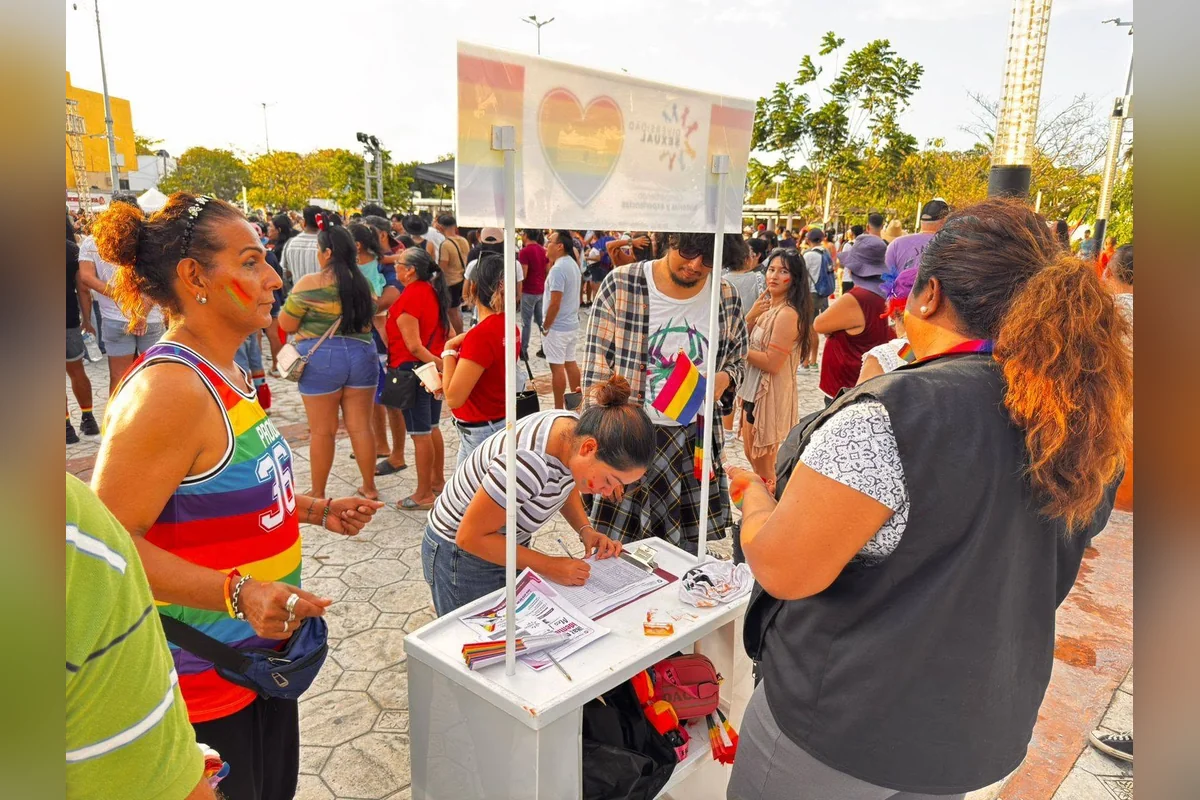
Cancún, Quintana Roo — Mexican civil codes and Quintana Roo’s own civil code recognize concubinage — the legal status of two unmarried people who live together as a couple — but same-sex partners still struggle to have that status formally certified, according to the head of the Benito Juárez municipal government’s sexual diversity office.
Nohamy Hermida Nieves, director of Attention to Sexual Diversity, said the issue tends to go unnoticed by couples until a legal obstacle suddenly requires them to prove their relationship, whether to claim an inheritance, make decisions about a partner’s medical care or settle a property dispute.
A 2007 law, rewritten in 2021
Quintana Roo added Article 825 Bis to its civil code on Nov. 27, 2007, defining concubinage as a union between a man and a woman with reciprocal rights and obligations, provided neither partner had a legal impediment to marriage — such as already being married to someone else — and provided they had lived together for at least two years.
Lawmakers rewrote the article in 2021 to define the union as one between two people, dropping the “man and woman” wording that discriminated against same-sex couples. The two-year condition remained: the relationship must be “constant and permanent for a minimum period of two years.”
Hermida said the legal figure becomes a problem mainly for couples who cannot make their relationship public because of their social and family circles or religious prejudice, which also keeps them from marrying.
“Many couples are forced to keep their relationship private, within very small circles, and that makes it less visible — and when it isn’t visible, it seems they have no rights, or they have no information, or they don’t think it will happen to them,” she said.
For the head of the newly created municipal office, ignorance of the legal framework keeps the community from claiming the rights concubinage grants.
Why it matters when a partner dies
Hermida said concubinage proves most useful when one partner dies, particularly for same-sex couples raising children, because relatives of the deceased frequently try to claim property or other benefits.
She said people usually come forward only once they are already in need.
“When a situation of need arises, that is when they start to approach us. It’s necessary that people know their rights from within the community, and all of the acronyms, so they can fight for them or at least know what they are,” she said.
She added that any information campaign should include a sensitization program for public servants, so officials do their jobs properly and serve residents without moral or religious prejudice. The municipal government has already run sexual diversity training for its firefighters so they can respond to emergencies with a gender perspective.
More Courts
- Quintana Roo Human Rights Commission Closes 930 Complaints With Only 13 Recommendations
- Anti-Corruption Prosecutor’s Office Seizes House in Playa del Carmen
- Former Puerto Aventuras Mayor and Two Ex-Officials Ordered to Trial on Extortion Charges
- Supreme Court Reopens Mahahual Case Against Royal Caribbean
- Why Mexico’s Treason Charge Over a U.S. Raid Matters
More Cancun
- Cancún–Isla Mujeres Boat Cooperatives Sink Under Heavy Losses as Only 20 of 130 Vessels Stay Active
- Vacation Rental Host Confronts Visitax Charge at Cancún Airport
- Graffiti Artists Erase Cancún’s ‘Wall of Corrupt Politicians’ as Activists Prepared to Restore It
- Cancún Named World’s Most Active City in World Wellness Weekend 2026
- Victims of Crimes Against Women Protest at Playa Delfines Over Court Failures in Cancún