Mexico City — Months of tensions between the United States and Mexico are escalating into a potentially more serious confrontation as President Claudia Sheinbaum refuses to arrest Mexican officials indicted in the US on drug-related corruption charges, according to Mexican officials.
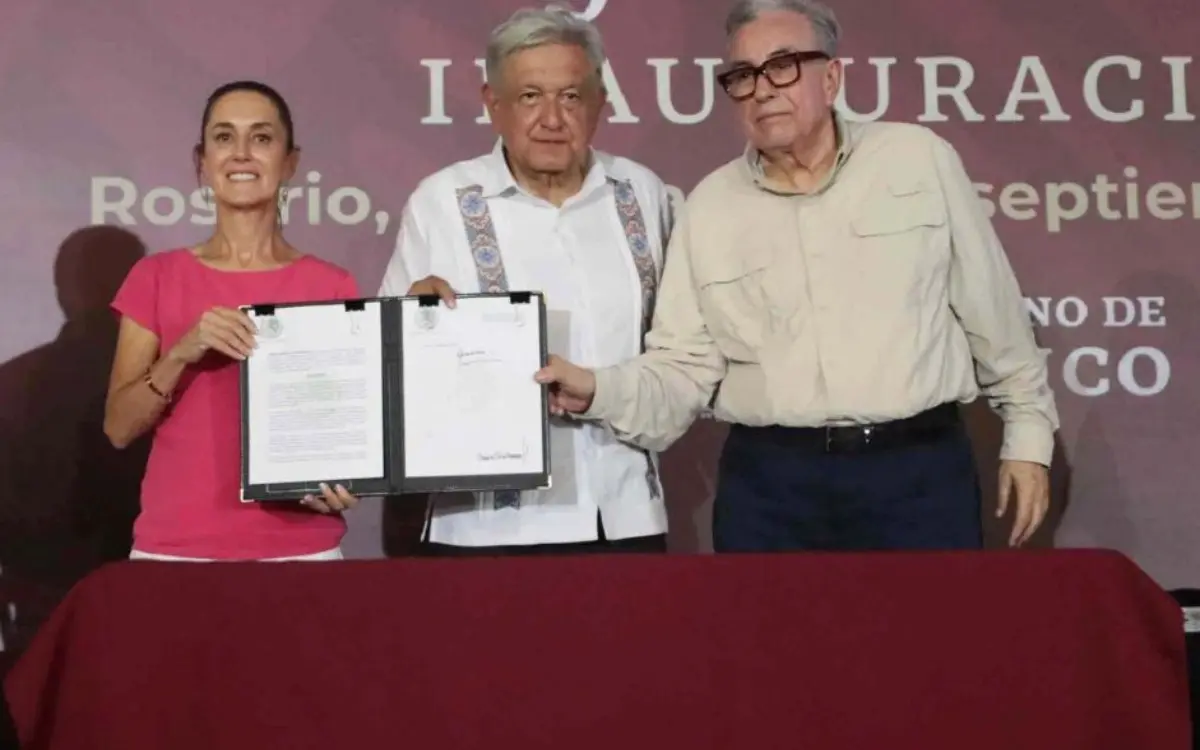
The US Department of Justice has accused 10 current and former Mexican officials, including Sinaloa Governor Ruben Rocha Moya, a close ally of Sheinbaum and a prominent figure in her left-wing party, of protecting drug trafficking. While the US has not yet presented all evidence, the Trump administration is intensifying efforts to prosecute them in a New York federal court.
Sheinbaum has taken an uncompromising stance against extraditing Rocha and the others, a Mexican official said. “She has made it very clear. She has decided no,” the official said.
The standoff poses a critical test for the Trump administration’s goals in Mexico, raising questions about how far it will go to combat corruption that has long sustained drug trafficking. The US has pressured Mexico to intensify its fight against organized crime, threatening harsh economic sanctions if Sheinbaum does not cooperate.
Under Sheinbaum, Mexican security forces have collaborated with US intelligence to destroy drug labs, seize narcotics, and capture or kill major crime bosses. She has also bypassed the extradition treaty to hand over at least 92 alleged drug traffickers wanted by the US. However, she has cited insufficient evidence to arrest the Sinaloa officials.
US officials privately acknowledge that the intensified anti-drug campaign has focused on tactical attacks and short-term gains rather than a long-term strategy to weaken organized crime, confront endemic corruption, or strengthen Mexico’s criminal justice system.
Within the Trump administration, some officials argue that tackling high-level corruption is crucial and that US prosecutors should act firmly if Mexico does not. But diplomatic and intelligence officials caution against pushing Sheinbaum too hard, fearing she might reduce cooperation on drug enforcement and immigration.
The political debate also centers on Sheinbaum’s independence from her mentor, former President Andrés Manuel López Obrador, who remains a dominant figure in the Morena party. On June 3, López Obrador attacked the New York indictment, claiming US officials were using corruption allegations to weaken Morena. “Some US officials are conspiring to weaken Morena and strengthen the right-wing opposition in Mexico,” he wrote.
Sheinbaum downplayed his statement, but analysts say his influence is evident. Eduardo Guerrero, a Mexican security expert, said, “I think Andrés Manuel’s message was: ‘Claudia, you have to stop this or they will destroy us.’ But the longer she delays handing over Rocha, the harsher the US punishment will be.”
DEA Administrator Terrance C. Cole told a Senate committee that the indictment was “just the beginning of what is to come in Mexico.”
Rocha, elected governor in 2021, has faced allegations of ties to drug cartels. In July 2024, Ismael Zambada García, a Sinaloa Cartel co-founder, claimed he was kidnapped outside Culiacán while en route to meet Rocha. Rocha denied involvement, saying he was in Los Angeles at the time.
The indictment alleges that Rocha allowed Los Chapitos, sons of Joaquín “El Chapo” Guzmán, to operate with impunity in exchange for support in his election. It claims Rocha met with cartel leaders, accepted bribes, and warned them about US-backed police operations. Rocha has denied the charges.
Sheinbaum dismissed the evidence as insufficient, saying suspects could be investigated in Mexico but she would not act without irrefutable proof. US diplomats were initially skeptical of relying on incarcerated traffickers as key witnesses, but at least one accused official, former Sinaloa Public Security Secretary Gerardo Mérida, surrendered to US authorities on May 11 and may cooperate.
Sheinbaum’s security chief, Omar García Harfuch, had privately told US diplomats she was committed to tackling corruption, but she has since accused Washington of interference. “An action of this magnitude is unprecedented in our bilateral relationship,” she said at a rally in May. “When someone abroad dictates who is guilty, that is no longer cooperation. That is interference!”
Her advisers have suggested she might reduce anti-drug cooperation if the US pushes too hard on the Rocha case. Such threats have worked before: in 2020, then-Attorney General William Barr dropped a case against former Defense Minister Salvador Cienfuegos after López Obrador threatened to limit cooperation. López Obrador later dismantled joint anti-drug programs and passed a law restricting US agents in Mexico.
But former Mexican Foreign Minister Jorge G. Castañeda said the Trump administration is different. “Trump simply doesn’t care,” he said.
More Politics
- Puerto Morelos Mayor Denies Detention After Federal Search of Rented Home
- Mexico’s Federal Prosecutor Charges Former Chihuahua Attorney General With Treason Over CIA Role in Drug Lab Raid
- Quintana Roo Health Secretary Flavio Rosado Resigns to Seek Morena’s Isla Mujeres Candidacy
- Mexico Expects US Tariff Relief Despite Delayed USMCA Talks
- Poverty Fell 38% in Quintana Roo, Governor Mara Lezama Says