Mexico City — The Mexican government has asked citizens of the Democratic Republic of the Congo, Uganda and South Sudan not to travel to Mexico due to an Ebola outbreak in the region, and announced special health screenings ahead of the 2026 World Cup.
The Health Ministry said it will strengthen epidemiological surveillance at international airports, including document checks, itinerary analysis and preventive measures for travelers arriving from risk areas.
“The recommendation is that people from those countries, fundamentally, try to reschedule their trips,” Health Secretary David Kershenobich said.
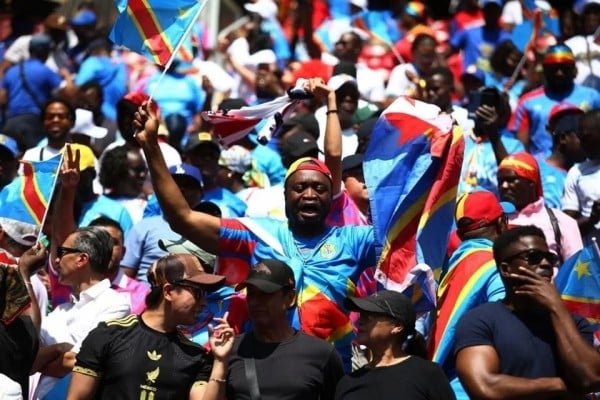
In the World Cup, the Democratic Republic of the Congo is scheduled to play Colombia in Guadalajara on Tuesday, June 23 at 6:00 p.m.
Kershenobich clarified that no cases have been reported in Mexico and said the risk of spread is “very low” for the country. However, he warned that the outbreak continues to evolve in central Africa.
“Yesterday the director of the World Health Organization commented that the Ebola outbreak continues to evolve and that the situation may get worse before it gets better,” he said.
Kershenobich explained that Mexico will implement special protocols due to the 2026 World Cup.
“Mexico as host country of the 2026 World Cup is committed to providing the safest possible environment,” he said.
The health secretary said there will be health filters, itinerary reviews and coordination with airlines and international authorities to detect possible risk factors before passengers board.
“At international airports we will have health filters, we have preventive measures and we will also do a documentary review and of the itinerary that passengers may have had,” he detailed.
Kershenobich noted that the Ebola virus is not airborne, but is transmitted through direct contact with secretions and body fluids of infected people.
“Therefore, the history of having been in contact with an infected person is very, very relevant,” he explained.
Kershenobich said Mexico is working in coordination with the United States and Canada on specific epidemiological protocols for the World Cup.
“We are implementing epidemiological surveillance protocols in coordination with the United States and Canada,” he said.
The Health Ministry explained that a suspected case is one in which a person has stayed during the last 21 days in areas with active transmission or has had contact with a confirmed case.
Alert symptoms include high fever, muscle pain, sore throat, diarrhea, severe stomach pain and unexplained bleeding.
More Lifestyle
- Hundreds of Riders Expected for Tulum’s Fourth Federated Horseback Ride
- Quintana Roo Plans Two Wastewater Plants and Two Aqueducts for Cancún and Playa del Carmen
- Playa del Carmen Ranks Second in HIV Cases in Quintana Roo, Official Says
- Cancún Taco Festival Aims to Revive Local Economy in Low Season
- Screwworm Cases Detected in Two Dogs and a Horse in Tulum