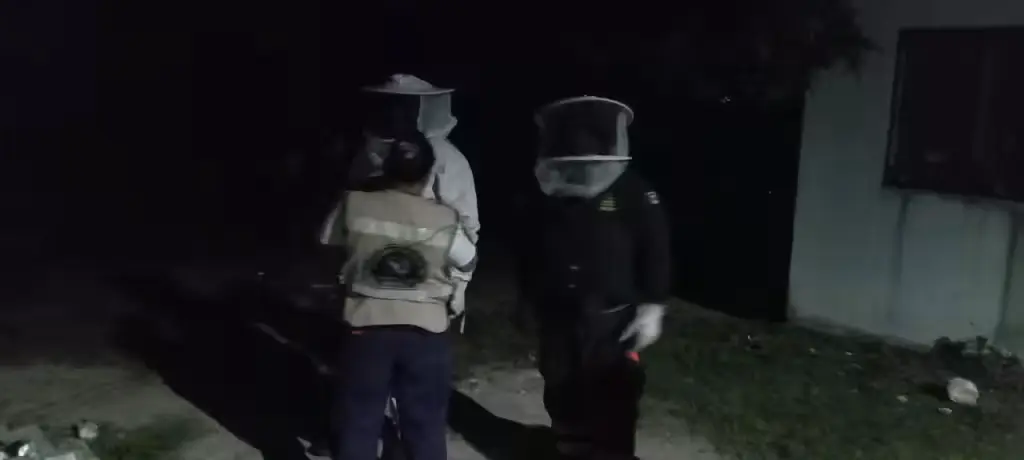
Cacao, Quintana Roo — A swarm of Africanized bees attacked three people and several dogs in the community of Cacao, near the Río Hondo in the municipality of Othón P. Blanco, prompting an emergency response.
Personnel from the National Commission of Emergencies’ Delegation 36 Ribera del Río Hondo went to the home after neighbors reported the swarm and asked for help due to the risk it posed to families and pets in the area.
The attack left two older adults, a child, and several dogs with bee stings. None of the victims suffered serious health complications, according to responders, who credited the quick containment of the swarm. One dog was taken to a veterinary clinic and remained under observation because of the number of stings it received.
Africanized bees, commonly called “killer bees,” are hybrids of European and African bee species. They are known for being far more aggressive and for attacking in large numbers, chasing victims over longer distances than common bees.
Emergency officials reminded residents not to try removing a swarm on their own and to immediately report unusual bee activity near their homes, since an improper attempt can trigger a mass attack with more serious consequences.
More Environment
- Yucatán Suspends Classes in 27 Municipalities as Tropical Storm Isaías Nears
- Sheinbaum Acknowledges Little Progress in Talks With Vulcan Over Calica
- Quintana Roo Plans 4.4 Billion Peso Wind Farm in Othón P. Blanco
- Tulum Ranks Second as Mexico Claims Six Spots on Best Beaches List
- University of the Caribbean Unveils Crocodile Coexistence Manual in Cancún
More Zona Maya
- Quintana Roo Opens 2026 Poetry Contest for Indigenous and Afro-Mexican Girls
- Drought Damages Farmland in Felipe Carrillo Puerto as Quintana Roo Assesses Losses
- Aluxes Endure in the Beliefs of Maya Communities in Quintana Roo
- Search Operation for Missing People Deployed in Felipe Carrillo Puerto
- Mothers of Missing Children Ask Quintana Roo to Display Their Faces on Public Transport