Mexico City — Mexicans who earn income or are required to issue invoices must register in the Federal Taxpayer Registry (RFC). Since 2022, young adults who turn 18 must also register, even if they do not work. Those who fail to do so can face fines of up to 13,430 pesos, according to the Federal Taxpayer Defense Office (Prodecon).
What is the RFC?
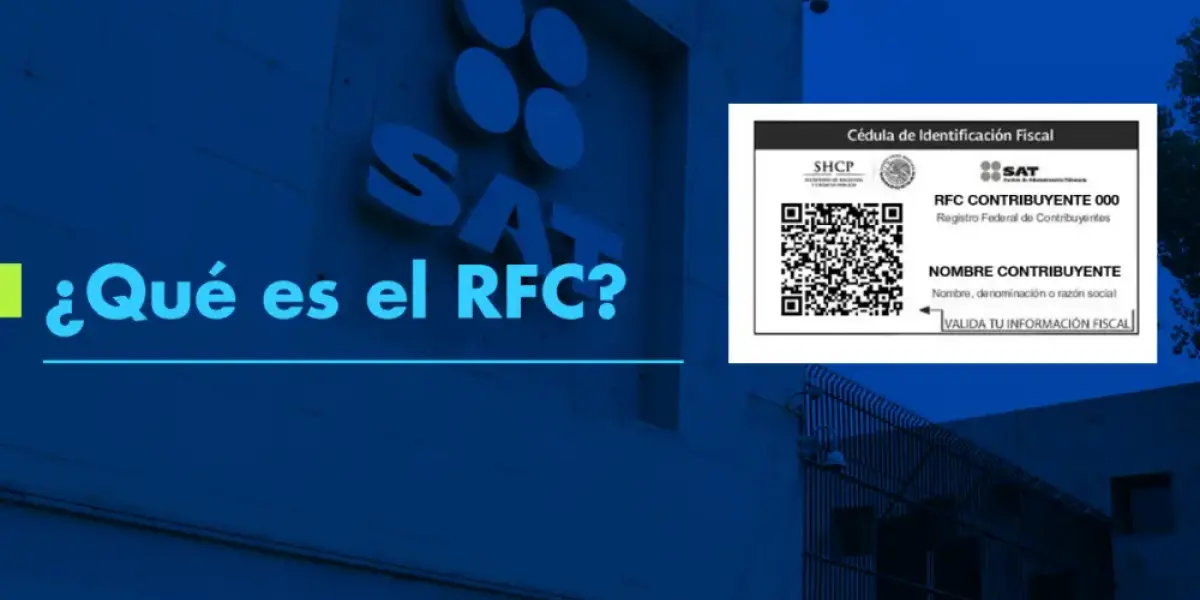
The RFC is an alphanumeric key created from a person’s name, surname, birth date, and a validation code (homoclave) assigned by Mexico’s tax authority, the SAT. The combination is designed to be unique to each taxpayer, although occasional cases of identical names do occur.
The registry identifies taxpayers for administrative procedures and helps them meet their tax obligations. Registration is mandatory for anyone engaged in income-generating activities or required to issue invoices.
18-year-olds must register
Under a 2022 change to the Federal Fiscal Code, people who turn 18 must obtain an RFC even if they are not working. However, that does not mean they will have tax obligations or need to file returns, according to Yanin Ortiz, subdelegate of Prodecon in Tabasco.
“Registering at 18 does not mean you will have tax obligations or have to file declarations; it simply means obtaining your registration with the SAT,” Ortiz said.
Most 18-year-olds are still studying and do not earn income. In that case, they can register as individuals with no tax obligations, which does not generate any filing requirement or penalties.
“It is very important to be careful about how you register and what activity you state, so you don’t attribute income you don’t actually receive and avoid future problems,” the Prodecon spokesperson said. “If you have any doubts, it’s best to consult a specialist.”
How to register
Prodecon recommends the following steps:
- Go to the SAT website and complete the online application.
- Attend an appointment at a tax office with an official ID and proof of address.
- Obtain the Constancia de Situación Fiscal (tax status certificate) and carefully verify that the information is correct.
Fines for noncompliance
Ortiz said that 18-year-olds who fail to register as individuals with no tax obligations are not subject to an economic fine. However, taxpayers who earn income and fail to register or do so late can be fined between 4,480 and 13,430 pesos.
In addition, taxpayers who do not submit updated information to the RFC — or file it late when requested by authorities — can face fines ranging from 5,400 to 10,780 pesos.
The official also noted that some taxpayers change their address on their voter ID but forget to update their tax address in the RFC. “This can have long-term consequences, because if the authority needs to notify you at the tax address declared in the RFC, it won’t find you,” she said, which can ultimately result in a fine.
Another common error is failing to update a person’s tax regime. Someone registered as an employee (salary earner) may later start a business and is required to report that change so the tax authority can adjust the registration accordingly.
“Failure to provide these notices can lead to penalties, so it is important to keep your RFC up to date to avoid these fines,” Ortiz said.
Benefits of registering
The RFC offers several advantages beyond tax compliance. For example, a person must be registered to obtain the electronic signature (e.firma), which is required to download a professional license, said Juvenal Lobato, a law professor at the National Autonomous University of Mexico (UNAM).
According to the tax platform Taxdown, registration allows citizens and businesses to access government services and programs, including tax receipts, business support initiatives, and credit or financing. It also simplifies administrative procedures related to tax filings, authorizations, and commercial transactions.
“In short, registering with the SAT in Mexico goes beyond a simple legal requirement,” Taxdown said.
More Government
- Cancún Residents Call Protest Against Aguakan Over Unsafe Roadworks on Avenida Colegios
- Quintana Roo Crews Clear 70,000 Liters of Water in Bacalar and Chetumal After Heavy Rains
- Yucatan Drafts Rules for Artificial Lakes After Worker Dies of Amoeba Infection
- Same-Sex Marriages Nearly Triple in Yucatán as 2025 Sets an Eight-Year Record
- Quintana Roo Wins SEMARNAT Approval to Restore 33.5 Km of Beaches