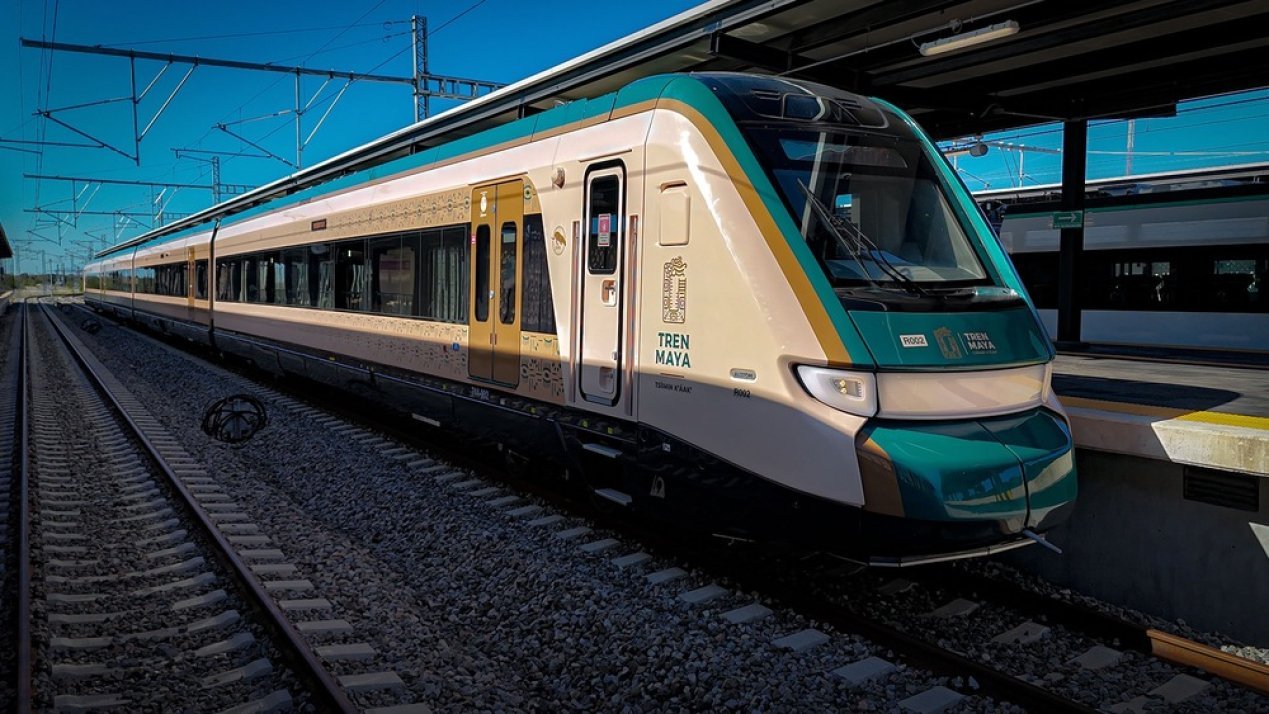
Mexico City — The Mayan Train has received a 15-year authorization to transport diesel, a move that strengthens the project’s logistics capacity as it advances toward freight operations and broader integration with Mexico’s rail and energy infrastructure.
The permit was granted by the governing body of the National Energy Commission (CNE) to Mayan Train, allowing the company to carry out the transportation of petroleum products by auto-tank and semi-trailer, according to El Economista. The authorization was issued under permit title CNE/PL/784/TRA/OM/2026, following resolution CNE/RES/457/2026. The authorized product is diesel, with no additional product category specified.
The authorization gives the Mayan Train a regulated framework to move diesel for the next 15 years. Under the permit, the company must maintain insurance for damages, including civil liability coverage for damages to third parties, in line with risk-analysis rules issued by the Safety, Energy, and Environment Agency (ASEA). It must also measure the volume and specifications of products received, transported, and delivered, and use only authorized units for the activity.
The permit also includes traceability and reporting obligations. Mayan Train must maintain a GPS service for each vehicle and comply with future CNE procedures for registering orders through a commercial transactions platform. This system is expected to record volumes handled, fuel quality, prices applied, and income, allowing authorities to supervise the movement of petroleum products and monitor market activity.
The authorization comes as the Mayan Train seeks to consolidate its role beyond passenger mobility. During Mexico Business Summit 2025, Brigadier General Germán Redondo, Head of the Corporate and Commercial Strategy Unit, Mayan Train, said the train had transported millions of passengers since starting operations on Dec. 16, 2023. The railway spans 1,554km and includes 34 stations, positioning it as one of the federal government’s flagship infrastructure projects in the southeast.
Passenger services operate across 20 daily routes, using part of a 42-train fleet built in Ciudad Sahagun, Hidalgo, with 70% national content. The fleet includes 32 hybrid trains and 10 diesel trains, divided into regular, long-distance, and restaurant-car configurations. Redondo said the project seeks to become a broader mobility system, not only a tourist train, by offering an alternative to road travel.
The diesel transport permit is also relevant to the project’s freight strategy. The Mayan Train’s freight integration plan is divided into two phases. The first phase, from 2025 to 2026, includes multimodal terminals in Palenque, Progreso, and Cancun, as well as a distribution terminal in Poxila. This phase also includes fuel transport capabilities for Cancun International Airport. A second phase, expected in 2027, would add a multimodal terminal in Chetumal and operation patios in Valladolid, Escarcega, Xpujil, and Pomuch.
The planned freight network is expected to move fuel, steel, cement, grains, and intermodal cargo, linking the southeast with broader national and international logistics corridors. Redondo said the government aims to connect the Mayan Train with the North American rail system and align it with the Interoceanic Corridor of the Isthmus of Tehuantepec (CIIT), strengthening Mexico’s multimodal logistics platform.
The Mayan Train had begun locomotive tests for freight operations, marking a step toward regular cargo service. The diesel permit now adds a key regulatory component to that transition, as fuel logistics will be necessary for both rail operations and potential cargo-related services in the region.
The permit also places Mayan Train among a limited group of companies authorized to transport petroleum products by rail tank car. As of Jan. 19, 2026, only six other companies had permits for petroleum transport by tank car: Kansas City Southern, Ferrocarril Mexicano, Ferrosur, Línea Coahuila Durango, Ferrocarril del Istmo de Tehuantepec, and Baja California Rail Road, reports El Economista. Unlike Mayan Train’s 15-year permit, those permits reportedly have 30-year terms.
More Business
- Mexico’s Auto Exports Slump 12% as US Tariffs Take Toll
- Cancún Residents Demand Governor’s Intervention Over Alleged Land Fraudster
- Mexico’s Inflation Accelerates for a Second Straight Month to 3.45%
- Tren Maya Freight Project Targets 4.7 Million Tons by 2030
- Cancún Taco Festival Aims to Revive Local Economy in Low Season
More Quintana Roo
- Cancún Business Council Launches Push to Diversify Quintana Roo’s Economy Beyond Tourism
- Mexico Adds COVID-19 Vaccine to Routine Childhood Schedule for Infants and Toddlers
- Power Outage in Chetumal Forces Closure of Quintana Roo Labor Courts
- Cancún Restaurants in the Red as Power Outages Add to Mounting Losses
- Playa del Carmen Mayor Joins Quintana Roo’s 52nd Statehood Anniversary in Chetumal