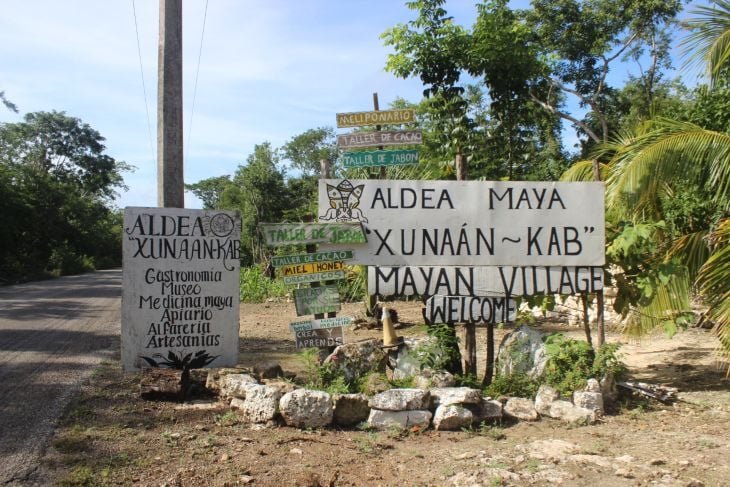
TULUM, Quintana Roo — A community tourism circuit connecting several Maya villages in the municipality of Tulum is being promoted as an alternative to the destination’s beach-centered tourism model, with local families providing food, cultural activities and nature experiences.
The Ruta Turística Cultural Maya includes stops in San Juan de Dios, Sahcabmucuy, San Silverio and the Aldea Maya Xunáan Kab near Cobá. Depending on the community and arrangements made in advance, visitors may tour meliponarios where stingless bees are raised, take part in traditional ceremonies, visit community centers dedicated to Maya customs and sample food prepared by local families.
Other attractions promoted as part of the circuit include Cenote Muul Ich Ts’ono’ot, Caverna Xamán, a lookout point and an archaeological area in San Juan de Dios. The project’s central goal is to direct more visitor spending toward communities outside Tulum’s coastal and downtown tourism zones.
First councilor David Manances Tah Balam, known locally as “Fili,” has promoted the initiative through several stages. The route was publicly relaunched in 2025 after communities reorganized their food, handicraft and visitor services. Tah has said transportation companies were also approached about adding the rural stops to their excursions.
The Tulum municipal tourism office has supported the project through maps and visitor-information materials, although it is not currently presented as a single daily excursion with a fixed itinerary. Activities, operating hours, admission costs and transportation arrangements may differ by community and should be confirmed before traveling.
What visitors can expect
At Aldea Maya Xunáan Kab, visitors can learn about traditional Maya cooking and sample dishes such as eggs with chaya accompanied by handmade tortillas. The name Xunáan Kab refers to the stingless bee traditionally raised by Maya communities for its honey.
Meliponiculture has cultural as well as economic importance in the Yucatán Peninsula. The native Melipona bee does not produce honey in the same quantities as European honeybees, making its honey a comparatively limited product. Community meliponarios may combine honey production with demonstrations about traditional hives, medicinal uses and the bees’ place in Maya culture.
Sahcabmucuy is promoted as a center for safeguarding local customs. Experiences may include explanations of community traditions, ceremonies and food prepared with regional ingredients.
In San Juan de Dios, the proposed itinerary includes natural and archaeological attractions. However, the archaeological area promoted by the route is not one of the major federally managed sites with regular public schedules and ticketing. Access should therefore be arranged directly with community representatives rather than treating it like a conventional visit to Tulum or Cobá.
The advertised meal service costs 150 pesos per person. Reservations and current information are available at 984 277 4580 and 984 181 5988. The Centro Santuario de Usos y Costumbres in Sahcabmucuy can also be contacted by WhatsApp at 984 204 2828.
Organizers have not published a single price covering the complete route. Visitors should ask whether a reservation includes meals, guides, ceremonies, cenote admission and transportation, and whether cash payment is required.
Part of a broader community-tourism policy
The Tulum project follows a wider effort to expand community-managed tourism in Quintana Roo. The state’s best-developed example is Maya Ka’an, a tourism region covering approximately 1 million hectares and involving 76 Maya communities. Its experiences include locally operated nature tours, food, handicrafts and cultural interpretation.
In March 2026, the federal government declared community tourism to be an activity of public interest. The policy established principles that include community management, participatory decision-making, environmental responsibility and a more equitable distribution of tourism revenue.
Quintana Roo’s Tourism Secretariat also operates a recognition program for community tourism providers. The distinction is intended to identify businesses that meet standards related to visitor services, organization, cultural authenticity and environmental practices.
The Tulum route remains less formalized than Maya Ka’an. Its experiences are spread among small communities, reservations are handled through local contacts and a complete public schedule has not been issued. That structure can keep more of the visitor’s payment within the community, but it also makes advance planning necessary.
The circuit is being promoted at a time when Tulum is trying to broaden its tourism economy beyond hotels, beach clubs and the archaeological zone. Sargassum, seasonal fluctuations in hotel occupancy and concerns about prices and beach access have increased pressure on the destination to develop activities that are less dependent on coastal conditions.
For rural families, the potential benefit comes from selling meals, honey, handicrafts and guiding services directly to visitors. Whether the route produces steady income will depend on consistent promotion, reliable transportation and clear information about schedules and prices. For now, visits should be arranged directly with the participating communities.
More Tourism
- Cancún’s Protected Natural Areas See Tourism Slump, With 600,000 Visitors Expected in 2026
- Cancún Bets on Health Tourism With New Forum
- Quintana Roo Expects 25% Surge in Cancún Flights Starting October
- Tourist Boat Traffic Plunges 30% in Quintana Roo Ports
- Tulum Tour Guides Pin Recovery Hopes on Cruise Ships and Year-End Holidays
More Tulum
- Tulum Faces Budget Deficit as Tourism Slump Slashes Revenue
- Drought Stalls Corn Planting in Tulum’s Maya Communities
- Mexico Moves to Curb Misleading Hotel Ads Claiming Private Beaches
- Man Shot Dead in Tulum Irregular Settlement as Neighbors Cite Land Threats
- Mexico to Review Private Events Held Inside Tulum National Park