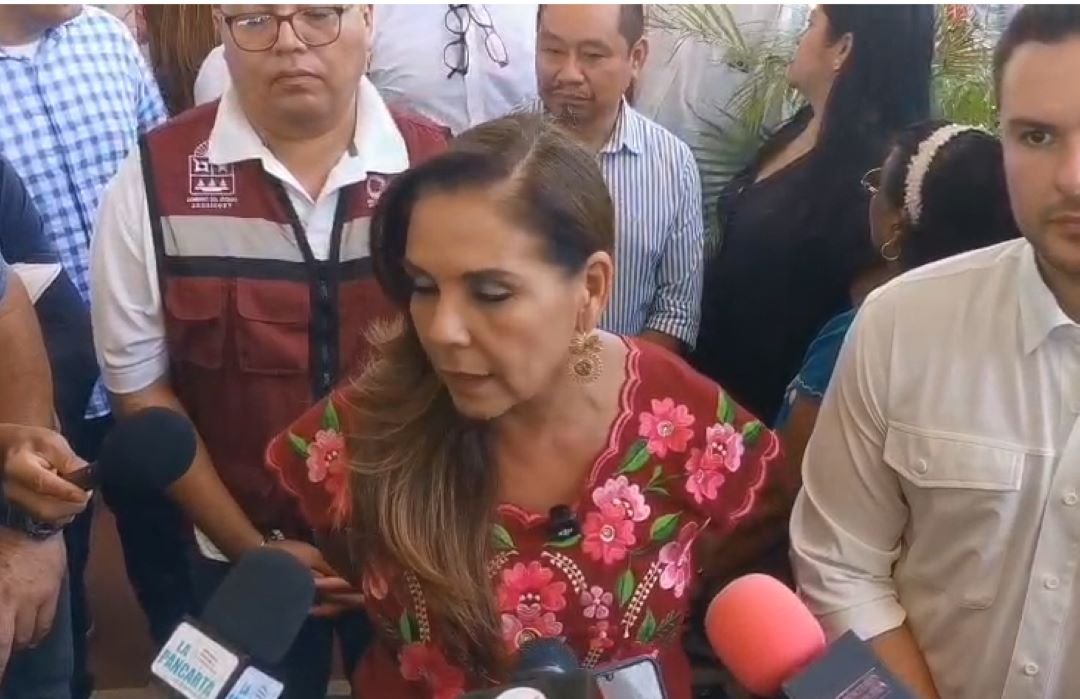
Chetumal, Quintana Roo — Quintana Roo Governor Mara Lezama clarified that any potential emergency declaration over the sargasso seaweed influx is a federal responsibility, as she confirmed that a comprehensive response strategy will be ready within 15 days.
Speaking after a food aid event, Lezama said the plan will integrate contributions from the Mexican Navy and the business sector, possibly including a temporary employment program. She also announced an intensive promotional campaign to publicize President Claudia Sheinbaum’s recent announcements aimed at restoring tourist numbers in Tulum.
Lezama stressed the need for more sargasso collection vessels operating offshore and beach cleanup efforts. “That’s why we have another meeting in ten days with the president, to deliver the finished project that brings together the Navy’s proposals, the success stories from the business sector, and what they’ve been investing, perhaps working together with a temporary employment program,” she said.
The governor noted that the required investment for sargasso management remains unclear, as costs vary depending on the type of collection vessels used to prevent seaweed from reaching the coast.
She reiterated that any emergency declaration falls under federal jurisdiction and that local business owners and hoteliers have not requested one, instead expressing satisfaction with the announced investments and strategies.
“We cannot improvise in the sargasso combat strategy; it must be a joint proposal. According to monitoring, there are certain sargasso paths that could act as sort of recruiters. We need to position vessels in strategic areas to contain as much as possible, so that as little as possible reaches near the coast, and on the coast we need barriers — so we have containment,” Lezama said.
Regarding the president’s initiatives — the Jaguar Park and free beach access — the governor acknowledged that Tulum’s economic and tourism recovery depends on multiple factors. She said the state will work to reinforce tourism promotion and publicize the agreements reached with the president.
“We have the measurements of how many tourists arrive, and we had a great season in January. That’s why opening the Jaguar Park and free beach access, along with reinforced promotion, is so important to boost hotel occupancy in downtown Tulum,” she said.
Lezama added that the state has already contacted cruise lines and tour operators to promote the Jaguar Park’s opening, which previously faced complications due to high costs and commissions.
She expressed confidence in Tulum’s recovery, citing the park’s opening, sargasso management, and improved public security through more surveillance cameras and anti-extortion efforts. “I have asked business owners to report any extortion attempt. I’ve spoken with them personally because sometimes there are internal disputes and they turn on each other. When there is a report, it must be addressed immediately. I’ve made it very clear: no one is above the law,” she concluded.
More Government
- Playa del Carmen Taps HR Directors to Boost Local Hiring
- Moderna COVID-19 Vaccine to Be Offered to Children in Cancún
- Trump Escalates Pressure on Mexico, Demands Action Against Cartel-Allied Officials
- Alleged Owner of Cancún Home Rented by Puerto Morelos Mayor Linked to Ultramar Fraud Case
- Paraguayan Tourists Challenge Asur Over $30 Exit Fee at Cancún Airport
More Quintana Roo
- Quintana Roo Tops 152,000 Metric Tons of Sargassum as Playa del Carmen and Cancún Lead
- Court Gives Profepa 72 Hours to Clarify Tren Maya Closure Order
- Quintana Roo Beaches Lose Up to 14 Meters of Sand a Year as Restoration Plan Advances
- Quintana Roo Youth Sailors Join Mexico’s Team for Optimist Championship in Uruguay
- Mara Lezama Hands Out 100 Sewing Machines in Chetumal to Boost Women’s Self-Employment