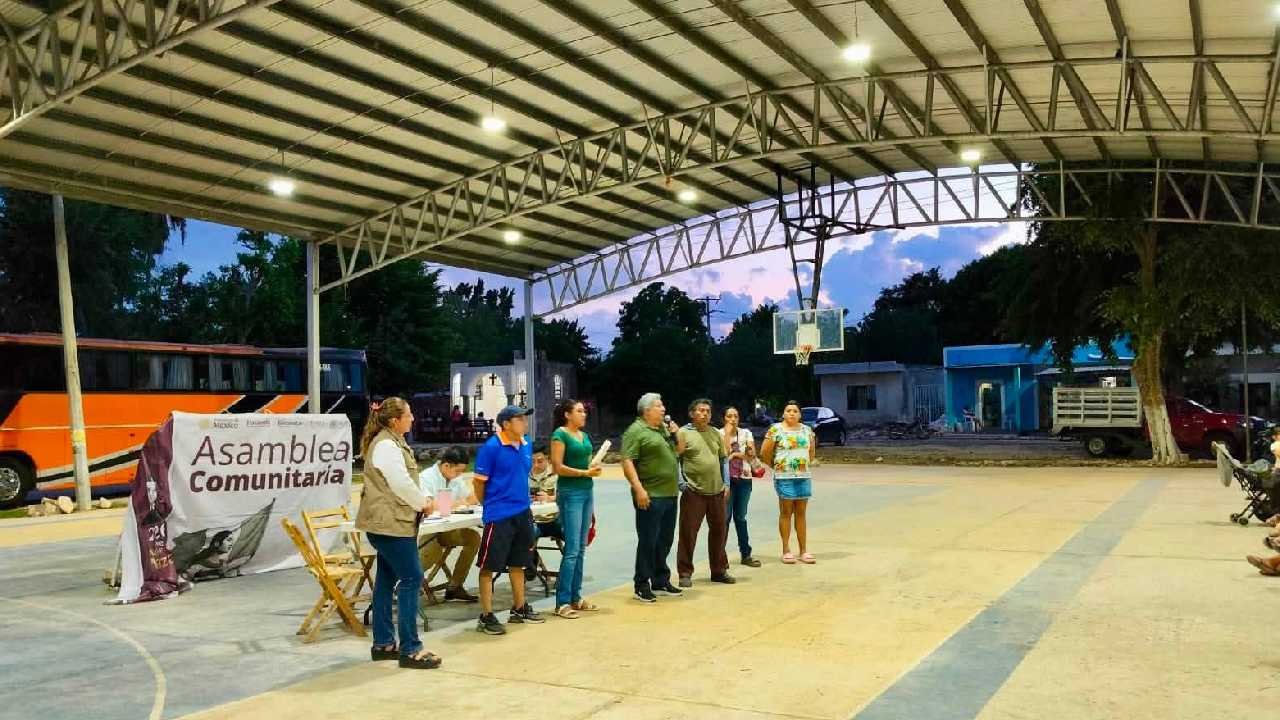
Chetumal, Quintana Roo — The National Institute of Indigenous Peoples (INPI) in Quintana Roo announced plans to more than double funding for indigenous communities in 2026, while denying any misuse of resources after a gap emerged between allocated and spent funds in 2025.
In 2025, indigenous communities in the state received just over 101.2 million pesos from the Fund for Social Infrastructure for Indigenous and Afro-Mexican Peoples and Communities (FAISPIAM). However, only about 30 million pesos were actually spent on projects, according to Venancia Ko Chuc, head of the INPI office in Quintana Roo.
Ko Chuc explained that the 30 million pesos went to indigenous infrastructure, productive projects related to tourism and economic activities, and actions to implement the rights of indigenous peoples.
“We financed about 30 million pesos across the state, including indigenous infrastructure, tourism or economic productive projects that land in the regions, and actions for the implementation of indigenous peoples’ rights,” she said.
The difference between allocated and spent funds has not been publicly explained. It remains unclear whether the remaining funds are tied to pending projects, administrative processes, or program operations.
According to the Center for Economic and Budgetary Research (CIEP), 216 indigenous communities in Quintana Roo were considered for funding in 2025. Of these, 90 are in Felipe Carrillo Puerto, 55 in José María Morelos, 36 in Lázaro Cárdenas, 18 in Bacalar, 10 in Tulum, four in Othón P. Blanco, one in Puerto Morelos, and three in Playa del Carmen. The smallest allocations went to Santa Rosa and San Jerónimo in Felipe Carrillo Puerto, with 84,639 and 91,106 pesos, respectively.
Ko Chuc denied any reports of embezzlement, emphasizing that funds are managed directly by community committees accountable to local residents.
“There are no complaints about alleged misappropriation of resources,” she said.
For 2026, the programmed amount for Quintana Roo is 209.2 million pesos, more than double the previous year’s allocation. The funding is expected to cover 240 indigenous communities, according to CIEP and federal records.
Ko Chuc noted that the national catalog currently recognizes 240 indigenous communities in Quintana Roo, though some localities are still being registered.
“In the national catalog of indigenous peoples and communities, there are 240 identified communities. There is still a portion that has not been registered, but practically the entire state is covered,” she said.
Regarding 2026, Ko Chuc acknowledged that no projects have been funded yet due to ongoing management and review processes.
“This year has been complicated. We haven’t financed any projects yet; we are in the management and review stages. Mainly, it’s been issues with the Treasury that have made the resource processing more difficult,” she said.
She expects funds to begin flowing in the second half of 2026 and hopes the final investment will match or exceed previous levels.
More Politics
- New Quintana Roo Press Group Leader Calls for Consensus Journalist Protection Law
- UQRoo Cancún Union Workers Allege Rigged Election, Demand Full Rerun
- Isla Mujeres Approves Updated Development Plan With 185 Action Items
- Mexico Seeks Tariff Cuts on Steel and Autos in US Trade Talks
- No Date Set for Supreme Court Ruling in Quintana Roo Border Dispute
More Quintana Roo
- Vehicle Theft in Quintana Roo Falls 24% as Motorcycles Account for 77% of Cases
- Quintana Roo Artisans Win Dedicated Law to Protect and Promote Their Craft
- Mundo Maya Nations Agree on Multi-Destination Tourism Route
- Quintana Roo Expands Distance University Program to 500 Students in Nine Municipalities
- Dengue Cases in Quintana Roo Climb to 310 as Deaths Reach Two