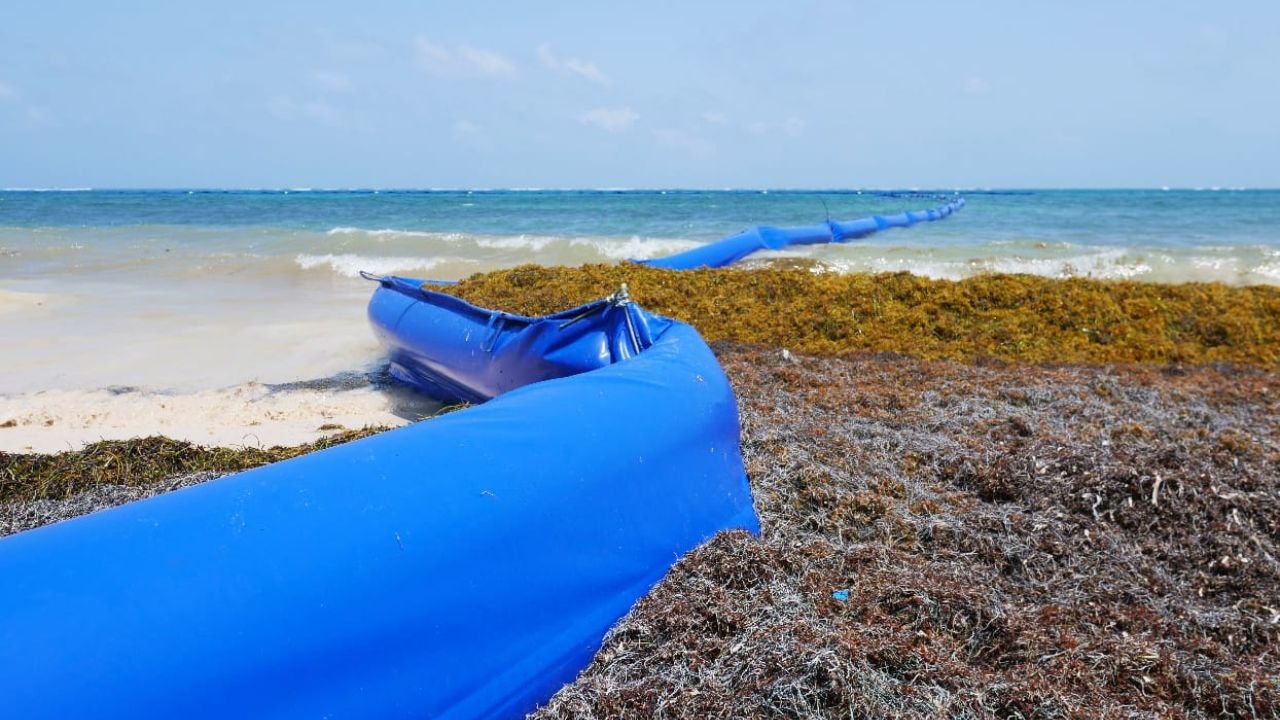
Chetumal, Quintana Roo — Sargassum collection in Quintana Roo has surpassed 106,000 metric tons this season, and the state is planning to expand its network of anti-sargassum barriers to nearly 40 kilometers with help from the federal government.
The state’s ecology and environment agency, SEMA, reported that 106,848 tons of the seaweed have been collected so far. Óscar Rébora Aguilera, the agency’s head, said the state has acquired 16 kilometers of barriers, of which the Mexican Navy has installed about 11 kilometers. Deployment has been slowed by rough seas, strong currents and high winds.
Barriers are currently in place at Puerto Morelos, Playa del Carmen, Tulum and Mahahual. The state expects to complete the remaining five kilometers this year. With the new federal investment, officials project adding nearly 35 more kilometers, bringing total coverage close to 40 kilometers.
Rébora Aguilera said the Navy’s ability to collect sargassum offshore has grown substantially. At the start of the current administration, about 1,000 tons were being removed at sea; this season, the figure has surpassed 16,000 tons.
“The goal is to keep increasing the amount collected offshore. The federal investment will give us greater installed capacity for collection,” he said.
The official also explained that winds play a key role in where sargassum lands. West winds push it onto beaches, while winds from the north and east divert it. A recent north wind system has provided a temporary break from shoreline arrivals.
Regarding the recent unusual entry of sargassum into the Nichupté lagoon, Rébora Aguilera said it was caused by a rare combination of winds and currents that has not repeated significantly. He added that the steady increase in sargassum over the past decade is a direct result of climate change, ocean warming and higher nutrient levels in the sea.
More Environment
- Nine Sick Dolphins Stranded in Abandoned Cancún Water Park
- Playa del Carmen Presses Federal Officials to Halt Wildlife Exploitation Permits
- Scientists Detect Early Signs of Groundwater Contamination in Quintana Roo
- 22 Hotels in Mexico’s Caribbean Join Dune Restoration Push
- Cancún Protesters Demand Answers on Fate of Big Cats Kept by ‘Pepe Tigre’
More Quintana Roo
- Measles Cases Surge 1,940% in Mexico’s Yucatan Peninsula
- Microplastics, Sunscreen Chemicals and Repellents Under Study in Quintana Roo Waters
- Quintana Roo to Present Mexican Caribbean Cenote Guide at DEMA Show 2026
- Quintana Roo Rethinks Tourism Model as Visitor Spending Falls
- Drainage Connection Gap Worsens Pollution of Cenotes and Beaches in Quintana Roo