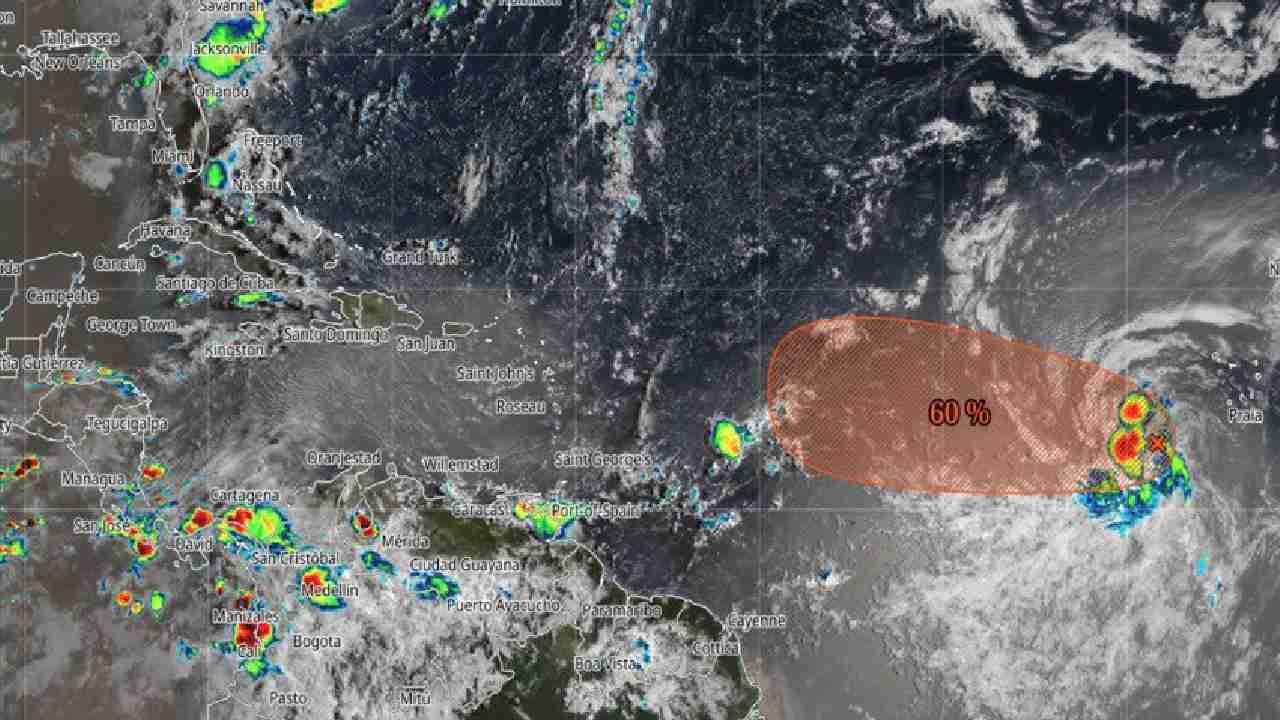
Quintana Roo — The National Meteorological Service (SMN) reported Wednesday that a low-pressure system in the Atlantic has reduced its potential to develop into a tropical cyclone in the coming days.
The system, located southwest of the Cape Verde Islands, is about 6,245 kilometers east of Quintana Roo’s coast and continues moving west-northwest, according to forecasters.
The probability of cyclonic development has dropped to 60% for both the next 48 hours and the next seven days.
Quintana Roo’s Civil Protection Coordination (Coeproc) shared the update and urged residents to rely only on official information as conditions could still change.
Governor Mara Lezama echoed that message, asking the public to follow the official channels of CONAGUA Clima and Coeproc for updates. She also reminded residents of the #TripleA prevention campaign: “Atent@s, Alerta y A salvo” — attentive, alert and safe.
Authorities said they will continue to monitor the system’s trajectory and evolution despite the reduced risk.
More Environment
- Cozumel’s Reefs Get a 3D Map Divers Can Explore Before Entering the Water
- Documentary Exposes 30 Years of Pollution in Cancún’s Chacmuchuch Lagoon
- Crocodile Surprises Tourists Swimming at Cozumel’s El Cielo Sandbar
- Playa del Carmen Calls Volunteers to Clean More Than 7 Kilometers of Beach
- Tulum Fishing Cooperative Seeks Funds to Expand Facilities and Sustain 70 Families
More Quintana Roo
- Quintana Roo Identifies 780 Irregular Settlements, Prepares Regularization Strategy
- Quintana Roo Lawmaker Proposes Mandatory Child Support Registry Check Before Marriage
- Riviera Maya Forum Pushes Caribbean Mexico Toward Regenerative Tourism
- Quintana Roo Prosecutors Search for 10 Missing People, Including Five Minors
- Childhood Obesity in Quintana Roo Up 18.5%, Diabetes Cases Rise