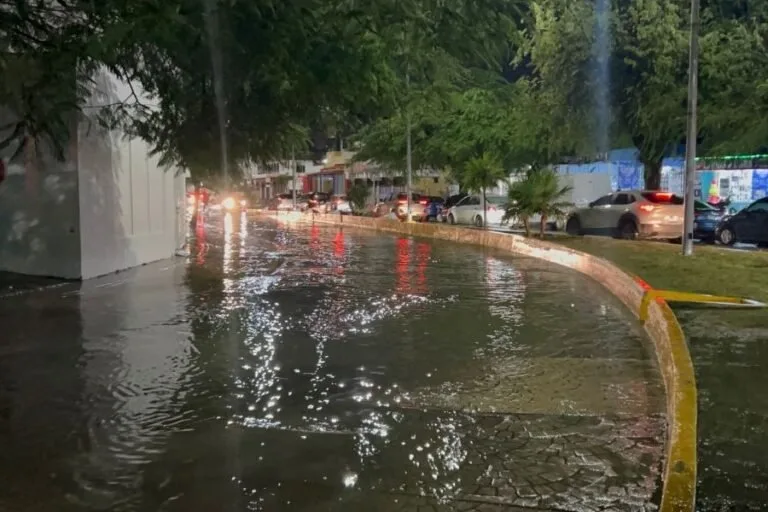
Merida, Yucatan — While thousands of residents in Yucatan grapple with flooded streets, damaged homes and mobility issues caused by days of intense rainfall, experts say there is no risk of the region’s aquifer overflowing.
Meteorologist Juan Vazquez Montalvo, a member of the Institutional Committee for the Attention of Extreme Meteorological Phenomena at the Autonomous University of Yucatan (UADY), explained that the severe waterlogging seen across the state capital is due to soil saturation, which is absorbing water more slowly than usual.
Merida has recorded about 380 millimeters of rain during this weather event, a significant amount that has caused problems in many neighborhoods and housing developments, Vazquez Montalvo said.
However, he clarified that the water table currently stands at 2.12 meters above sea level — far below the 5.20 meters reached in 2020 after storms Cristobal and Gamma and Hurricane Delta. Those extraordinary rains caused historic flooding in areas such as Las Americas and Santa Fe, scenarios not expected under current conditions.
Vazquez Montalvo noted that reaching critical levels again would require accumulating around 2,000 millimeters of rain, a figure he described as practically impossible in the short term.
Although streets remain waterlogged and inconveniences persist, specialists consider the situation a problem of ground saturation rather than a risk of the aquifer overflowing beneath the city and much of Yucatan’s territory.
More Lifestyle
- Isla Mujeres Ready for Luz y Vida 2026 Festival With Free Pandora Concert
- Moderna COVID-19 Vaccine to Be Offered to Children in Cancún
- Hospital O’Horán Performs First Robotic Appendix Surgery; Patient Treated Free of Charge
- Paraguayan Tourists Challenge Asur Over $30 Exit Fee at Cancún Airport
- Influencer Discards 2,500-Peso SpongeBob Cake at Nickelodeon Riviera Maya, Citing Bad Taste