Cancún, Quintana Roo — Quintana Roo faces a highly vulnerable outlook of extreme drought, delayed rains and the latent threat of wildfires next year as El Niño strengthens and bears down on the Atlantic and Caribbean basin, a leading Mexican scientist has warned.
Julia Carabias Lillo, a professor in the Faculty of Sciences at the National Autonomous University of Mexico (UNAM) and a member of El Colegio Nacional, issued the warning during a climate change colloquium in Cancún. She said the climate crisis is a problem that concerns all of society and requires an urgent cultural shift.
Carabias said the state’s coastal zone is highly exposed to hurricanes whose frequency and intensity are rising. She argued that the region must move toward adaptation and mitigation through individual and collective action, along with strong pressure on the government to implement effective public policies.
Coral reefs and protected areas under pressure
The researcher stressed the need to regulate territorial growth in Quintana Roo, protect biodiversity, respect protected natural areas and safeguard the coral reefs that serve as natural barriers defending coastal communities.
She also warned bluntly that improper construction permits and the development of megaprojects that ignore environmental conservation only deepen the state’s problems.
On El Niño, Carabias explained that while its effects tend to hit the Pacific hardest, they also directly affect the Atlantic and Caribbean, disrupting rainfall patterns.
“What we have to be doing is anticipating where there has been a delay in the rains, for example, or where there may still be some strong hurricanes,” she said.
Wildfire warning for next year
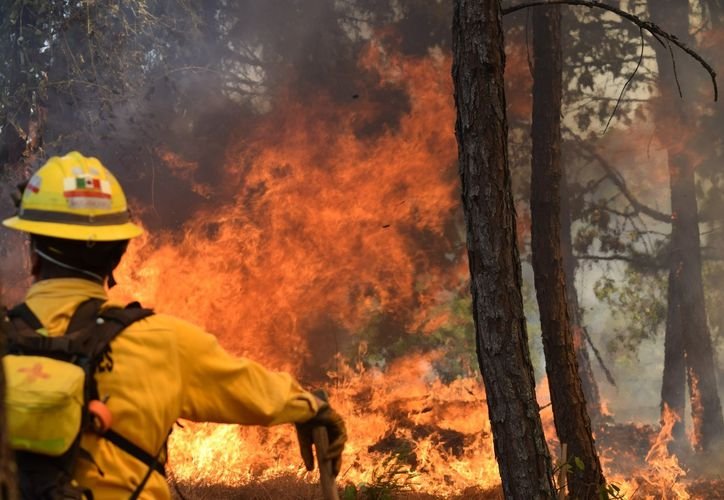
Above all, she said, the real problem arrives next year with the droughts it may bring. After the intense rains, she noted, vegetation grows and produces abundant fuel, making preventive measures essential to avoid fires like those Quintana Roo has suffered in the past.
Carabias concluded that the entire population of Quintana Roo must actively join these efforts to confront a contingency that has already become unavoidable.
More Environment
More Cancun
- Bishop of Cancún-Chetumal Visits 73 of 78 Parishes in First Eight Months
- Mexican Caribbean Leads Hotel Boom as Cancún and Riviera Maya Take Half of New Rooms
- Cancún Searching Mothers Reopen Outbound Lanes but Keep Hotel Zone Blockade
- Cancún’s El Parián Market Endures as a Working-Class Hub After 48 Years
- Quintana Roo to Build Three Margarita Maza High Schools in Cancún by 2027