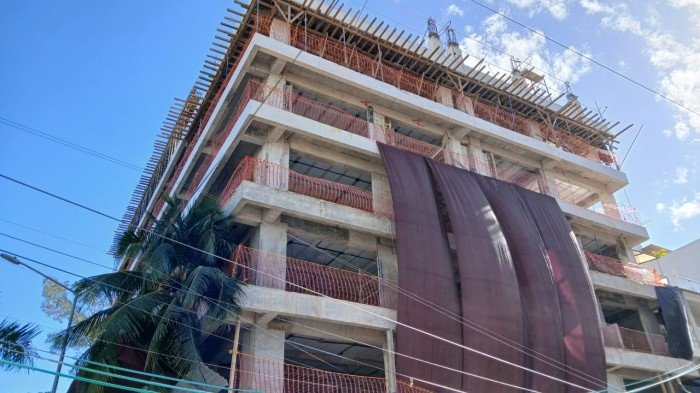
Playa del Carmen, Quintana Roo — Mexico’s new General Law of Ecological Balance and Environmental Protection addresses land-use planning and requires municipalities to coordinate with the federal government, but it lacks real mechanisms to oversee local construction permits and density changes, according to an environmental lawyer.
Irma Morales, an attorney with the association Defendiendo el Derecho a un Medio Ambiente Sano (DMAS), made the comments after Alicia Bárcena, head of the Environment Ministry (Semarnat), presented the new law Monday at President Claudia Sheinbaum’s morning press conference.
Bárcena emphasized that the law improves the distribution of responsibilities, noting that municipalities draft their Local Ecological Zoning Programs (POEL) but must have them approved by Semarnat.
“They cannot make urban development changes without going through us. It is difficult, but we are doing it in the 17 coastal states of the republic; ordering the federal maritime-terrestrial zone,” the secretary said.
Morales said that was one of the issues she and other activists raised with Semarnat on May 21 during a protest in defense of Mahahual.
“We took the opportunity to bring up the POELs and how in Quintana Roo municipalities modify them to suit their convenience, without coordination with the federal government,” she said.
She pointed to numerous cases of construction projects receiving building permits before completing their environmental impact statements, and to the state Environment Secretariat issuing authorizations for coastal areas that fall outside its jurisdiction.
“When urban development plans are modified, the ones who lose are the community and the ecosystems,” Morales said. “The new law mentions land-use planning, but it still lacks mechanisms to guarantee real institutional coordination.”
More Environment
- Cancún to Host Climate Change Colloquium With Experts From Mexico, Guatemala and New York
- Tulum Records Over 6,000 Sea Turtle Nests as Beach Furniture Threatens Hatchlings
- Lab Coral Restoration Urgent as Caribbean Reefs Decline, Expert Warns
- Quintana Roo Bolsters Sargassum Strategy With Satellite Monitoring and Research
- Stationary Front to Bring Rain Across Yucatán on Tuesday
More Playa del Carmen
- Playa del Carmen Mayor Pitches Atlético Dallas on Preseason Camp and Youth Sports Alliance
- Playa del Carmen Skater Vivian Morfin Places Seventh at World Speed Skating Championships
- Car With Two Children Overturns at Paamul Curve on Highway 307
- Playa del Carmen Opens Nominations for Elvia Carrillo Puerto Award Honoring Outstanding Women
- CFE and Playa del Carmen to Review Plan for Submarine Power Line to Cozumel