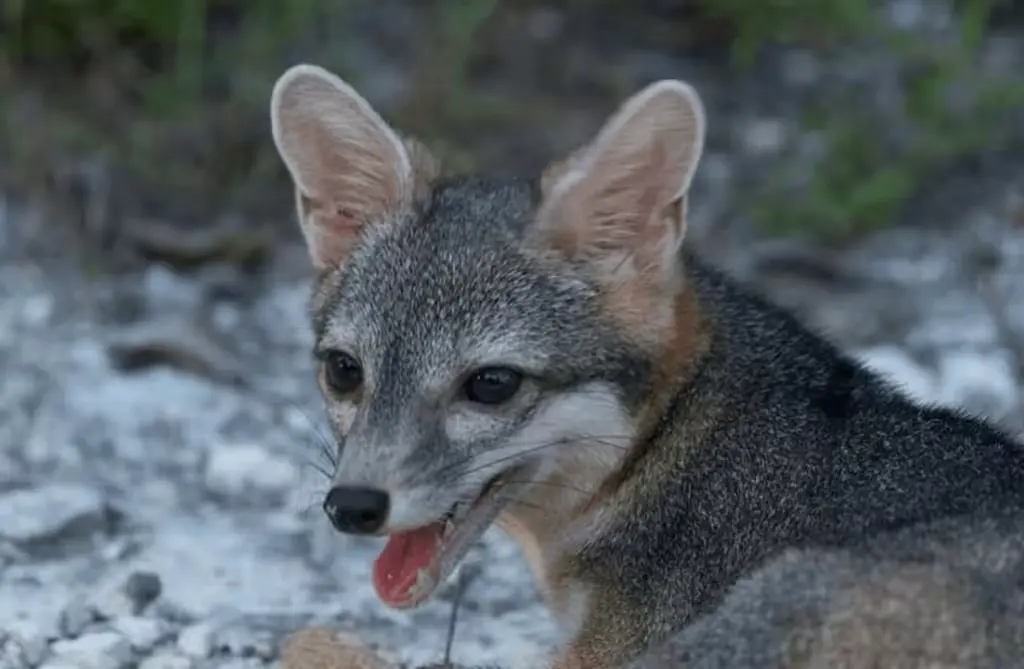
Cozumel, Quintana Roo — A photograph of the elusive Cozumel dwarf fox has confirmed the species’ continued presence on the island for the first time in more than two decades, reigniting scientific interest in its population and conservation.
Biologist Rafael Chacón Díaz documented the sighting, noting that while residents and specialists had reported occasional observations, no recent photographic evidence existed to scientifically validate the mammal’s survival in its natural habitat.
The last documented sighting dates to the early 2000s, when Chacón photographed the animal in 2002 and 2003. Since then, reports were limited to unverified accounts, leaving uncertainty about the species’ persistence on the island.
“The photograph is key because it confirms the species is still present. For years we only had verbal references, but now we have concrete evidence to advance its study,” Chacón said.
Following the image’s release, international scientific organizations — including the journal Neotropical Biology and Conservation — contacted the researcher to develop a joint monitoring and analysis project focused on this rare and poorly documented specimen.
Researchers have installed camera traps in several jungle areas of Cozumel to gather new records, study behavior, and determine the species’ distribution within the island ecosystem. International researchers are expected to arrive in the coming weeks to conduct fieldwork, analyze collected material, and generate data on population size, habits, and potential threats.
The documented reappearance carries both scientific and environmental significance, highlighting the persistence of little-studied wildlife on an island facing pressure from urban and tourism development. Experts say the finding underscores the need to strengthen conservation strategies in Cozumel, particularly in jungle areas where organisms may be at risk without having been fully studied.
More Environment
- Mexican Army Nears Completion of 16-Kilometer Jungle Road Over Tulum’s Sac Actún Cave System
- Akumal Halts Turtle Swim Tours Through September
- Mexico Assigns $110 Million Navy Budget to Fight Sargassum in Quintana Roo
- Mérida Opens First Green Corridor to Fight Climate Change
- El Niño Keeps Atlantic Hurricane-Free, Setting Record for Latest First Storm in Decades
More Cozumel
- Leonardo Aguilar to Headline Free Cozumel Concert for Grito de Independencia 2026
- Cueva Popotitos: New Underwater Cave System Found South of Cozumel
- Armed Men Try to Abduct Woman on Cozumel; She Escapes on Her Motorcycle
- Cozumel Opens New Sustainable Tourism Trail in Island’s South
- Quintana Roo Mayors Tout Results as Residents Decry Persistent Gaps